Trump Admits Iran Memorandum 'Is Not Final' After Signing 14-Point Deal at Versailles
The US-Iran memorandum launches a 60-day negotiation period

President Donald Trump has warned that a newly signed agreement between the United States and Iran is 'not a final deal', despite formally endorsing a 14-point memorandum intended to end four months of conflict between the two countries.
The memorandum, signed during a ceremony at the Palace of Versailles on Wednesday, launches a 60-day negotiating period aimed at securing a broader settlement between Washington and Tehran. While supporters hailed the framework as the most significant diplomatic breakthrough since hostilities escalated earlier this year, Trump repeatedly stressed that many of the toughest issues remain unresolved.
The signing followed talks involving French President Emmanuel Macron, Secretary of State Marco Rubio and senior officials from both sides. Although the agreement commits the US and Iran to a series of de-escalation measures covering sanctions, shipping routes and nuclear discussions, its success will depend on whether negotiators can transform the framework into a permanent accord over the coming two months.
Trump Emphasises Deal Is Still a Framework
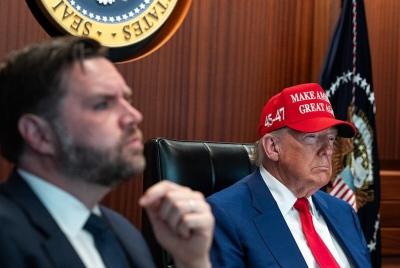
Trump repeatedly sought to downplay suggestions that the agreement represented a diplomatic breakthrough, stressing that many of the most contentious issues remain unresolved.
Speaking before the signing ceremony, he even suggested that Vice President JD Vance could attend in his place. When reporters jokingly asked whether he would take credit if negotiations succeeded and blame Vance if they failed, Trump laughed and replied that he liked the idea.
The memorandum was initially signed electronically by Vance and Iranian Parliamentary Speaker Mohammad Bagher Ghalibaf three days before Trump and Iranian President Masoud Pezeshkian formally endorsed it.
Unlike the 2015 Joint Comprehensive Plan of Action negotiated under former President Barack Obama, the new document does not establish a detailed settlement. Instead, it creates a framework for negotiations, giving both sides 60 days to attempt to turn a fragile understanding into a lasting agreement.
Just prior to this evenings dinner at Versailles in France, hosted by President @EmmanuelMacron—President @realDonaldTrump signed the Iran Memorandum of Understanding, once Secretary Rubio received it…
— Dan Scavino (@Scavino47) June 17, 2026
“A pretty key moment in history we are sharing together…” @SecRubio pic.twitter.com/sLYi6G9TM3
Shipping Routes and Sanctions Among Key Issues
Among the memorandum's provisions is a commitment to restore commercial shipping through the Strait of Hormuz, one of the world's most important energy transit routes. Iran has agreed to facilitate the passage of commercial vessels for at least 60 days, while the United States has committed to removing its naval blockade under a phased timetable.
The agreement also opens the door to discussions on sanctions relief, frozen Iranian assets and wider economic reconstruction measures. According to US officials, Washington would begin issuing waivers for certain Iranian oil exports while broader sanctions arrangements are negotiated.
Iran's stockpile of highly enriched uranium remains another major focus. The memorandum states that both sides will work towards an agreed mechanism for handling the material, with on-site down-blending under International Atomic Energy Agency supervision identified as a possible option.
Hardest Negotiations Still Lie Ahead
While supporters have described the memorandum as a significant diplomatic breakthrough, critics have argued that many of the most contentious issues remain unresolved. Several Republican lawmakers questioned whether the framework provides sufficient guarantees on Iran's nuclear programme and future regional security arrangements.
Reagan is rolling over in his grave. Iran’s nuclear ambitions were not curbed, and they have learned that threatening the Strait of Hormuz works and will undoubtedly leverage it in the future. Now, Iran gets to build brand-new infrastructure under this deal.
— U.S. Senator Bill Cassidy, M.D. (@SenBillCassidy) June 17, 2026
Before the war, the…
Trump is claiming there is no $300 Billion Dollar payment to Iran by the U.S…
— Chuck Schumer (@SenSchumer) June 18, 2026
These are his handwritten initials. He should read his own memo of understanding. pic.twitter.com/RhiWXBBmEL
With the memorandum now signed, attention shifts to the negotiations due to begin in Switzerland. The success of the agreement will depend on whether US and Iranian officials can bridge differences over sanctions, nuclear oversight and regional security during the 60-day negotiating period.
© Copyright IBTimes 2026. All rights reserved.
- Recommended For You