JD Vance Iran Trip Cancelled: 'Logistics' Cover Hides Real Reason — Iran Walked Out Over Lebanon Strikes
Iran called Israeli strikes 10km into Lebanon a 'direct violation' of Trump's just-signed deal

Vice President JD Vance's planned trip to Switzerland to lock in the new US-Iran peace framework collapsed on Thursday, and the White House blamed 'difficult logistics' for the postponement. The real reason had surfaced hours earlier in Tehran, where Iran's negotiating team had already suspended its own departure, citing Israeli air strikes deep inside southern Lebanon as a direct breach of the deal Donald Trump signed at Versailles only one day before.
Iran's foreign ministry pulled the plug first. An informed source told Hezbollah-aligned outlet Al-Mayadeen that Tehran's delegation halted preparations after Israeli operations reaching more than 10 kilometres (6.2 miles) inside Lebanon were judged a clear violation of the first clause of the memorandum of understanding (MOU). That clause commits both sides to the 'immediate and permanent termination of military operations on all fronts, including in Lebanon'. Vance's announcement followed only hours later.
A Deal Already Wobbling at Clause One
Trump signed the 14-point framework on 17 June 2026 at the Palace of Versailles, with French President Emmanuel Macron looking on and Iranian President Masoud Pezeshkian holding up a signed copy in Tehran. The framework opens a 60-day negotiation window, lifts the US naval blockade of Iranian ports immediately, restarts traffic through the Strait of Hormuz toll-free, and ties future sanctions relief to Iran diluting its highly enriched uranium stockpile under International Atomic Energy Agency oversight.
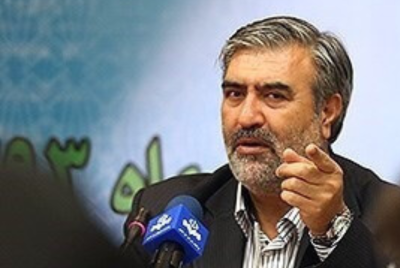
Iran's Supreme Leader Ayatollah Ali Khamenei approved the document despite reservations, the foreign ministry said Thursday. Within hours, foreign ministry spokesman Esmaeil Baghaei told Lebanese outlet Al Akhbar that any continued Israeli strikes or occupation of Lebanese territory would amount to an 'annulment' of the MOU.
Vance's Warning to Israeli Ministers
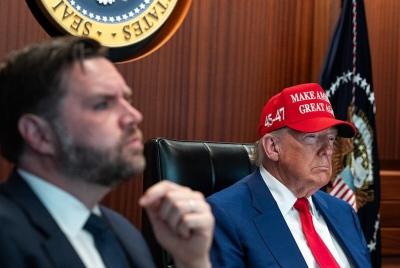
The tension between Washington and Jerusalem had been building before Tehran walked out. On Thursday, Vance bluntly fired back at critical Israeli cabinet members, saying, 'Do not attack the only leader in the world who likes you,' according to Ynet. That message followed an Israeli strike in Beirut's Dahiyeh suburb shortly before the signing. Trump and Vance had openly criticised Israel for risking the deal at the moment of its closure.
At a White House briefing on Thursday, Vance defended the framework against Republican critics worried Washington had ceded too much. 'As they dial up their good behavior, we can dial up the economic relief,' he said. 'If they dial down their good behavior, we can turn it off.' He admitted he no longer knew when he would fly to Switzerland.
What It Means for US Drivers
The political stakes carry a wallet-level consequence for American households. The national average price of a gallon of regular gasoline fell to $3.99 (£3.02) on Thursday, the first reading below $4 since March, American Automobile Association data showed. Brent crude dropped under $79 a barrel, its lowest since early March. Both moves were tied directly to the Strait of Hormuz reopening to commercial traffic.
Pre-war pump prices stood at about $2.98 (£2.26) a gallon. If the 60-day window collapses, analysts at JPMorgan have already warned that prices could climb back above $5 (£3.79) if Hormuz traffic stalls again.
Pakistan's PM Also Stood Down
Pakistani Prime Minister Shehbaz Sharif, a key mediator, also cancelled his visit to Switzerland on Thursday. Two senior officials told the Associated Press the ceremonial signing was no longer needed because both Trump and Pezeshkian had already executed the document electronically. The cancellations stacked within a single day, leaving the technical talks without a confirmed restart date.
© Copyright IBTimes 2026. All rights reserved.
- Recommended For You