

'Resign Now!' Gianni Infantino Under Fire as FIFA Boss Labeled a 'Disgrace'
Donald Trump's call to FIFA ignites a global storm as Jeff Stelling, UEFA and football legends pile pressure on Gianni Infantino over the Balogun controversy.
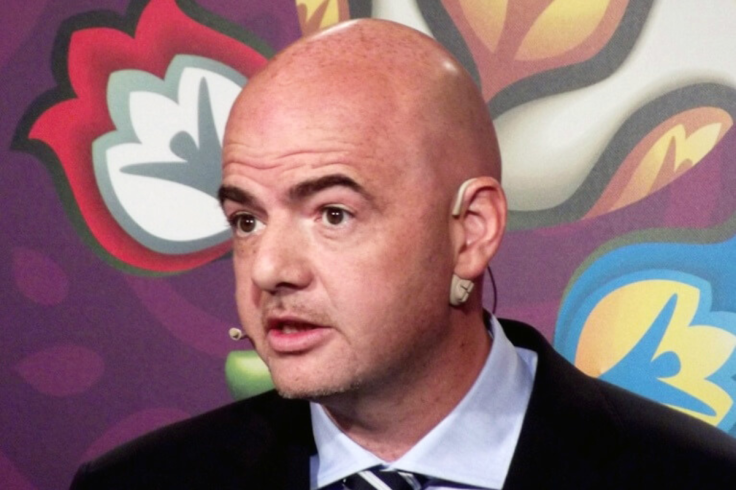
Jeff Stelling has called for FIFA president Gianni Infantino to resign immediately after football's governing body overturned Folarin Balogun's World Cup suspension, a decision that has sparked fierce debate over fairness, transparency, and the role of political influence in the sport.
The controversy intensified after US President Donald Trump confirmed he had personally called Infantino to ask for a review of Balogun's red card. Although FIFA insists its independent judicial bodies made the final decision without interference, the timing of the reprieve has fuelled growing Gianni Infantino to resign and drawn criticism from across the football world.
🚨𝗕𝗥𝗘𝗔𝗞𝗜𝗡𝗚: Some members of FIFA's Executive Committee are calling for the resignation of President Gianni Infantino and are preparing a lawsuit against him.
— The Touchmine | 𝐓 (@TouchmineX) July 6, 2026
This comes after revelations that FIFA allegedly bent the rules to favor a player and a country.@AlertaNews24 pic.twitter.com/fnPbWdaGGn
Stelling Leads Calls for Infantino to Quit
Speaking on talkSPORT, former Sky Sports presenter Jeff Stelling delivered one of the strongest rebukes yet of the FIFA chief.
'It's an absolute disgrace,' he said.
Stelling argued that the debate was no longer about whether Balogun deserved a red card. Instead, he said the issue was how FIFA handled the process.
'Gianni Infantino needs to resign. He needs to resign today.'
He also criticised Infantino's close relationship with Trump, pointing to the FIFA Peace Prize presented to the US president last year and questioning the optics of the pair communicating while a disciplinary case remained active.
Trump Call Sparks Political Questions
Trump acknowledged speaking directly to Infantino after Balogun was sent off during the United States' victory over Bosnia-Herzegovina.
'I didn't think it was a foul,' Trump told reporters at the White House.
'All I did was ask for a review; I didn't say you have to do this.'
Shortly afterwards, FIFA suspended Balogun's red card, allowing the striker to play in the United States' Round of 16 meeting with Belgium.
The sequence of events quickly became the centre of the FIFA World Cup controversy, with critics questioning whether political leaders should be contacting football's governing body while disciplinary proceedings are ongoing.
Infantino rejected any suggestion of outside influence. He said he informed Trump that the matter would be decided by FIFA's independent judicial bodies and insisted he respects their decisions, even when he does not personally agree with them.
🚨BREAKING: FIFA President Gianni Infantino is looking at possible demotion from his spot and fines of up to £10m‼️
— Dr.Sam Youssef Ph.D.,Ph.D.,DPT. (@drhossamsamy65) July 6, 2026
⛔️He is being charged with corruption, favoritism and bribery in favor of Argentina‼️ pic.twitter.com/J1y8PenI27
UEFA Warns FIFA Has 'Crossed a Red Line'
The backlash soon spread beyond broadcasters and pundits.
In a rare public intervention, UEFA accused FIFA of having 'crossed a red line', warning that football depends on rules being applied consistently and transparently.
The governing body said decisions made at a World Cup can have consequences far beyond a single tournament, making the UEFA criticism of FIFA one of the most significant responses to the controversy.
Gianni Infantino has further diminished the reputation of an organisation that had already become a byword for sleaze under his predecessor Sepp Blatter. He should resign.
— Telegraph Football (@TeleFootball) July 6, 2026
The Telegraph says Gianni Infantino must go. Read the full Telegraph View ⤵️https://t.co/2TwulFjyCv pic.twitter.com/2BQt82k7Iq
Football Figures Join the Backlash
Stelling was far from alone in his criticism.
Former England defender Gary Neville described the decision as 'a stain' on the World Cup before concluding, 'It stinks.'
Jurgen Klopp also questioned the situation, saying, 'This is our game, not theirs.' He added that if Trump and Infantino had genuinely influenced the outcome together, 'it calls everything into question.'
Former FIFA president Sepp Blatter weighed in as well, writing on X: 'Red cards are not overturned by political phone calls. They are overturned by rules, evidence and independent bodies.'
Belgium coach Rudi Garcia admitted he initially thought reports of Balogun's reprieve were an April Fool's joke, while Norway manager Stale Solbakken called the decision 'a big mistake'.
Why the Decision Matters
The controversy has grown beyond Folarin Balogun's red card.
Critics argue the incident has created the perception that outside pressure can influence football's disciplinary process, even though FIFA maintains its judicial bodies acted independently. That distinction has become central to the debate, with many arguing that public confidence depends not only on fair decisions, but also on the appearance of fairness.
The decision could also have wider consequences. Reports suggest England's Football Association is considering an appeal over Jarell Quansah's dismissal, while France may do the same regarding Michael Olise's suspension. If more teams pursue similar challenges, Balogun's case could become a defining precedent for future tournaments.
For now, Gianni Infantino remains at the centre of one of the biggest governance disputes of the World Cup. Whether FIFA's explanation eases the criticism remains uncertain, but with figures from across football openly questioning the organisation's handling of the case, the pressure on the FIFA president under fire shows little sign of fading.
© Copyright IBTimes 2026. All rights reserved.