Iran and Egypt Urge FIFA to Distance World Cup Match from Seattle Pride
Football federations request FIFA to separate World Cup match from Seattle's Pride celebrations

Iran and Egypt have jointly urged FIFA to remove any association between Friday's World Cup fixture in Seattle and the city's Pride celebrations, asking football's governing body to ensure there are no 'Pride Match' displays, ceremonies, or promotional activities inside the stadium.
The match, scheduled for 26 June at Lumen Field, falls during Seattle's Pride weekend and has been referred to by some as the 'Pride Match.'
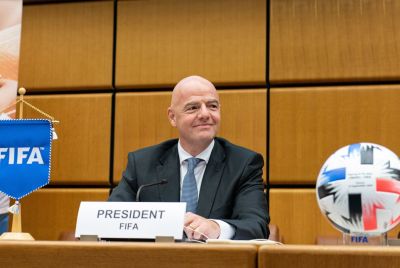
Although FIFA has confirmed that rainbow flags will continue to be permitted at all World Cup matches this summer, both football federations have argued that the match environment should not include activities linked to what they describe as the 'movement.' FIFA president Gianni Infantino has already sought to distance the tournament from Seattle's wider Pride events, saying there is no official 'Pride Match' and that anything taking place in the city is separate from the football fixture itself.
Iran and Egypt Told FIFA They Oppose Any Pride-Related Activities at the Match
The Iranian Football Federation reportedly said it had made its position clear to FIFA and expected the governing body to act on the concerns raised by both participating nations.
'We believe FIFA should take into account the views and concerns of the participating teams when considering matters related to the match environment and stadium presentation,' the federation said.
It added: 'FIFA has been informed of this shared position by both countries and is expected to take the necessary steps to ensure that no related ceremonies or promotional activities take place within the stadium or as part of the official match environment.'
Iran's statement did not directly mention Pride or LGBTQ issues. Instead, it referred to the event and the community as the 'movement.'
The Egyptian Football Federation expressed a similar view in a letter addressed to FIFA's secretary general. It said it objected to 'the holding of any activities related to supporting homosexuality.'
The federation added that it 'completely refuse these activities, which directly contradicts with the cultural, religious and social values in the region, especially in the Arabic and Islamic communities.'
The dispute comes after media reports in December 2025 linked Seattle's World Cup activities with the city's Pride weekend. According to the report, both Iran and Egypt condemned the association immediately and sought to prevent any connection between the football match and Pride events.
FIFA Maintained Position Despite Objections
While the two federations have pressed FIFA to remove any Pride-related presentation from the match environment, FIFA has continued to allow rainbow flags under its tournament rules.
The organisation confirmed to the New York Times that rainbow flags are permitted at all World Cup matches this summer. At the same time, Infantino said there would be no official 'Pride Match' at the tournament. Speaking to the Swiss newspaper Weltwoche, he said any Pride events taking place in Seattle 'has nothing to do with the match itself.'
SeattleFWC2026 has also described the fixture at Lumen Field as an 'inclusive event.' It reaffirmed that 'rainbow flags and other flags representing sexual orientation and gender identity are permitted under the FIFA World Cup 2026 Stadium Code of Conduct.'
The disagreement also comes against the backdrop of the laws and policies in both countries.
Iran is one of six countries that formally impose the death penalty for same-sex relations, alongside Brunei, Mauritania, Nigeria, Saudi Arabia, and Yemen.
The article also notes comments previously made by former Iranian Supreme National Security Council secretary Ali Larijani, who said the death penalty for homosexuality was 'effective in keeping society safe from perversion.'
According to the information provided, many gay men in Iran face pressure from the state, clerics, and even their own families to undergo gender reassignment surgery. The country's approach, introduced under Ayatollah Ruhollah Khomeini during the 1980s, is based on the belief that homosexuality is an illness.
In Egypt, homosexuality is not explicitly outlawed, although it is described as being de facto criminalised.
© Copyright IBTimes 2026. All rights reserved.
- Recommended For You