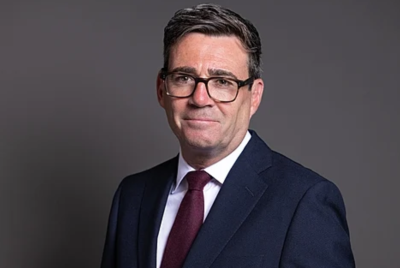
Keir Starmer Under Fire As Allies Accuse Him Of Leaving UK Bases Exposed To Iran
Keir Starmer faces fierce scrutiny over his handling of Iranian threats to UK bases and Britain's wider role in regional security.

Keir Starmer is under mounting pressure in Westminster after allies and opponents accused the prime minister on Thursday of leaving UK military bases vulnerable to Iranian attacks in Cyprus and Bahrain, despite rising regional tensions and direct threats to British personnel.
The criticism centres on what ministers have so far limited to diplomatic protests and statements, rather than visible military measures or sanctions, as Iran's actions across the Middle East intensify.
Concern over the government's handling of Iran has been simmering since the start of Starmer's premiership, but it has sharpened in recent days as Tehran's network of militias and proxy forces has grown more active. Iran is widely accused by Western governments of destabilising the region, funnelling weapons and cash to armed groups while crushing dissent at home. Within this climate, any missile activity near or towards British military assets is read not as a distant skirmish, but as a direct challenge to London's resolve.
Keir Starmer And The Charge Of Weakness On Iran
In this case, the trigger for the latest furore was a series of Iranian attacks targeting facilities used by Western forces in the Middle East, including bases in Cyprus and Bahrain where British troops are stationed. While detailed operational responses are rarely public, what is visible is the government's political posture. Here, critics say Keir Starmer has chosen the path of caution to the point of timidity.
Rather than announcing retaliatory measures or new sanctions, Downing Street released an official statement fronted by Middle East minister Hamish Falconer. His warning to Tehran was firm in wording but modest in substance, saying Iran's 'reckless actions are threatening the security of the region and the safety of British nationals and must stop.' For those already sceptical of Starmer's instincts on defence, the phrase 'must stop' landed like a plea rather than a threat.
Inside government, allies argue the prime minister is deliberately avoiding theatrical escalation, preferring what he calls 'calm, level-headed leadership.' In public, however, that steadiness has not always translated into confidence. At a press conference on the crisis, Starmer spoke at length about British citizens being 'worried sick' and appeared, to some observers, more anxious than resolute.
His promise that 'we will do everything we can to protect British lives, uphold British values and safeguard the national interest' has therefore been read through a harsher political lens than he might have hoped. Supporters insist the government is working in lockstep with allies and keeping sensitive options off the front pages. Detractors see a leader who talks in abstractions while other countries act.
Allies Bridle As Keir Starmer Relies On Partners
The awkward truth is that Britain is not the only Western power with skin in this particular game. French, Spanish, Dutch and Greek naval forces have been increasingly visible in the eastern Mediterranean and wider region, intercepting threats and reassuring partners. It is those flags, not the Union Jack, that opponents now point to as evidence that London has slid into the second row.
Regional partners are said to be unimpressed. Officials and commentators in Bahrain, Jordan and the United Arab Emirates, countries that live with Iran as an immediate neighbour rather than a distant adversary, are reportedly frustrated by what they see as a half-hearted British response. Publicly, those governments tread carefully. Privately, according to critics in the UK, they question whether Starmer is prepared to defend shared interests with sufficient grit.
This is the political charge that really stings. It is one thing for Keir Starmer to be criticised at home by familiar opponents like Kemi Badenoch or Nigel Farage, who have painted him as indecisive or 'humiliating.' It is quite another if traditional security partners begin to see Britain as a passenger rather than a driver in regional security.
Starmer's office counters that he is not in the business of grandstanding and that visible restraint does not mean military planners are idle. Yet the optics matter. When British servicemen and women are potentially under fire and the headline response appears to be a strongly worded press release, it is not hard to see why accusations of weakness gain traction.
The prime minister's insistence that he is charting a sober, rules-based path in a lawless neighbourhood may appeal to part of the electorate. But as Iran tests boundaries and allies watch closely, the question hanging over Keir Starmer is whether careful diplomacy will be enough to convince anyone that UK bases and Britain's global standing are truly secure.
© Copyright IBTimes 2026. All rights reserved.
- MOST POPULAR IN National