Louvre Robbery Film Announced as $100 Million Missing Jewels Case Remains Unsolved
The daring Louvre jewel heist of 2025 is set to become a Hollywood film, exploring the audacious theft and its implications.
The daring Louvre jewelry robbery that stunned the world in 2025 October is heading to Hollywood, with a new film project now in development. French filmmaker Romain Gavras is set to direct a cinematic adaptation inspired by the case, as producers move quickly to dramatise one of the most audacious museum thefts in modern history.
The project is based on Main basse sur le Louvre ('A Grab at the Louvre'), an investigative book by journalists from Le Parisien, Le Monde, and Paris Match. According to reports, the film rights have been acquired by production company Iconoclast, with the adaptation expected to explore both the heist itself and the widening investigation into the stolen treasures.
The $100-Million Heist That Shocked France

The upcoming productions revisit a case that remains unsolved: the theft of approximately $100 million (£74.3 million) worth of French crown jewels from the Louvre Museum in Paris.
The robbery took place on 19 October 2025, inside the museum's Apollo Gallery, one of the most heavily visited sections of the world-famous institution. Investigators say the thieves entered and exited the museum in just minutes, bypassing security systems and escaping with royal-era jewelry once worn by figures connected to Napoleon's imperial family and 19th-century French royalty, AFP reported.
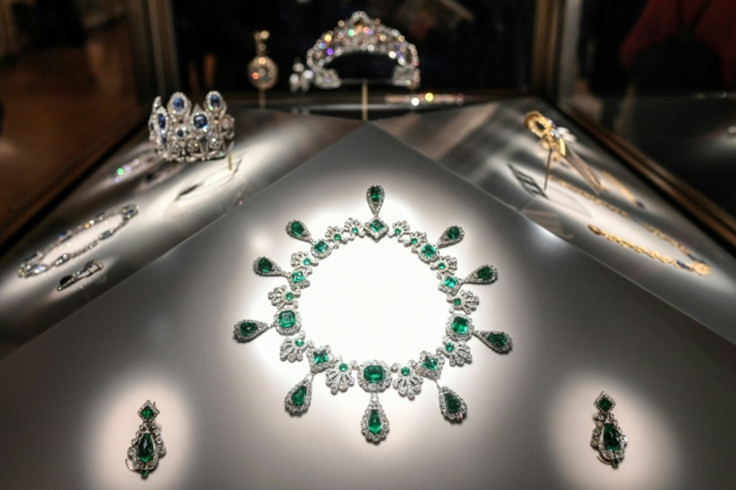
Among the stolen items were emerald and diamond sets linked to Empress Marie-Louise, sapphire jewelry worn by Queen Marie-Amélie and Queen Hortense, and several elaborate pieces associated with Empress Eugénie, including a pearl diadem, brooches, and decorative bodice ornaments. A damaged crown dropped during the escape was later recovered, but the rest of the jewels remain missing and unaccounted for.
How the Louvre Heist Unfolded
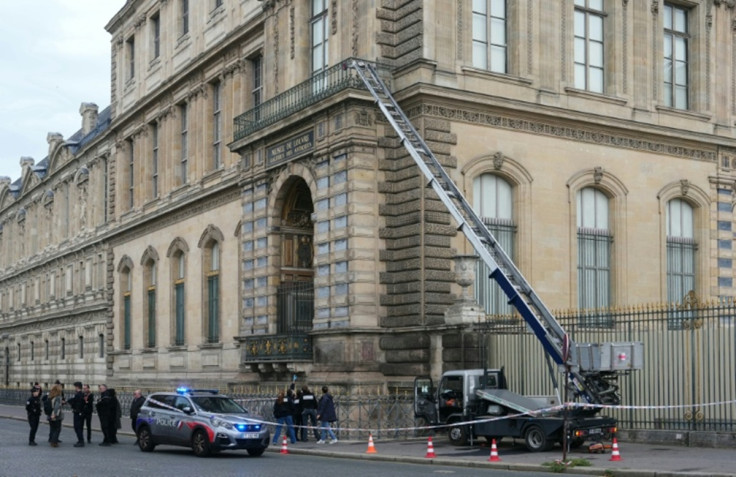
Security reports and early investigations revealed a highly coordinated operation that exploited vulnerabilities in the museum's surveillance and response systems. The heist reportedly began at around 9:30 a.m. shortly after the museum opened. Investigators believe four suspects arrived in a vehicle equipped with a mechanical lift, which they used to reach the Galerie d'Apollon (Gallery of Apollo) through a balcony overlooking the River Seine. Photos from the scene later showed a ladder placed against a first-floor window.
Investigations also revealed that two of the suspects broke into the museum, threatened security guards, and smashed two glass cases holding valuable jewels. Police said the heist only lasted four minutes, and the suspects escaped at 9:38 a.m.
A parliamentary inquiry later concluded that multiple security failures contributed to the success of the robbery, including limited camera coverage and delays in law enforcement response. In some cases, police were reportedly directed to the wrong location in the critical early minutes after the alarm was triggered.
The incident led to the removal of museum director Laurence des Cars.
The speed and precision of the operation have led experts to describe the event as one of the most sophisticated museum thefts in recent decades, intensifying scrutiny of museum security standards across Europe.
Investigation Stalls as Jewels Remain Missing
After seven months of investigation and the arrests of the suspects, authorities failed to recover the majority of the stolen items. French prosecutors have continued to express concern that the jewels may have already been dismantled, recut, or smuggled into underground markets, making recovery increasingly unlikely.
From Real Crime to Screen Drama
As the investigation continues, the Louvre case has already become a global cultural reference point, now transitioning into film and television storytelling.
The planned adaptations aim to dramatise not only the heist itself but also the broader questions it raised about museum security, heritage protection, and the vulnerability of priceless artifacts in the modern era.
© Copyright IBTimes 2026. All rights reserved.
- Recommended For You