'MAGA Christianity Is a Cult': Ex-Church Members Expose Mass Indoctrination and Political Control
When loyalty to a political movement eclipses the Jesus of their childhood, some believers are choosing exile over obedience.

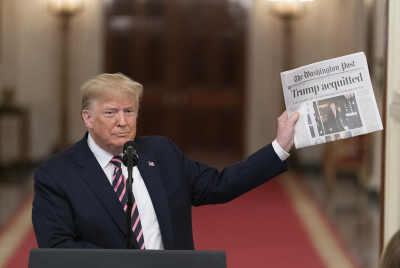
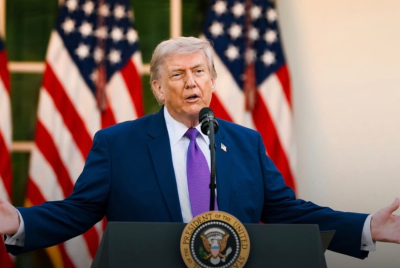
'MAGA Christianity' is driving Americans out of the churches they grew up in, according to former believers who say a fusion of right‑wing politics, nationalism and authoritarian religion has turned their faith communities into instruments of control rather than spiritual homes.
The discussion gained renewed attention after a TikTok video by nurse and content creator Jen Hamilton went viral. In the clip, Hamilton read Matthew 25, a passage about feeding the hungry and welcoming strangers, while criticising Donald Trump's Make America Great Again movement. The video prompted numerous comments from people who said they had left church because, in their view, Christian faith had become intertwined with MAGA politics.
How 'MAGA Christianity' Took Root In The Pews
'MAGA Christianity' is the label critics use for a strain of conservative US Christianity that has wrapped itself tightly around Trump-era Republican politics. HuffPost spoke to a string of former insiders, many of them now authors, who say this subculture has been quietly normalised in churches over decades but hardened dramatically during and after Trump's rise.
Anna Rollins, who grew up Southern Baptist and later wrote Famished: On Food, Sex, and Growing Up as a Good Girl, remembers the merger of religion and Republicanism beginning in childhood. 'Faith was the most important part of my life,' she said, but being a 'good Christian' meant following a thick web of written and unwritten rules. 'Faith and freedom were often talked about in the same breath. We often sang patriotic songs in church services, in addition to hymns. Nationalism was tightly woven in with Christianity.'
Others say that blend slid into outright coercion. Georgia writer Deirdre Sugiuchi, whose forthcoming memoir Unreformed recounts her time in a white evangelical reform school, is blunt. 'MAGA Christianity is a cult. I know because I was in it,' she told HuffPost. As a teenager she was sent to Escuela Caribe, a strict evangelical institution in the Dominican Republic, for failing to be a 'subservient adolescent female.' She describes what followed as 'near‑unimaginable oppression,' justified as God's will and 'for our own good.'
Her fear now is not abstract. 'I'm terrified about the merging of politics and Christianity,' she said, arguing that religious freedom rhetoric and unregulated faith‑based organisations can be used to erode civil rights. She points to the way Trump was treated by some believers: 'We have a president whom many equate with God... and surprise the White House, and the country, is literally being torn to pieces.'
Cara Meredith, author of Church Camp: Bad Skits, Cry Night, and How White Evangelicalism Betrayed a Generation, says the political message she absorbed as a teenager could not have been clearer. 'If there was one message I received in my formative years when it came to the intersection of faith and politics, it was simply this: Vote Republican. There was no other option.' To identify as Christian, she was told, was to vote for the Republican Party. Anything else was framed as siding against God.

Several interviewees said MAGA Christianity is no longer just about policy preferences but about a moral universe that prizes obedience, hierarchy and the nation above Jesus' teachings on love, mercy and solidarity with the marginalised. Amy Hawk, author of The Judas Effect: How Evangelicals Betrayed Jesus for Power, said Trump's behaviour with women clashed violently with the ministry she led for survivors of assault.
Supporting him, she concluded, was impossible. 'In the ten years since Trump came on the scene, I have learned that white evangelical spaces don't follow Jesus as closely as they pretend to,' she said. 'There has been a mass indoctrination into the Republican Party that looks absolutely nothing like the Christ they claim to serve.'
Cracks in MAGA Christianity and the Cost of Walking Away
The cracks, several former congregants say, began not with politics but with Scripture. Rollins says careful reading of the Bible undercut the nationalist message she heard from the pulpit. 'Reading Scripture made me see that Christianity was not about aligning oneself with a nation‑state. Jesus was killed, in part, because people wanted him to act in service of political movements.'
For Sugiuchi, the turning point came years after she left Escuela Caribe. In 2005 she read Julia Scheeres' memoir Jesus Land, which documented the same school and similar abuses. Visiting the campus, she saw what she describes as attempts to whitewash its history.
Meeting a parent of a current student, she realised her own silence had helped keep the system going. 'By keeping silent, other people were being abused in the name of religion,' she said. With Scheeres and others, she later joined efforts that contributed to the school's closure. She still considers herself a person of faith, but wants nothing to do with organised religion.
Tia Levings, whose memoir A Well‑Trained Wife: My Escape From Christian Patriarchy became a New York Times bestseller, traces MAGA Christianity to a long‑standing overlap between authoritarian church cultures and Christian nationalism. 'Right now that's close to a perfect circle,' she said.
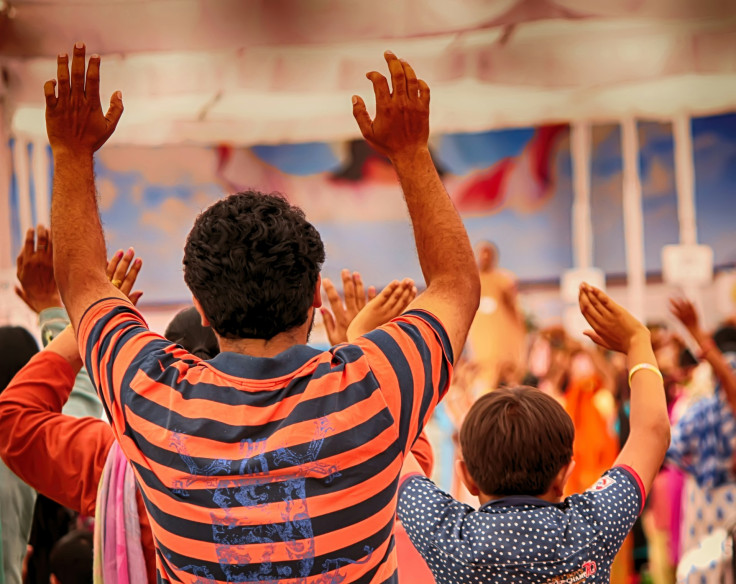
In her view, decades of authoritarian parenting, weak accountability for pastors and 'a steady stream of misinformation' have left generations without the critical tools to question what is preached. The result, she argues, is that 'the meaning of being a Christian in America has fundamentally changed.'
Leaving that world is rarely clean. 'Leaving costs nearly everything,' Levings said. Relationships, social networks and practical support often evaporate. Meredith describes it starkly: 'When you're in, you're in. But when you're out, you're out. You're cast to the side.' She talks about the sudden quiet when the people who prayed for you, brought casseroles and watched your children 'just disappear,' leaving a void 'not in your soul, but in your calendar and your text messages and your social media apps, too.'
Several interviewees said they left organised churches because they believed doing so allowed them to preserve their faith rather than abandon it. Hawk says she never stopped loving Jesus, she simply stopped recognising him 'in the spaces that claimed his name.' For her, church had become about 'fear and control, about who was in and who was out.'
Meredith, who also wrote The Color of Life: A Journey Toward Love and Racial Justice, links her own 20‑year disentangling to a slow awakening to race and power. Some, she says, are jolted awake by moments like the killing of George Floyd or the Capitol riot. For most, it is 'a series of lots of little things that make you realize, 'Hey, something's not right.'
Those who leave MAGA Christianity do not all discard belief. Rollins still calls Christianity 'a beautiful religion' and has kept what she sees as its core: hope, grace and concern for 'the poor, the orphans and the foreigners'. She has consciously stripped away 'the prosperity gospel, the perfectionism, the white supremacy and nationalism, and the hyper‑individualism' she sees in much of the Western church.
Others, like Hawk, find a looser, more stubborn faith outside the institution. Her favourite verse now is Galatians 5:1: 'It is for freedom that Christ has set us free.' She reads it as 'an indictment against religious structures, rules, and conformance.' Meredith, for her part, has a simple message for anyone quietly questioning their place in MAGA‑aligned churches: 'You belong, because you're human. That's it.'
The experiences described here reflect personal testimony rather than representative evidence. While researchers have documented broader declines in religious affiliation in the United States, there is no definitive data showing how many people have left churches specifically because of support for Donald Trump or Christian nationalism.
© Copyright IBTimes 2026. All rights reserved.
- Recommended For You