Thousands of Men Are Using Telegram Groups to Secretly Spy on Women, Study Warns
Safety advocates argue Telegram's anonymity makes it a global hub for tech-enabled abuse

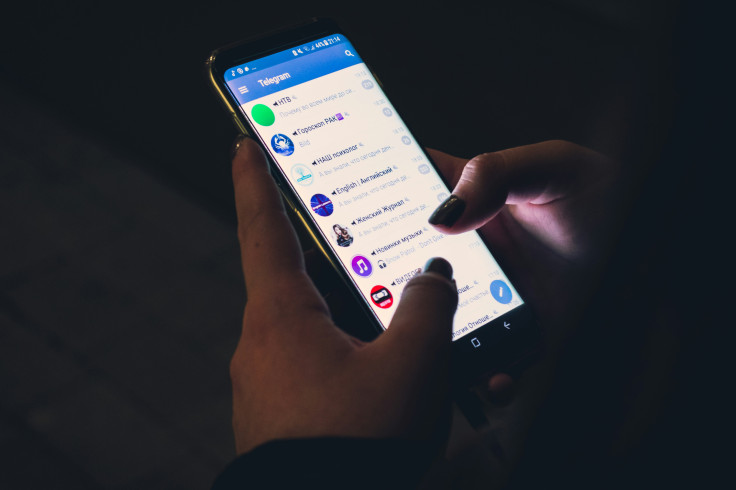
A disturbing new study has uncovered a massive digital network where thousands of men are allegedly using messaging apps to monitor women without their consent.
Research conducted by privacy experts reveals how private channels facilitate coordinated harassment and the sharing of sensitive media. As the scale of this covert activity comes to light, serious questions are being raised about the safety of popular communication platforms.
New findings from a European digital rights group show that thousands of men belong to hidden Telegram communities where they trade hacking equipment, spying programs, and stolen personal photos of women.
High Volume of Illicit Data Exchanged
Data from the non-profit AI Forensics, which investigates digital risks, exposes how tech-driven harassment has exploded on a chat app used by over a billion people every month.
Researchers spent six weeks early this year tracking nearly 2.8 million messages across 16 Italian and Spanish-speaking Telegram groups, according to a report by WIRED. During this timeframe, they identified over 24,000 members who collectively traded more than 82,000 pieces of media, including photos, videos, and voice recordings.
Marketplace for Invasive Surveillance Tools
These groups were caught promoting various illegal services, such as breaking into social media profiles, gaining entry to private phone galleries, and providing software to track a partner's online moves. In one message translated by the team, a user offered to hack into any social media platform and promised, 'I hack and recover any type of social media service. I can spy on your partner's account.'
The study documented over 18,000 mentions of spying and surveillance materials within the collected data. Some advertisements promoted bots that claim to break into a woman's photo gallery secretly. Entry to these channels could cost as little as five Euros monthly, while other specific services were listed for between 20 and 50 Euros.
Ordinary Women as Primary Targets
Although some content focused on famous individuals, the study emphasised that most targets are ordinary women, many of whom have no idea their photos are being circulated or manipulated.
'We tend to forget that most victims are ordinary women who sometimes do not even know that their pictures are shared or manipulated in these types of channels,' said Silvia Semenzin, a researcher at AI Forensics. 'The majority of this violence is directed towards people who the perpetrators know personally.'
Semenzin, who previously brought similar Italian Telegram groups to light in 2019, argued that the app should be labelled a 'very large online platform' under European safety laws. This change would force the service to operate under much tougher regulatory scrutiny.
Platform Policies and Corporate Defense
A spokesperson for Telegram informed WIRED that the platform deletes 'millions' of posts daily through 'custom AI tools.' The company added that its European policies ban the promotion of violence and illegal sexual material, such as non-consensual images, as well as doxing and the trade of illicit products or services.
The firm stated it has shut down almost 12 million communities and channels since the start of the year, with over 153,000 of those connected to child abuse content. 'We firmly reject the idea that Telegram profits from content we are actively taking down,' the spokesperson remarked, noting that the app remains committed to following European Union rules.
Global Scope and Ongoing Legal Scrutiny
Digital safety experts and researchers have consistently identified Telegram as a primary setting for the wider problem of tech-driven harassment against women.
'Any platform or app that can be used to harm women and girls will be,' observed Adam Dodge, a lawyer and the creator of EndTAB, an agency dedicated to stopping tech-enabled abuse. He pointed out that Telegram is particularly problematic because it combines anonymity and speed with massive groups of users who share similar motives.
Past investigations have already found comparable networks in China, Germany, Portugal, and the UK, proving this issue reaches far across the globe.
‼️ the 𝗮𝗿𝗿𝗲𝘀𝘁𝗲𝗱 𝗰𝗼𝗿𝗲 𝗺𝗲𝗺𝗯𝗲𝗿𝘀 of rape-focused Telegram channel “德国老司机驾校” (“Fahrschule für Experten in Deutschland” in German) ‼️
— Byron Wan (@Byron_Wan) May 8, 2026
They are just the core members; there are reportedly thousands of members — all Chinese — in the group.
top row: Jiang… https://t.co/H63EqfujpP pic.twitter.com/nh1P0LZJVs
'These networks that we found are a very small sample of a much larger phenomenon,' noted Salvatore Romano, the research lead at AI Forensics. He suggested that 'without Telegram, it would be much harder for these people to have such a large user base.'
Pavel Durov, the founder of Telegram, is currently facing a criminal probe in France regarding illegal activity hosted on his platform—allegations he has flatly denied.
© Copyright IBTimes 2026. All rights reserved.
- Recommended For You