Missing Nancy Guthrie: Former FBI Agent Slams Sheriff's 'Devastating' Errors in Kidnap Case
In the case of missing grandmother Nancy Guthrie, the minutes and hours lost at the start now cast the longest shadow.

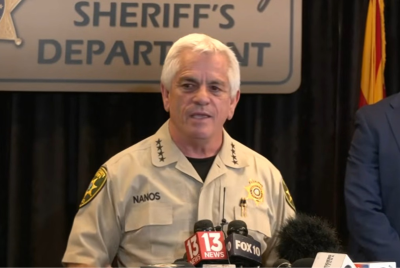
An ex-FBI special agent has warned that mistakes made in the first two days of the search for missing Arizona grandmother Nancy Guthrie could never be undone, accusing Pima County Sheriff Chris Nanos of making 'devastating' errors that may affect any future prosecution.
Guthrie, 84, disappeared from her home on Sunday, 1 February, in a case that has since drawn national attention in the US. The FBI later released footage of a masked man on her front porch, quickly dubbed 'Porch Guy' online, and investigators have treated the incident as a likely abduction. With no sign of Guthrie months on, scrutiny has shifted from the mystery of what happened to hard questions about how the investigation was handled from the start.
Former FBI Agent Says Nancy Guthrie Investigation 'Cannot Be Fixed'
Jennifer Coffindaffer, a retired FBI special agent who has been following the Nancy Guthrie case closely, expressed her criticism in a pointed series of posts on X on 3 April. Her assessment was blunt.
'There is no way for Sheriff Nanos to recover from his errors in this case,' she wrote, arguing that the most serious mistake was a failure to set aside prior disputes and assign the most capable investigators to Guthrie's disappearance immediately. 'And the biggest error he made was not brushing his past issues with people aside and putting his best of the best on Nancy's case. There are no crime scene do-overs. There is no way to recover the 1st 48 hours of an investigation.'
In missing persons cases, the first window is not a vague concept. Coffindaffer argued that the clock ran out before the sheriff's office had even hit its stride. She said the response in those opening hours was so flawed that it may have harmed both the search for Guthrie and the chances of ever holding anyone to account.

She went further, saying early law enforcement decisions had a 'devastating' impact on efforts to bring Guthrie home and would echo through any eventual courtroom battle. 'Early LE blunders had a devastating [impact] on bringing Nancy home. Early LE blunders will impact a successful prosecution of Porch Guy,' she wrote, referring to the unidentified man seen on Guthrie's front stoop in video released by the FBI.
The frustration in her comments is not subtle. In her final post in the thread, Coffindaffer turned from critique to a more unsettling warning saying, 'Meanwhile, Porch Guy walks free and if I were rich, over 60, and living in Arizona, I would be pretty worried. What is to stop Porch Guy from striking again? Nothing.'
Authorities have not confirmed whether they share that assessment of the ongoing risk, and there has been no public announcement of any arrest in relation to Guthrie's disappearance. Nothing is confirmed yet, so any assumptions about the identity, motives or future actions of 'Porch Guy' should be taken with a grain of salt.

'Golden Hour' and the Cost of Lost Time
Coffindaffer is not the only former officer to read the Nancy Guthrie investigation through the lens of time lost. In early February, retired NYPD sergeant Joe Giacalone spoke to Parade about how crucial the very start of a missing-persons case can be.
'It's really the first hour, we refer to it as the golden hour,' Giacalone said. 'That's the most important thing that first hour [when someone is reported missing].'
Taken alongside Coffindaffer's critique, his words underline a harsh reality. The difference between a tightly run first hour and a disorganised first forty-eight hours is not just academic. It can mean leads that never materialise, CCTV that is overwritten, witnesses who drift away or forget details, physical evidence that quietly disappears.
What neither Giacalone nor Coffindaffer can say, from the outside, is exactly which opportunities were missed in Guthrie's case. That remains buried in internal logs, radio traffic and decisions that may never be fully aired in public unless there is a trial or a formal review. But the pattern of criticism from seasoned investigators is hard to ignore.

Their remarks also hint at tension around Sheriff Nanos. Coffindaffer's reference to 'past issues with people' suggests local political or professional rifts that, in her view, bled into an operation that should have been purely about getting the best possible team on an 84-year-old woman's disappearance. There has been no detailed public response from Nanos addressing those accusations or setting out precisely how his office managed the crucial early days.
What is clear, from both the retired agents and the grim passage of time since 1 February, is that the search for Nancy Guthrie no longer sits in that golden hour. It is in the long, uncertain phase where families wait, online sleuths pore over grainy footage of a masked man on a porch, and experts argue over what might have been salvaged if the first decisions had been different.
© Copyright IBTimes 2026. All rights reserved.
- Recommended For You