Nancy Guthrie Update: Retired FBI Agent Questions Initial 'Search' Response After Cops Ignored Family's Early Abduction Alarms
Steve Moore highlights critical errors in the investigation of Nancy Guthrie's disappearance

Retired FBI agent Steve Moore has questioned the decision to treat Nancy Guthrie's disappearance as a search-and-rescue operation rather than a potential abduction, saying the early misjudgement had a 'huge' impact on the investigation. Speaking following reports that an insider had claimed the police's 'rush to judgment' compromised the case, Moore said investigators should have recognised signs of criminal activity from the outset.
Moore pointed to blood on the front door and a ripped-out Ring camera as clear indicators that the scene did not fit a routine missing persons scenario. He also questioned why officers appeared not to act on testimony from Savannah and Annie Guthrie, who told police their mother was unlikely to have wandered off at night.
Retired FBI Agent Slams 'Rush to Judgment'
Journalist Brian Entin spoke with Moore after receiving the insider account, seeking to understand how the early assumption affected the investigation. Moore said that if detectives assumed Nancy had simply wandered off, they would not treat the scene as a crime. 'You're not going to be looking for somebody to assist. You're not going to be looking for tire tracks or footprints or anything else,' he explained.
The blood on the front door and the removed Ring camera should have prompted a different approach from the outset. 'Within the first hour of arriving that should have tipped them off that this was a crime,' Moore said.
He also expressed frustration that investigators appeared to discount the family's direct testimony about Nancy's physical limitations. 'Did they think that in their vast non-experience that they knew more about it than the family?' he asked.
The Fatal Consequence of Opening a Contaminated Scene
The insider's account also revealed that the initial homicide supervisor allegedly had no prior homicide experience, a detail Moore described as 'inconceivable.' This led to what he called a 'terrible mistake': processing the scene and then reopening it to the public. By allowing people near the house and driveway, investigators likely destroyed microscopic evidence. Moore explained that once a scene is released, any evidence found later, a footprint, a strand of hair, becomes legally suspect, as it could have been introduced by members of the public. Had the FBI been involved from the first hour, Moore said, investigators would likely have removed tiles from the front step for high-velocity blood spatter analysis.
Non-Tenured Detectives at the Scene
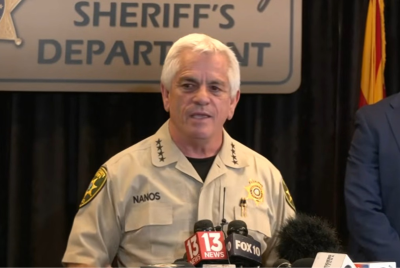
An insider who spoke to Entin separately revealed that Pima County Sheriff Chris Nanos deployed 'non-tenured' detectives to the scene in the critical early hours of the investigation. 'The people who were there on the scene were not tenured homicide detectives,' the source said. 'They didn't have a lot of experience in homicide at that point, to include the supervisor who, from my understanding, never investigated a homicide before being installed as the supervisor to the homicide unit.' Moore said investigators should follow the evidence wherever it leads, regardless of where it points.
The supervisor who first responded to Nancy Guthrie's house had never investigated a homicide, according to an insider close to the investigation.
— Brian Entin (@BrianEntin) April 2, 2026
The full interview airs tonight on @NewsNation at 10pmET. pic.twitter.com/qRLLIib7zh
Family Faces Grim Reality as Hopes for a Safe Return Fade
An unverified report claimed that a second ransom note received by Savannah and her siblings was an apology letter from the abductors, who reportedly indicated that Nancy's heart condition had proved more serious than anticipated and that she had 'gone to be with God.' Broadcaster Megyn Kelly suggested the note may explain why Savannah chose not to pay the ransom. Retired Nassau County police lieutenant Michael Gould has separately speculated that Nancy most likely did not survive the abduction, citing the absence of any proof of life, her heart condition, severe back pain, and limited mobility. Gould also noted Savannah's use of the past tense when speaking about her mother, suggesting the family may be coming to terms with the possibility of her death.
As the investigation crosses the two-month mark with no suspects identified, experts have raised serious concerns about the integrity of the early response. The Tucson community continues to hold out hope, with prayers and flowers left at a 'Bring Her Home' banner, but the forensic and procedural questions raised by Moore and others suggest the path to resolution has been significantly complicated by the events of those first hours.
© Copyright IBTimes 2026. All rights reserved.
- Recommended For You