New York Just Banned Shops From Charging You More Based on Your Browsing History and Personal Data
The One Fair Price Act aims to eliminate personalised pricing based on consumer data.
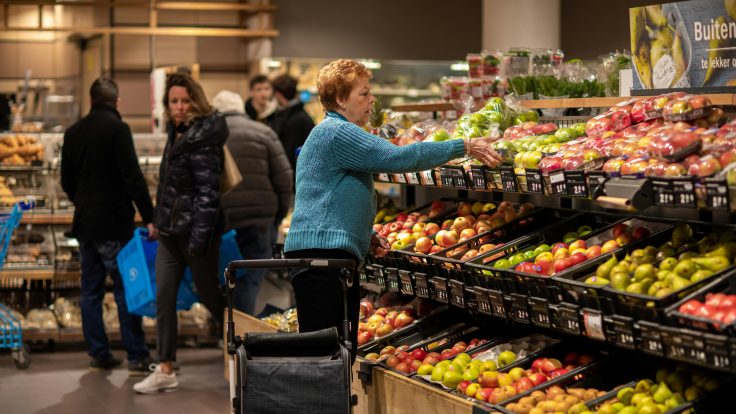
New York's legislature has passed the country's strongest ban on surveillance pricing, making it illegal for businesses to charge consumers different prices based on who they are rather than what they are buying.
On 5 June 2026, both chambers of the New York State legislature passed the One Fair Price Act (S8623B/A9349B), a bill that prohibits companies from using personal data, such as browsing history, real-time location, income, or inferred household size, to generate individual prices for shoppers.
The bill now awaits the signature of Governor Kathy Hochul, who has until the end of 2026 to act. If signed, New York becomes the third US state to outlaw the practice, following Maryland and Connecticut, both of which passed equivalent laws earlier this year.
How One Fair Price Act Will Be Enforced
The legislation targets a practice the industry variously calls personalised pricing or surveillance pricing. In plain terms, it means a company can know enough about you, through your device, your search history, your purchase behaviour, or even your battery level, to calculate exactly how much you are willing to pay and then charge you accordingly. The One Fair Price Act makes that illegal in New York.
The bill outlaws any price set by an algorithm that uses a consumer's data to charge different customers different amounts for the same item. It covers online and in-store transactions. Crucially, businesses must also disclose clearly when they are using automated pricing systems at all, which brings a transparency requirement alongside the outright ban.

Enforcement sits with the New York Attorney General's office. Civil penalties start at £3,980 ($5,000) per initial violation and rise to £15,920 ($20,000) for repeat offences, with each individual instance of personalised algorithmic pricing counting as a separate violation. One weakness identified by advocates is that Consumer Reports has called on Governor Hochul to reinstate a private right of action that was removed from the bill during amendments, which would allow individual consumers to sue companies directly rather than relying solely on the attorney general to act.
Discounts for seniors, teachers and similar groups remain lawful, as do loyalty programme promotions. The carve-out preserves pricing that benefits consumers without exploiting their data profiles. What the law targets is the reverse: charging someone more because an algorithm has determined they can afford it or are unlikely to shop elsewhere.
Investigations That Drove Push for Legislation
The political momentum behind the bill was built on documented evidence, not theory. In December 2025, Consumer Reports, alongside Groundwork Collaborative and More Perfect Union, published a joint investigation into Instacart's pricing practices. Nearly 400 volunteer shoppers across four cities purchased identical baskets of groceries at the same stores, at the same time. The findings were stark.
Seventy-four per cent of items showed at least two different prices across shoppers. For some products, the gap between the highest and lowest price reached 23%. At one Safeway in Seattle, the same box of Wheat Thins carried five different price points depending on who was checking out.
Extrapolated across a typical household of four, Consumer Reports estimated the total annual cost of those variations could reach £956 ($1,200) per year. Instacart acknowledged the price differences but called them 'negligible' and described them as randomised A/B tests, not surveillance pricing. The company ended the programme in December 2025, days after the report's publication and amid an FTC probe.

Consumer Reports also investigated Kroger's data practices, finding that the supermarket giant was building individual shopper profiles containing inferences about income, family size, education level and gender. One customer who requested their data under a state privacy law received a 62-page document.
Federal Confirmation and Attorney General's Rally
The practices targeted by the One Fair Price Act are not hypothetical. In January 2025, the Federal Trade Commission published preliminary findings from its Section 6(b) study of surveillance pricing intermediaries, examining firms including Mastercard, McKinsey, Accenture and others. The FTC found that consumer behaviour as granular as mouse movements on a webpage, or products left in an unpurchased online cart, could be tracked and fed into pricing systems to tailor what individual shoppers see.
On 5 May 2026, New York Attorney General Letitia James rallied in Syracuse alongside Senator Rachel May, labour unions including UFCW Local 1500 and the RWDSU, and AARP New York in support of the One Fair Price Package. 'When New Yorkers place an order online or go to the grocery store, they should be able to trust that they are seeing the same prices as everyone else,' James said. 'At a time when New Yorkers are already facing higher prices everywhere they look, we must use every tool available to us to protect New Yorkers and keep costs down.'
Senator May, the bill's primary sponsor, put the legislation's premise simply, 'New Yorkers shouldn't have to wonder if the price they see is based on who they are instead of what they're buying.' The bill passed the legislature with support from New York City Council Speaker Julie Menin and Majority Leader Shaun Abreu, who had introduced parallel local legislation on 14 May 2026 that would have made New York City the first city in the country to enact such protections.
The price you see may soon, at last, be the price everyone sees.
© Copyright IBTimes 2026. All rights reserved.
- Recommended For You