1950s Flying Saucer Letter Found in Flea Market Junk Box Matches Secret Air Force Pilot Report
Sometimes the most profound secrets of our skies are found buried at the bottom of a forgotten cardboard box.
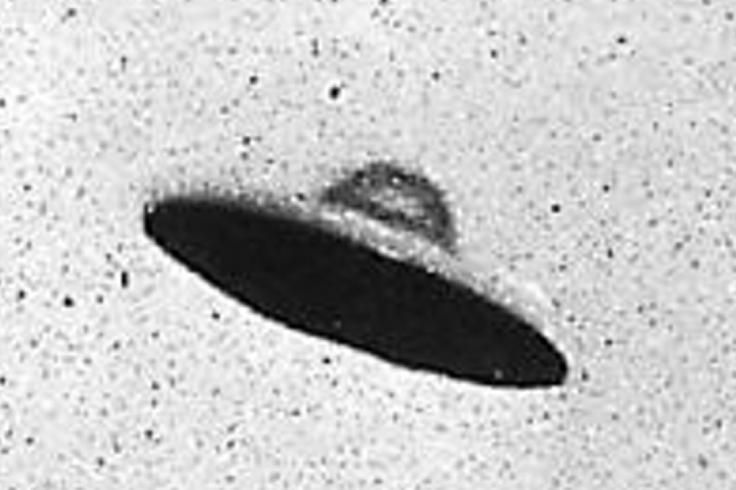
A privately written letter describing an alleged flying saucer sighting over South Africa in 1953 has resurfaced more than 70 years later after being discovered inside a cardboard box at a flea market in south-west England.
The typewritten correspondence, written by a woman named Barbara Graves to her friend Muriel Armfield in Surrey, will be offered for sale by Sworders Auctioneers on 18 August.
Auction specialists say the document is particularly notable because its account closely matches reports made by members of the South African Air Force on the same day, offering a rare civilian perspective on an incident that has remained part of UFO history for decades.
The letter itself does not verify what was seen. Instead, it provides a contemporary eyewitness account that appears consistent with other reports from the period.
Letter Describes Unusual Object Above Durban
According to the correspondence, Graves and her companion, Tom, were visiting the Durban Botanical Gardens on 8 March 1953 when they noticed an unusual object high above the city. Writing to her friend in England, Graves acknowledged how extraordinary the story might sound.
'I hope you don't think I've taken to the bottle when I tell you that on Sunday, Tom and I saw a Flying Saucer over Durban.' She explained that the pair had been taking photographs when Tom asked her to look upwards to catch the sunlight.
Instead, she said, they noticed a circular object travelling at what appeared to be a very high altitude across an otherwise clear blue sky. According to Graves, both concluded it could not have been a conventional aircraft.
'We both agreed it definitely wasn't an aeroplane,' she wrote. The letter goes on to describe the object travelling across the sky before apparently coming to a complete stop for an extended period. Graves then said it climbed higher until it eventually disappeared from view.
Account Aligns With Military Reports
What makes the letter historically interesting is its apparent overlap with documented military reports from the same day. According to information supplied by Sworders Auctioneers, two South African Air Force officers also reported observing an unidentified aerial object over Durban on 8 March 1953.
Those reports have previously featured in historical discussions surrounding unidentified flying object sightings during the early Cold War period. The auction house says a newsreel crew later interviewed the military personnel about the incident.
While the similarities between the civilian and military accounts have attracted attention, neither provides conclusive evidence regarding the nature of the object observed. No official explanation has been established.
Private eyewitness correspondence from the early 1950s is relatively uncommon, particularly when it relates to widely reported historical events. Unlike official military reports, personal letters often capture immediate impressions without being written for publication or official investigation.
Sworders Auctioneers says the document has been authenticated and linked to Graves and her intended recipient before being prepared for sale. Mark Wilkinson of Sworders described the discovery as unusual because comparable first-hand civilian letters concerning well-known UFO incidents rarely appear on the public market.
'No comparable private first-hand UFO eyewitness letter from this period is known to have appeared at public auction,' Wilkinson said. The letter was reportedly discovered among miscellaneous papers inside a cardboard box purchased at a flea market in south-west England.
The sighting occurred during a period when reports of unexplained aerial phenomena were receiving increasing international attention. The early 1950s saw numerous UFO reports emerge from Europe, North America, Australia and southern Africa, prompting investigations by military organisations in several countries.
Many sightings were later attributed to aircraft, balloons, astronomical objects or atmospheric conditions, while others remained officially unexplained because of insufficient evidence rather than confirmation of anything extraordinary.
The Durban incident has remained one of several South African cases periodically revisited by researchers examining historical UFO reports.
Historical Document Rather Than Proof
Although the rediscovered letter has generated renewed interest, historians note that eyewitness testimony alone cannot establish what was actually observed. Human perception can be affected by distance, lighting, weather conditions and expectations, particularly when unusual objects are viewed briefly against open skies.
Equally, the existence of multiple witnesses does not necessarily identify an object's origin. For that reason, the letter should be viewed primarily as a valuable historical document rather than evidence confirming extraterrestrial activity.
Its significance lies in preserving a contemporary civilian account that appears to have been written independently of official investigations and at roughly the same time as military personnel reported a similar unexplained sighting.
More than seven decades later, the object seen above Durban remains unidentified. Whether it represented an atmospheric phenomenon, highly classified military test flight, observational error or something else entirely has never been conclusively determined.
What survives is a carefully preserved snapshot of a moment that briefly puzzled both ordinary witnesses and trained military observers, an episode now returning to public attention through an unexpected discovery in a forgotten box of papers.
© Copyright IBTimes 2026. All rights reserved.
- Recommended For You