Is Nicole Kidman Pricing Herself Out? Source Claims Star Refuses To Cut Fees Amid Industry Slump
As Hollywood counts every penny, Nicole Kidman is being cast as the star who refuses to come cheap.

Nicole Kidman is facing claims from within Hollywood that her refusal to cut her fees, even as the film industry struggles, is costing her Oscar-worthy roles, the National Enquirer reported on 13 March 2026. The outlet cites a source who alleges that Kidman, 58, has made it clear she will walk away from projects if her pay does not at least match — and preferably exceed — her last job.
For context, Nicole Kidman has rarely been out of demand in recent years. The Australian star of Scarpetta and Nine Perfect Strangers topped Forbes' list of highest-paid actresses in 2024, reportedly earning $41 million over 12 months. That figure was driven in large part by streaming work, as platforms competed aggressively for prestige titles and reliable marquee names to anchor glossy dramas.
Nicole Kidman And The Price Of Star Power
The news came after Forbes reported that Nicole Kidman commanded $1 million per episode on three separate series: The Perfect Couple, Lioness, and Expats. Industry trade Variety has previously stated that she earned the same rate on Nine Perfect Strangers, underlining just how firmly she sits in the top bracket of television talent.
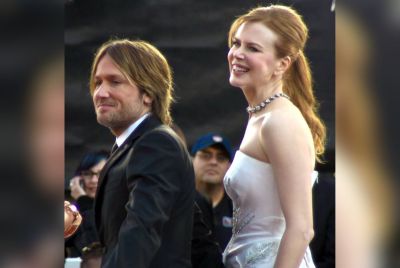
Financially, the picture painted by the reports is of an actor still very much at the peak of her earning powers. Divorce documents relating to Kidman's split from musician Keith Urban, revealed in January and cited by the Daily Mail, stated that she has more than $100,000 coming in every month. The filings have been treated in some corners of the industry as yet another reminder that Kidman is negotiating from a position of comfort.
The Enquirer's unnamed source characterises that confidence rather differently. 'For Nicole, it seems to be all about getting paid more than the last job,' the insider claims. 'She'll happily walk away from a project if her princely fees aren't met or surpassed.'
The same source points to Practical Magic 2 as Exhibit A. According to their account, 'there's a consensus that the only reason Nicole made Practical Magic 2 is because she knew she could demand an 8‑figure paycheck from Warner Bros.' The sequel to the 1998 supernatural drama is due in 2026, and Kidman is 'rumoured to be receiving $15 million' for reprising her role, the source says, adding bluntly: 'She was clearly looking to cash in.'
None of those figures has been confirmed by Kidman, Warner Bros., or her representatives, and should be treated with caution. Still, even the suggestion of a $15 million payday for a single film sits awkwardly against a backdrop of studio cost‑cutting, cancelled projects, and an ongoing debate about how sustainable mega‑salaries really are in the streaming age.
Hollywood's Downturn And Nicole Kidman's Strategy
The insider quoted by the Enquirer goes further, suggesting Kidman is now out of step with her peers. 'The movie business isn't doing great,' it stated. 'Other A‑listers are adjusting their compensation expectations to help get projects green‑lit. Not Nicole!' The implication is that where some stars are cutting upfront fees or taking back‑end deals to get films made, Kidman is holding the line.
That may be seen as shrewd self‑preservation. After decades at the top and five Academy Award nominations — including one win — Nicole Kidman has the kind of résumé that usually commands a premium. For every studio accountant wincing at an eight‑figure quote, there will be executives who still believe her name above the title justifies a bold bet.
Yet there is a risk that the ground has shifted more quickly than even an Oscar winner can track. The streaming boom that helped fund those $1 million‑per‑episode cheques is no longer in its breakneck growth phase. Studios have shelved completed films to save on marketing and taxes. Prestige projects that might once have been fast‑tracked are now pored over for cost‑to‑benefit ratios.
In that climate, the warning that Kidman 'is being advised to rethink her money tactics or it could cost her top roles' feels, at the very least, plausible. If her camp is indeed being urged to soften its stance, it suggests some insiders fear that a hard line on fees might see her quietly leapfrogged by talented contemporaries willing to take slightly less up front.
For now, only a small circle of executives, agents, and Kidman herself knows how flexible she is willing to be behind closed doors. Until someone on the record spells out the real numbers, claims about greed and intransigence remain just that — claims that, like so much Hollywood gossip, should be taken with a grain of salt.
© Copyright IBTimes 2025. All rights reserved.
- Recommended For You