

'Our Next-Door Neighbor': Nearby 'Super Earth' Mass Downgrade Skyrockets Chances for Alien Life
A modest change in the numbers has turned an obscure exoplanet into one of the most intriguing nearby bets in the search for alien life.
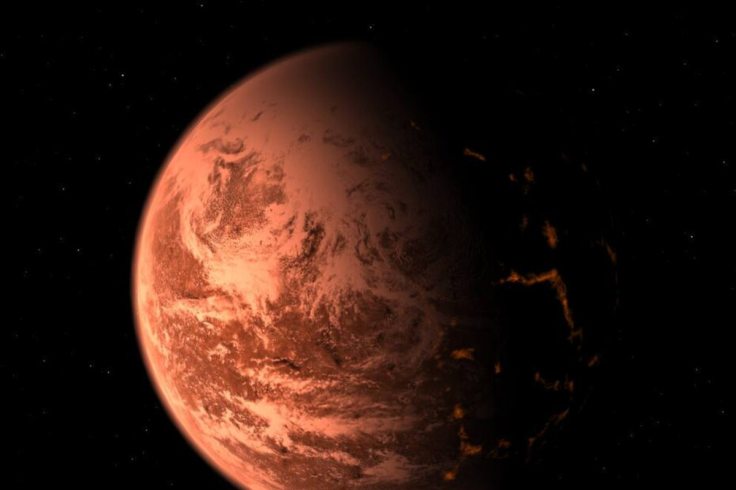
A nearby 'super Earth' in one of the closest star systems to our own appears far more likely to support alien life than first believed, after astronomers sharply downgraded its mass using new data gathered in Texas.
The researchers reanalysed GJ 3378b, an exoplanet discovered in 2024 orbiting a red dwarf star roughly 25 light-years from Earth. When it was first detected, the world seemed to be about five times as massive as our planet, hovering awkwardly on the boundary between a rocky super Earth and a small gas giant. That uncertainty, coupled with fears of crushing atmospheric pressure, kept expectations in check over whether anything resembling life could endure there.
Super Earth are widely seen as some of the most promising hunting grounds for alien biology. They are larger and potentially more dynamic than Earth, but still small enough to be made of rock rather than gas. GJ 3378b fits that bill on paper.
It whips around its cool red dwarf star every 21.5 days, hugging it at a distance that would bake any planet in our own solar system. Yet its star emits about 90% less radiation than the sun, putting this world squarely in the so-called habitable zone where liquid water could theoretically pool on the surface.
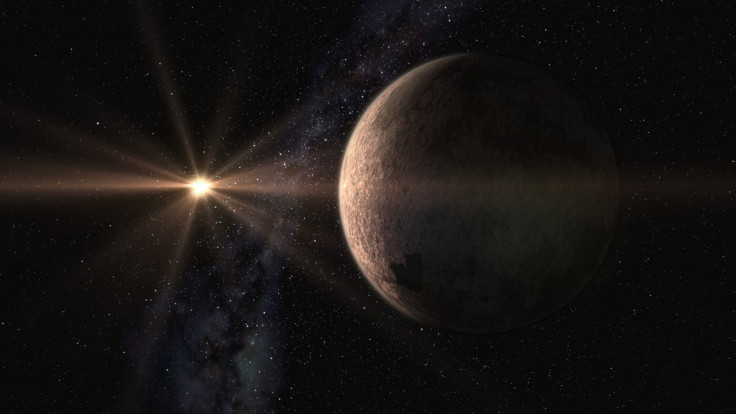
Super Earth Mass Revision Boosts Alien Life Odds
In the new study, published 30 June in The Astrophysical Journal, the team used the Habitable-zone Planet Finder instrument on the Hobby-Eberly Telescope at the McDonald Observatory to revisit the measurements. Rather than watching the planet directly, the instrument tracks minute wobbles in the host star as it is tugged back and forth by the planet's gravity.
Those fresh observations changed everything. GJ 3378b, is closer to 2.3 times Earth's mass, not five. That might sound like an abstract tweak in the numbers, but in exoplanet science it is the difference between a world that is almost certainly rocky and one that might have been just another small gas ball.
A planet a little over twice Earth's mass can, on current models, hold on to an atmosphere without letting it become unimaginably dense at the surface. In other words, if GJ 3378b has an atmosphere at all, it could have pressures broadly comparable to those on Earth, rather than conditions more suited to crushing submarines. That alone makes the super Earth vastly more interesting as a potential cradle for alien life.
'This one's exciting,' lead author Paul Robertson, an astronomer at the University of California, Irvine, said in a statement released with the study. He was keen to stress just how close this system is in galactic terms. Twenty-five light-years is a long way for us, but in a Milky Way that stretches to about 100,000 light-years across, GJ 3378b is, as he put it, 'our next-door neighbour.'
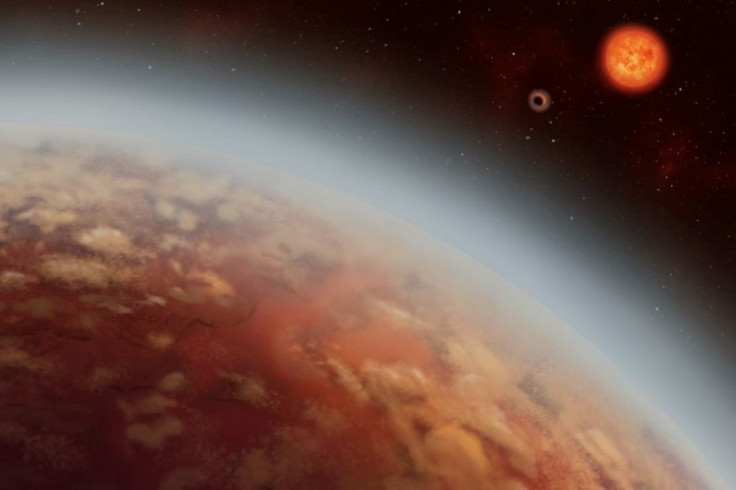
A Nearby Super Earth That Astronomers Can Actually Study
The proximity of this super Earth is not just a curiosity. It makes GJ 3378b one of the more practical targets for the next wave of telescopes designed to sniff out atmospheres and, if astronomers get lucky, possible biosignatures.
Scientists have identified plenty of other exoplanets that might host life, but many sit far deeper in the galaxy or circle stars that are harder to study. Being only 25 light-years away, and orbiting a relatively dim red dwarf, gives GJ 3378b a rare advantage. Light passing through or reflecting off any atmosphere it has stands a better chance of being picked apart by instruments on the ground and in space.
At this stage, nobody has actually detected an atmosphere around GJ 3378b, let alone oceans or clouds. Red dwarfs, despite their low overall output, can be unruly neighbours. Their flares and stellar winds are notorious for stripping away atmospheres from close-orbiting planets, much as solar radiation is thought to have eroded Mars' ancient atmosphere and surface water.
Nothing is confirmed yet, so all talk of potential habitability should be taken with a grain of salt. What the new mass estimate really provides is a more hopeful starting point. If follow-up observations show that GJ 3378b has retained a substantial atmosphere, scientists say it would instantly jump towards the front of the queue for detailed study.
'If a planet in the habitable zone has a proper atmosphere, we can justify further research looking for biosignatures, liquid water or other signs of life,' study co-author Gogod James, an undergraduate at UC Irvine, said in the team's statement.
The nature of the host star only adds to the strategic importance. GJ 3378b orbits a red dwarf, the most common type of star in the Milky Way. Around 70% of stars in our galaxy fall into this category, according to co-author Michael Endl of the McDonald Observatory and the University of Texas at Austin. In his words, they 'represent the standard,' which makes understanding the planets that circle them more than just a curiosity. It is central to working out how common life might be in the universe.
If astronomers can show that a nearby red dwarf system like this can hold onto a temperate, rocky super Earth with a stable atmosphere, the quiet implication is that similar worlds could be scattered throughout the galaxy. GJ 3378b sits there as a tantalising maybe, a close cosmic neighbour that suddenly looks far more like somewhere worth getting to know.
© Copyright IBTimes 2026. All rights reserved.