Top Scientist Reveals Why Aliens Are Terrified to Visit Earth
Professor Carol Oliver explores how time dilation might deter extraterrestrial visitors.

A top scientist has suggested that aliens may be 'terrified of Earth' not because of humanity, but due to a bizarre cosmic phenomenon known as time dilation, which could leave any interstellar visitor stranded in a future where everyone they knew is long gone. Professor Carol Oliver, a science communication and astrobiology expert at the University of New South Wales in Sydney, outlined the theory in a recent article, arguing that the physics of space travel itself may be enough to keep extraterrestrials away.
Speculation about alien life has surged in recent months following the release of hundreds of classified UFO documents by the US government and renewed pop culture interest, including Steven Spielberg's latest film 'Disclosure Day.' The persistent question remains the same: if the universe is so vast and potentially full of life, why has no one shown up?
Aliens Fear Time Dilation
Professor Oliver points to Einstein's theory of relativity, which shows that time slows down as an object approaches the speed of light. While this has been experimentally confirmed, its implications for long-distance space travel are less comforting.
'They would go home to a planet much older than the one they left – perhaps by a century or more,' she wrote. 'They would be time exiles.'
The concept is not theoretical fluff. NASA astronaut Scott Kelly provided a real-world example when he spent a year aboard the International Space Station. Upon returning, he was measured to be milliseconds younger than his identical twin brother on Earth due to the effects of motion on time.
That difference is negligible on a human scale, but Oliver argues it becomes extreme over interstellar distances. Earth's nearest stellar neighbour, Proxima Centauri, sits around 40 trillion kilometres away. Even the fastest spacecraft ever built, NASA's Parker Solar Probe, would take approximately 6,650 years to reach it at top speed.
To make such a journey within a typical lifespan, a spacecraft would need to travel close to the speed of light. That is where things become, frankly, a bit wild. Time aboard the craft would slow dramatically, while time on the travellers' home planet would continue at a normal pace. By the time they returned, centuries could have passed.
Alien Travel Risks Go Beyond the 'Time Curse'
Even if extraterrestrials were willing to accept the psychological cost, the physical journey presents further complications. According to Professor Oliver, travelling at near-light speed would expose spacecraft to intense radiation.
Tiny hydrogen atoms, normally harmless, would become high-energy particles capable of damaging or destroying a vessel. The heat generated by such travel could 'ablate and eventually destroy the hull' of a spacecraft, she noted.
There is Earth itself, our planet's oxygen-rich atmosphere, created roughly 2.4 billion years ago by cyanobacteria, is ideal for human life but may not be so welcoming to others. Oxygen is highly reactive, meaning it could be corrosive or even toxic to alien biology.
'It's therefore not toxic for us, but oxygen is reactive and could be highly corrosive for aliens,' Oliver explained.
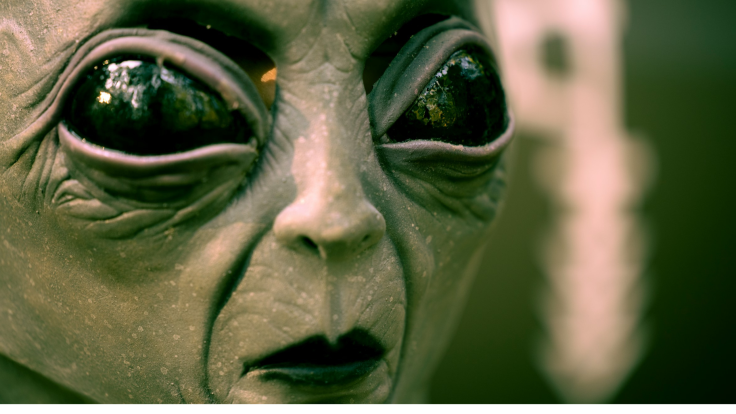
While protective suits could theoretically solve this problem, she pointed out an intriguing detail. 'Reports of visiting aliens do not include any descriptions of spacesuits.' It is a throwaway line, perhaps, but one that quietly undermines many popular narratives about alien encounters.
Online, the theory has sparked mixed reactions. Some social media users have described the idea as 'bleak but logical,' while others question whether advanced civilisations might have already overcome such barriers. A few have taken a more sceptical view, noting that the absence of evidence still leaves plenty of room for alternative explanations.
Still, the numbers alone keep the debate alive. Scientists have identified around 6,200 exoplanets across 4,700 solar systems, and with more than 100 billion stars in our galaxy, the probability of life existing elsewhere remains high.
Which leaves a strange possibility hanging in the air. Maybe aliens are out there. Maybe they have done the maths. And maybe, after weighing up the cost of a visit, they decided Earth simply is not worth the trip.
© Copyright IBTimes 2026. All rights reserved.
- Recommended For You