

The 'Time Exile' Curse: Why Einstein's Laws Prove Visiting Aliens Can Never Return Home
The universe may be teeming with life, but the same laws that make interstellar travel possible may also turn every alien voyage into a one‑way ticket out of time.

Aliens could, in theory, reach Earth but would never truly go home again, according to physicists who say Einstein's laws of relativity turn any near‑light‑speed visitor into a 'time exile.' The warning lands just as the US government publishes hundreds of previously classified unidentified anomalous phenomena case files, and Steven Spielberg's new film Disclosure Day stokes public belief that aliens are already among us.
Enthusiasm about extraterrestrials has been building steadily. Recent polling in Australia, the United States and other countries suggest roughly a third of people think aliens are visiting Earth. The newly released UAP records, stretching from the 1940s to the present, have only deepened that conviction, even though they largely catalogue unexplained sightings rather than prove anything concrete. Nothing in those papers confirms extraterrestrial hardware in our skies, and officials repeatedly stress that most cases remain unresolved rather than otherworldly.
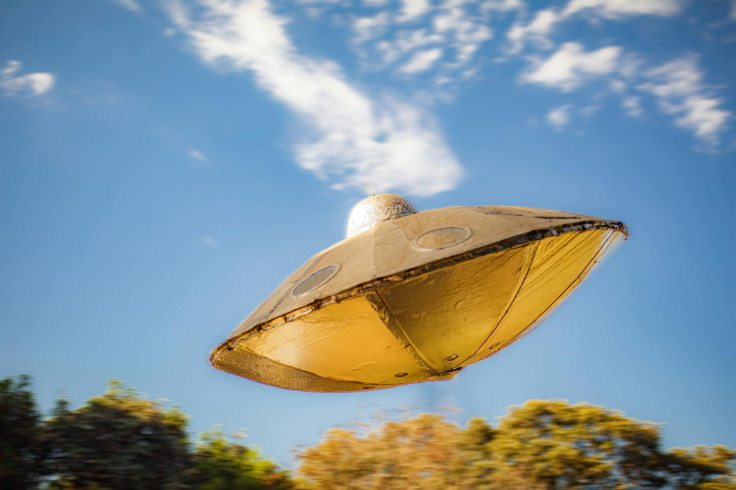
Still, the idea of advanced beings slipping in and out of our atmosphere sounds seductively plausible. The physics says otherwise. Start with the dullest but most brutal fact in the entire debate: space is enormous, on a scale that makes even science fiction feel parochial.
The nearest star system, Proxima Centauri, sits about 40 trillion kilometres away. That is some 268,000 times the distance between Earth and the sun, or 4.3 light years in astronomical shorthand. Our fastest current spacecraft, NASA's Parker Solar Probe, manages around 191 kilometres per second, just 0.064 per cent of the speed of light. At that pace, a one‑way trip to Proxima Centauri would take around 6,650 years. No civilisation, alien or human, is packing enough packed lunches for that journey.
So proponents of visiting aliens usually assume a civilisation far beyond us, one that has somehow cracked travel at a significant fraction of light speed. That is where Einstein walks into the room and spoils the reunion party.
The Hidden Secret in Einstein’s Brain That Made Him a Genius 🧠✨ pic.twitter.com/ALED52aOSq
— Tehxi (@yajnshri) June 6, 2026
How Einstein's Time Dilation Would Maroon Visiting Aliens
Einstein's theory of relativity shows that time does not tick at the same rate for everyone. The faster you move, the slower time passes for you compared with someone who stayed at home. This effect, called time dilation, is measurable even with today's modest speeds.
When NASA astronaut Scott Kelly returned from nearly a year on the International Space Station, he was measured to be milliseconds younger than his identical twin on Earth. The station circles the planet at about 28,150 kilometres per hour, hardly relativistic territory, yet the clocks disagreed ever so slightly.
Scale that up to aliens tearing across interstellar space at velocities close to light speed, and the gap stops being poetic and becomes devastating. A crew might experience, say, a few years travelling to Earth and back, but the planet they left could age by a century or more. Step off the ship and your friends are dead, your institutions transformed, your language perhaps fossilised. You have not just gone abroad, you have been exiled in time.
Any civilisation capable of such travel would grasp this in advance. They would understand that sending crews to visit planets like ours is less a scientific expedition and more a one‑way cultural amputation. It is difficult to imagine large numbers of volunteers signing up for that fate without an extraordinarily compelling reason.
**WOW** David Grusch: "There are several different types of Alien species that the US government are aware of" 👽
— Interstellar (@InterstellarUAP) June 9, 2026
"It's a continuum from Corporeal bipedal type life forms to sentient plasma life" pic.twitter.com/whIvDxWYt8
Energy, Radiation and a Hostile Earth for Aliens
The time‑exile problem is only one of three major obstacles. The second is the staggering energy bill. As an object accelerates, its effective mass increases. Push it towards the speed of light and you need more and more energy for ever smaller gains. At light speed itself, the maths blows up: the ship's mass would be infinite, and so would the energy required. In plain terms, you never actually get there.
Even slower near‑light‑speed trips have vicious side effects. Interstellar space is not perfectly empty. It is laced with sparse hydrogen atoms and dust. Hit those at a significant fraction of light speed and they turn into lethal radiation, battering passengers and electronics alike. The heat would slowly sandblast the hull away.
Theoretical work by physicist Miguel Alcubierre suggests faster‑than‑light travel might be possible by bending spacetime itself. Yet his own equations admit to 'currently impossible' energy demands, far beyond any known technology. On paper, it looks clever. In practice, it stays on paper.

All of this invites a simple question. Why would aliens squander that much energy and accept that kind of physical and temporal risk just to drop by Earth, when anything we possess they could almost certainly manufacture more safely at home?
Then there is the third snag, which we seldom discuss in UFO lore: biology. Earth's biosphere is not casually interchangeable. Life here and the planet's atmosphere evolved together over billions of years. Complex organisms only emerged because early cyanobacteria flooded the atmosphere with oxygen about 2.4 billion years ago.
That oxygen is breathable. For aliens adapted to some entirely different chemical regime, it could be corrosive, even lethally so. They might manage brief visits in protective suits, the way humans brave toxic industrial sites. Yet popular reports of visiting aliens almost never mention cumbersome life‑support gear. If such accounts were accurate, these beings would be strolling through a potentially hostile environment in their shirtsleeves, which makes little sense.

If Aliens Are Not Here, Where Are They?
The absence of credible alien traffic does not mean the universe is empty. Astronomers have identified roughly 6,200 exoplanets in more than 4,700 star systems, and suspect most stars host at least one planet. With more than 100 billion stars in our galaxy alone, the number of worlds is, without exaggeration, astronomical. Some may well be habitable.
Within our own solar system, Mars and the icy moons Europa, Enceladus and Titan all carry some potential for past or present microbial life. If scientists find that life sparked twice within one modest solar system, the odds of it arising elsewhere shoot up, at least statistically.
New stunning UFO-related videos released by Pentagon.
— TMZ (@TMZ) June 12, 2026
🎥: The Department of War pic.twitter.com/b5ixElxIWj
Since 1960, projects such as the SETI Institute's surveys and the Breakthrough Listen programme based at the University of Oxford have been combing the sky for radio signatures of alien intelligence. So far, they have found nothing. In a universe 13.8 billion years old, a century‑long listening effort is a blink, and a quiet one at that.
As a 1959 paper in Nature drily noted, estimating the chance of success is difficult, but if humanity does not search, that chance 'drops to zero.' For now, the physics points to a strange compromise: aliens may well exist, but if they obey Einstein's rules, the odds of them popping round for a visit and then making it home to tell the tale look vanishingly small.
© Copyright IBTimes 2026. All rights reserved.