Alien Discovery: Scientists Update First Contact Plan to Prevent Global Panic
When the universe finally answers back, the real test may be whether humanity can keep its head long enough to decide who speaks for Earth.

Scientists have quietly rewritten the global rulebook for what happens if alien intelligence is ever detected, updating long‑standing 'first contact' plans in 2026 to prevent panic and confusion in an era of deepfakes, social media storms and instant viral rumours. The new guidance, issued by the Paris‑based International Academy of Astronautics, sets out how astronomers should verify any alien signal, how quickly the public should be told and who gets to decide what humanity says back.
The idea that an alien civilisation might suddenly appear over Earth has for decades been pushed to the fringes of culture, somewhere between science fiction and conspiracy theory. From 'little green men' in flying saucers to shadowy rumours of secret military files, the subject has largely lived in films, late‑night talk radio and internet forums. Yet scientists have, since the late 1980s, maintained a serious, if little‑known, set of protocols for how to handle genuine evidence of extraterrestrial intelligence.
First trailer for ‘ALIEN ISOLATION 2’.
— DiscussingFilm (@DiscussingFilm) June 5, 2026
Coming soon. pic.twitter.com/GzvjhCehke
The International Academy of Astronautics first adopted its 'post‑detection' principles in 1989 and last revised them in 2010. The latest version, the academy says, has been several years in the making and involved contributions from more than 350 researchers worldwide. In a press release, the organisation framed the overhaul as a response to a very modern problem: how to keep a cool scientific head when a single unverified screenshot can trigger global chaos.
'In an era of deepfakes, automated misinformation, and instant global connectivity, unverified claims could trigger confusion or panic,' warned astrophysicist Michael Garrett, who chairs the academy's committee for the Search for Extraterrestrial Intelligence (SETI). 'These new protocols guide SETI scientists in maintaining the highest standards of evidence before making announcements to the world.'
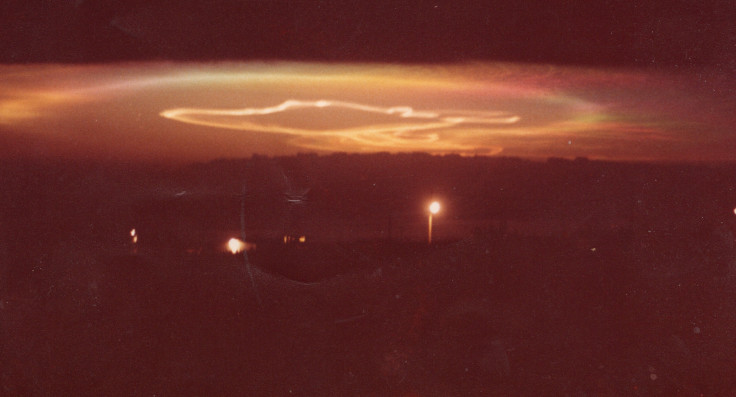
New Alien Protocols for a Noisy, Online Planet
The updated alien contact guidance is not a law and carries no formal enforcement power. Instead, it lays out what the academy considers best practice for any agency, observatory or research group scanning the universe for technosignatures, the tell‑tale signs of technologically capable life.
Much of the skeleton remains from the 1980s. The core expectation is still that any potential signal suggesting alien intelligence undergoes a 'rigorous' verification process and is scrutinised by the wider scientific community before anyone reaches for a microphone. Only once there is broad consensus that the data are credible should it be reported to international bodies such as the United Nations and then made public.
What has changed is the recognition of how messy that process will be in real time. The guidelines now explicitly address the risk that individual scientists who report a possible detection could become targets for online harassment or worse. The academy urges institutions to put safeguards in place to protect researchers' safety and to manage the flow of information so that rumours and hoaxes do not drown out the actual evidence.
'Can you see ALIENS?': UFO FILES 3.0 'reveal' new MYSTERIOUS orb encounters across America 🔴 Catch the day's latest news here ➠ https://t.co/xfiDL6MsDM 🗞️ pic.twitter.com/8C9N5QnReX
— Economic Times (@EconomicTimes) June 15, 2026
The committee has also updated its view of what 'evidence' might look like. Early protocols focused heavily on radio transmissions, the classic SETI scenario of a narrowband signal beamed across space. The new framework acknowledges that many more technosignatures are now on the table, from unusual patterns of light around distant stars to other detectable traces of alien technology.
Alongside the scientific steps, the document calls for the creation of a post‑detection committee, drawing in experts far beyond astronomy. Its job would be to examine the longer‑term social, political and ethical implications if we confirmed that an alien civilisation exists, and to advise on something far thornier than data analysis: who, if anyone, speaks for Earth.
One red line remains firm. The academy advises against sending any response to confirmed aliens until there has been broad international input, explicitly pointing to the United Nations as a forum. In other words, no single lab, nation or tech billionaire should be firing off messages to the cosmos on humanity's behalf.

Alien Obsession, from UFO Hearings to Disclosure Day
The timing of the academy's revisions is not accidental. They arrive amid a renewed public fixation on aliens and unidentified aerial phenomena, fuelled as much by politics and cinema as by telescopes.
In Washington, a string of high‑profile hearings has dragged UFO lore back into the mainstream, with witnesses and lawmakers suggesting that the US government may be sitting on information about extraterrestrials that have already visited Earth. That scrutiny has prompted former President Donald Trump to order the Pentagon to begin releasing files from some of its UFO investigations, now rebadged in official jargon as 'unidentified anomalous phenomena,' or UAP.
At the same time, Steven Spielberg's film 'Disclosure Day,' starring Emily Blunt, has landed in cinemas with a storyline built squarely on these anxieties. The film imagines a government cover‑up of UFOs and wrestles with the precise question the academy is trying to answer in real life: how, exactly, should the public be told if aliens exist?
None of these cultural flashpoints prove that an alien intelligence has reached out to us, and nothing in the academy's document suggests that any such discovery is imminent. Officials are explicit that these are contingency plans, not coded hints, and nothing is confirmed yet, so everything should be taken with a grain of salt.
Still, the concern underlying the update is clear. The first whiff of a candidate signal will not emerge into a quiet world. It will arrive into a churning online environment where hoaxes, memes and political agendas move faster than peer review. As Garrett puts it, 'We do not shout 'alien' the moment we see a strange blip. Only when we have reached a consensus that a signal is credible do we bring it to the world.'
Whether that caution would actually hold in the glare of a genuine detection is an open question. The new protocols are, in the end, a bet that patient verification can outrun viral speculation long enough for humanity to decide, together, what it wants to say back.
© Copyright IBTimes 2026. All rights reserved.
- Recommended For You