

Palace Slammed Over Epic Cover-Up After Sitting on 30,000 Ex-Prince Andrew Epstein Emails
When 30,000 unseen emails collide with a damaged prince and a haunted institution, the real battle is no longer about guilt, but about whether the public will ever be allowed to know.

Buckingham Palace is facing fresh accusations of an 'epic cover-up' after it emerged that officials received an archive of 30,000 emails linked to ex-Prince Andrew Epstein investigations as far back as May 2020, years before current police inquiries into his conduct as a UK trade envoy.
The email cache disclosed in High Court documents and said to concern Andrew Mountbatten-Windsor's financial affairs and business activities landed at the Lord Chamberlain's office long after questions about his friendship with Jeffrey Epstein had entered mainstream politics, but well before Thames Valley Police confirmed they were examining allegations of misconduct in public office. The material is understood to have been taken from the account of businessman Jonathan Rowland, whose family enjoyed a long-standing relationship with the duke, and whose ventures Andrew reportedly helped promote while representing Britain abroad.
😳 Prince Andrew spotted with a massive black eye
— NEXTA (@nexta_tv) June 6, 2026
It remains unclear how he got it.
A reminder: Andrew was stripped of his royal titles and privileges over his ties to financier and convicted sex offender Jeffrey Epstein. https://t.co/7HWrgnwmN3 pic.twitter.com/Ob3XSQ94Ja
Email Cache Raises Awkward Questions
Andrew, 66, was arrested on suspicion of misconduct in public office, amid claims he shared sensitive information with Epstein while serving as a trade envoy for the UK. He has denied any wrongdoing, denied receiving personal benefit from the role, and rejected allegations about his association with the late sex offender.
According to court records cited in the High Court proceedings, a copy of the 30,000-strong archive was supplied to the Lord Chamberlain in May 2020. A later ruling in 2022 referred to emails having been 'delivered to Buckingham Palace,' confirming that at least some of the correspondence at the heart of today's controversy has been in royal hands for four years.
A source familiar with the reaction inside Westminster and the wider establishment said the timing of that handover is what has rattled so many observers. 'What has surprised many observers is not simply the existence of the emails, but the fact that Buckingham Palace appears to have received such a substantial archive years before the current investigations gathered pace,' the source told OK! 'That is why questions are now being asked about what information was available and whether any concerns were raised internally at the time.'

The same source stressed there is, so far, no proof that palace staff actively buried evidence. 'There is no evidence that palace officials concealed wrongdoing, but critics argue the revelation creates a perception problem and will be seen as a potential royal family cover-up.' In other words, the issue is as much about trust in the institution as it is about whatever sits in those 30,000 messages.
Buckingham Palace has declined to discuss the contents of the archive. A spokesperson said only: 'Since there is an ongoing police enquiry concerning Mr. Mountbatten-Windsor, it is not possible to provide any comment on these matters.'

Political Fallout Deepens
Some of the emails have already slipped into the public domain. Earlier this year, published correspondence reportedly showed Andrew requesting a confidential Treasury briefing in 2010 and then sharing it with Jonathan Rowland, in connection with developments involving Iceland's banking sector. For critics, that kind of crossover between state information and private business is precisely why the wider archive now looks so sensitive.
'The significance of the archive is that it appears to cover a period that has already generated substantial public controversy,' a second source said. 'People want to know whether the emails provide additional context about decisions, relationships and financial arrangements that have been debated for years.'
The drip of revelations has coincided with the release in the United States of millions of documents linked to the Epstein case, which again underlined Andrew's ties to the Rowland family. Reports have suggested he promoted some of their business ventures and once described family patriarch David Rowland as his 'trusted money man.'
At Westminster, patience appears to be fraying. Labour MP and minister Rachael Maskell said, 'the system built around the Royal Household has to be reviewed,' arguing that the mounting claims around ex-Prince Andrew Epstein scrutiny point to something structurally wrong rather than a single errant royal. 'The web grows ever darker and that is why we have got to address the issue of unaccountable power and also the abuse of power in high office,' she added.
From inside the royal ecosystem, the language has been scarcely softer. Former palace press secretary Ailsa Anderson branded the allegations 'absolutely horrendous' and called them 'another nail in the coffin' for Andrew's already battered public standing. Royal biographer Andrew Lownie, who has long pressed for more disclosure around Andrew's trade envoy tenure, said requests for official information were still being blocked and argued that the 'cover-up continues.'
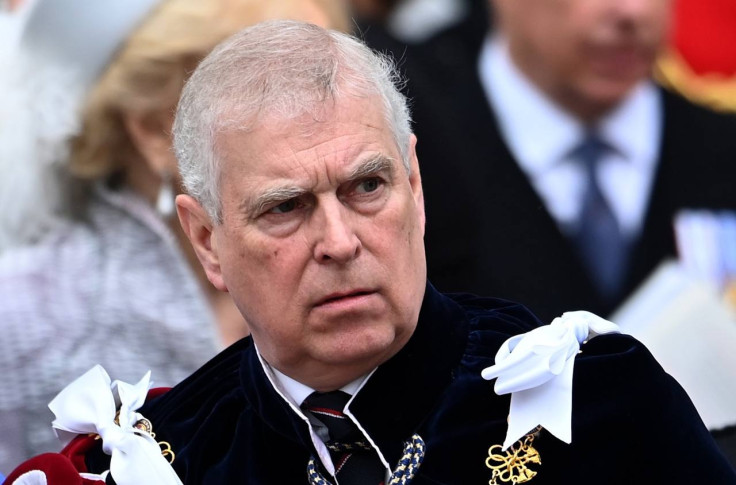
Thames Valley Police, now at the centre of this tangle of politics and palace intrigue, has tried to keep its footing on neutral ground. 'We are aware of the allegations circulating in the public domain and encourage anyone with relevant information to get in touch,' the force said.
A government spokesperson insisted Whitehall is cooperating. 'We are fully cooperating with Thames Valley Police, and last week we published documents about the creation of the role and Andrew Mountbatten-Windsor's appointment in 2001,' they said, pointing to a narrow tranche of material now online while the far larger email archive remains locked away.
At this stage, nothing in the cache has been independently verified in full and neither the palace nor investigators have detailed its contents, so any assumptions about what those 30,000 emails show should be treated with caution. Yet the longer they stay in the shadows, the harder it becomes for the monarchy to argue that there is nothing to hide.
© Copyright IBTimes 2026. All rights reserved.