

Pope Leo Condemns Iran War as 'Unjust' Amid Growing Clash With Donald Trump
The Pope urged renewed peace talks as his increasingly public disagreement with Donald Trump over the Middle East conflict continued.
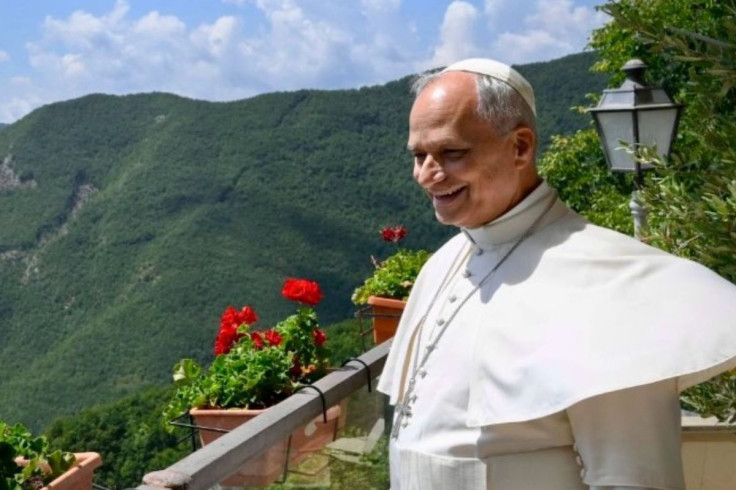
Pope Leo has renewed his call for peace in the Middle East, describing the Iran war as 'unjust' and urging world leaders to return to negotiations as fighting entered its tenth consecutive day.
His remarks further widen an increasingly public disagreement with US President Donald Trump, who has repeatedly criticised the pontiff's position on the conflict.
The Pope said continued military action was worsening humanitarian suffering while doing little to resolve the crisis.
For context, the pontiff's comments come amid a tenth straight day of attacks between the United States and Iran across the Middle East. This renewed intensity has overshadowed recent diplomatic efforts in Pakistan to salvage an interim ceasefire deal that collapsed earlier this month, as the two countries continue to battle for control of a waterway vital to world energy supplies.
The religious leader used his platform to issue a direct plea to the international community. He stated he was 'asking all people of goodwill to search always for peace and not violence, to reject war, especially a war which many people have said is an unjust war, which is continuing to escalate and which is not resolving anything.'
He further noted that the conflict is exacerbating global issues. 'In fact, we have a worldwide economic crisis, energy crisis, situation in the Middle East of great instability, which is only provoking more hatred throughout the world,' the pope said.
The Vatican has consistently called for diplomatic solutions since hostilities escalated earlier this year.
Pope Leo Calls for Peace as Iran War Escalates
The pontiff's address focused heavily on the human toll of the continued warfare. 'So come back to the table. Let's talk. Let's look for solutions in a peaceful way,' he urged. 'And let's remember, especially the innocent, children, the elderly, Sick.'
He reminded the international community that countless individuals 'have already become or will become victims of this continued warfare.' Attacks on civilian infrastructure, he noted, are 'against international law' and serve as a sign of 'the hatred, the division and the destruction that the human being is capable of.'
He concluded his remarks on the conflict with a simple assertion: 'And we all want to work for peace. People want peace.'
Pope Leo has been a vocal critic of the war since it started earlier this year. His comments have drawn reactions from President Donald Trump, who has repeatedly shot back at the religious leader, suggesting he stop opining on political issues.
Rising Tensions Between Pope Leo And President Trump
The Pope's latest comments continue an increasingly public disagreement with President Donald Trump over the conflict. Trump has previously criticised Leo's position, describing the pontiff as 'very liberal' and arguing he should avoid commenting on foreign policy.
Leo has responded that his position is rooted in Christian teaching rather than politics, saying the Church has a duty to speak against war regardless of the governments involved.
During a Palm Sunday address shortly after, the pope took a definitive theological stance. He stated that God 'rejects' the prayers of those who wage war and 'does not listen' to leaders who invoke faith to justify conflict.
President Trump Rejects Pope Leo Over Iran War
Trump launched a scathing attack on the pontiff days later. The president stated he did not think history's first American pope is 'doing a very good job', labelling him 'a very liberal person' and suggesting that the pontiff should 'stop catering to the Radical Left.'
'Pope Leo is WEAK on Crime, and terrible for Foreign Policy,' the president wrote in his post, adding, 'I don't want a Pope who thinks it's OK for Iran to have a Nuclear Weapon.'
Neither side has indicated any direct contact over the issue. Their disagreement has played out through public statements and media interviews.
Speaking to reporters aboard a flight to Algeria, Leo replied that his opposition to the war was rooted in the Gospel, not political ideology, and that he does not fear the Trump administration.
'To put my message on the same plane as what the president has attempted to do here, I think, is not understanding what the message of the Gospel is,' Leo said. 'And I'm sorry to hear that, but I will continue on what I believe is the mission of the church in the world today.'
Conflict Continues to Disrupt Energy Markets
Beyond the political disagreement, fighting continues to affect regional stability and global energy markets, particularly around the Strait of Hormuz, one of the world's busiest oil shipping routes.
Iranian Interior Minister Eskandar Momeni recently visited Pakistan, a key mediator in the conflict that is seeking to rejuvenate diplomacy, but it was unclear what new arrangement might be reached to end the war. Speaking from the Oval Office, U.S. President Donald Trump gave a dim view on possible talks, saying the U.S. had 'no interest in meeting.'
Meanwhile, the battle for control of a waterway vital to world energy supplies continues. Shipping through the Strait of Hormuz has largely stalled, and as the fight for control over the waterway intensifies, both sides have targeted civilian infrastructure in the region relied on by millions of people.
A barrage of U.S. strikes hasn't compelled Tehran to loosen its grip on the strait, through which about one-fifth of the world's crude oil and natural gas was shipped before the war. The U.S. continued its airstrikes on the Islamic Republic early Tuesday, and Iran attacked a tanker in the strait, forcing the crew to abandon the ship.
Rising Attacks Fuel Unrest Amid Ongoing Iran War
The fallout is spreading rapidly as Iran also kept up attacks against U.S. allies in the region. Sirens in Bahrain and Kuwait warned residents on Tuesday afternoon of incoming projectiles.
In the Red Sea, Iran-backed Houthi rebels have opened a new front against Saudi Arabia by declaring a naval blockade of the kingdom, threatening the flow of global oil supplies and trade. With the Strait of Hormuz blocked up, Saudi Arabia has been relying on a pipeline to the Red Sea to get millions of barrels of oil out to market.
As fighting continues and diplomatic efforts struggle to gain momentum, Pope Leo has indicated he will continue urging negotiations over military escalation. Whether his appeals influence political leaders remains uncertain, but his intervention reinforces the Vatican's longstanding opposition to prolonged armed conflict.
© Copyright IBTimes 2026. All rights reserved.