

'Anonymity Is Security': Royal Expert Slams Prince Harry's Constant UK Safety Drama
A secret flight, a closed‑door summit and a prince still at war with the country he calls home.

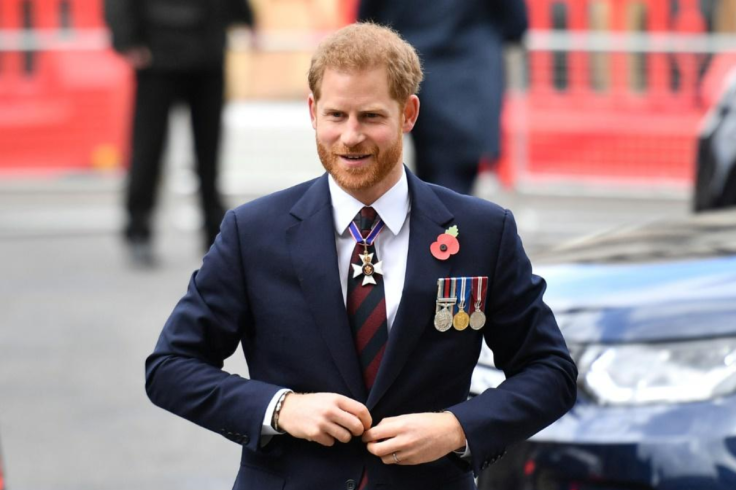
Prince Harry's latest visit to the UK has reignited the long‑running row over his security, after royal commentators argued that his quiet reunion with King Charles in Gloucestershire earlier this month proved the prince can travel safely without the full police protection he has been demanding.
Prince Harry lost his publicly funded UK security detail when he stepped back as a working royal and moved to North America with Meghan Markle in 2020. Since then, he has repeatedly said he does not feel safe bringing his wife and their children, Prince Archie and Princess Lilibet, back to Britain without specialised police protection, and has taken legal action to challenge the Home Office committee known as RAVEC, which oversees royal and VIP security arrangements.
In the run‑up to his most recent UK trip, Harry spent months warning about threats to his safety and sought 24/7 police protection at his own expense. That request was rejected by RAVEC, a decision he is reported to have found 'distraught.' Yet when he did fly in for a string of charity engagements and an event marking the one‑year countdown to the 2027 Invictus Games in Birmingham, his movements around the country passed with relatively little drama.
Meghan and the children, who had been at the centre of his security concerns, quietly joined him later and travelled to meet King Charles and Queen Camilla at Highgrove. Buckingham Palace only confirmed the reunion after it had already taken place, describing it as a private family moment. No photographs have surfaced. No airport shots, no car‑window glimpses, no long‑lens images of toddlers on the tarmac. For a couple so often painted as media catnip, the silence was almost eerie.
Royal Expert Says Prince Harry's Security 'Drama' Rings Hollow
The low‑key nature of that visit has fuelled criticism from royal commentators who argue that Prince Harry's public fight over UK security has been exaggerated, even counter‑productive.
Speaking on the programme Palace Confidential, veteran royal reporter Richard Kay said the way the Sussexes managed to enter and leave Britain largely unseen undercuts the narrative that the prince is uniquely at risk on UK soil.
'Harry and Meghan can come in and depart the United Kingdom whenever they like,' Kay said. 'We don't see photographs of them, unless they want to be photographed. They make such a drama about all of this, and yet the public don't need to know.'
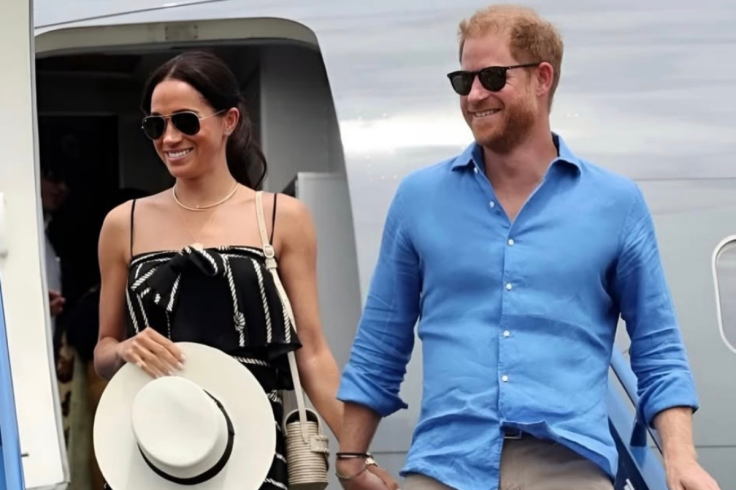
He went further, arguing that the couple's recent trip illustrates a simpler solution than court battles over so‑called 'wraparound' police protection.
'By and large, they can slip in and out,' he said. 'All this talk that Harry's in danger and he needs this wraparound security, well, anonymity is the best form of security of all. No one can cause them harm. I know that sounds slightly glib, but I think it's an important part of this whole package.'
Kay pointed to the fact that it remains unclear when Meghan and the children landed, or even where they flew in from, as 'absolutely proof positive that they are able to drop in and drop out of the UK as they please.'
In other words, the expert's charge is blunt, if inconvenient for Harry's legal argument: the less he talks about his security, the safer he appears to be.
King Charles, Queen Camilla and a Tense Family Summit
The Highgrove meeting itself was always going to be loaded. For starters, Prince Harry's relationships with several senior royals, particularly Prince William and Queen Camilla, have been deeply strained by his memoir Spare and high‑profile interviews in which he accused unnamed family members of leaking, briefing and worse.
Ahead of the visit, royal watchers widely speculated that William and Camilla would steer clear of any reunion. In the end, reports suggest the Queen was very much present and may have played a pivotal role in how the talks unfolded.
According to Richard Kay, Camilla was likely there at her husband's insistence and served as a kind of 'referee.'
'You can understand why Camilla would have wanted to support Charles,' he said. 'I don't know whether she actually wanted to meet Harry and Meghan, with all the water that's gone under the bridge.'
Kay added that she had 'a very good reason not to want to spend any time in the same room as him,' given past criticisms, but argued that her presence ensured King Charles was not pressed into any decision he did not fully support.
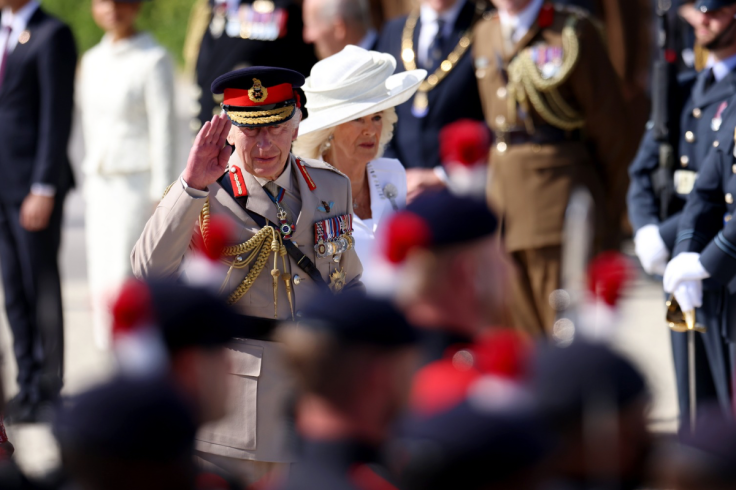
That description tallies with assessments from other royal commentators who say the meeting was far from a cosy reunion. On TalkTV, host Kevin O'Sullivan dismissed the whole thing as 'a mess,' a characterisation backed by royal biographer Angela Levin, who cited unnamed sources for her readout of the atmosphere in the room.
'It was a mess,' Levin said, claiming 'the King insisted Camilla would be with him. Camilla is very particular about how people talk to him and particularly Harry.'
Levin alleged that Harry had 'sent in a list of what he wanted' ahead of the visit and believed 'everything was going to be what they wanted.' Instead, she said, 'they didn't get a thing.'
IBTimes UK cannot independently verify these accounts, and Buckingham Palace has stressed that the encounter was a 'private family‑only meeting.'
Meghan Markle's Reluctant Return to Royal Ground
If Harry sees the UK as a security minefield, Meghan's reservations appear to run in a slightly different direction.
Royal author Christopher Andersen suggested that, from Meghan's point of view, the Highgrove reunion may have been frosty rather than healing.
'One gets the sense that, from Meghan's perspective, the reunion with Charles and Camilla wasn't entirely warm and fuzzy,' Andersen said.
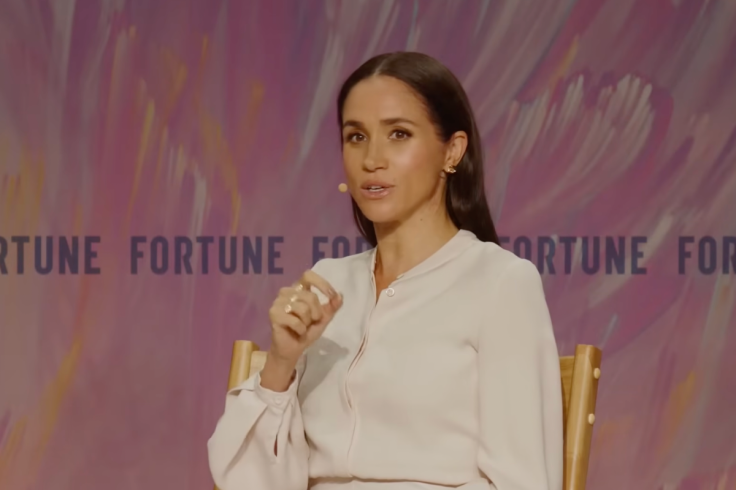
He argued that Meghan feels more at ease in their Montecito home in California and is wary that joining Harry on such trips could be read as a signal she is edging back towards royal life, something he believes she does not want.
'It's fairly clear that Markle feels more secure in [her home] in Montecito, and doesn't want to give the impression that she will be any part of a return to royal life,' he said.
Royal sources have pushed back at that kind of commentary, noting that Andersen was not present at Highgrove and could not know precisely what happened behind closed doors. Again, the only on‑the‑record line from the Palace remains that it was a family occasion, and nothing more.
Still, piecing together the strands, a picture emerges that is awkward for Harry's legal stance on security. The prince has argued, in effect, that he and his family are too exposed in the UK without police protection. Yet when they chose to arrive quietly and avoid cameras, they did exactly what security professionals often advise high‑risk individuals to do, and it appears to have worked.
The real question for the Sussexes now is whether they are willing to rely on low‑profile travel and private arrangements, or whether Harry will continue his public fight to restore the level of protection he once took for granted. On this evidence, the courts might not be his biggest problem. The optics are.
© Copyright IBTimes 2026. All rights reserved.