How Much Does It Cost to Shadow a Russian Warship? Britain's Navy Faces a Growing Bill
Routine surveillance of Russian naval activity strains Britain's defense resources, requiring ships, aircraft, and crews
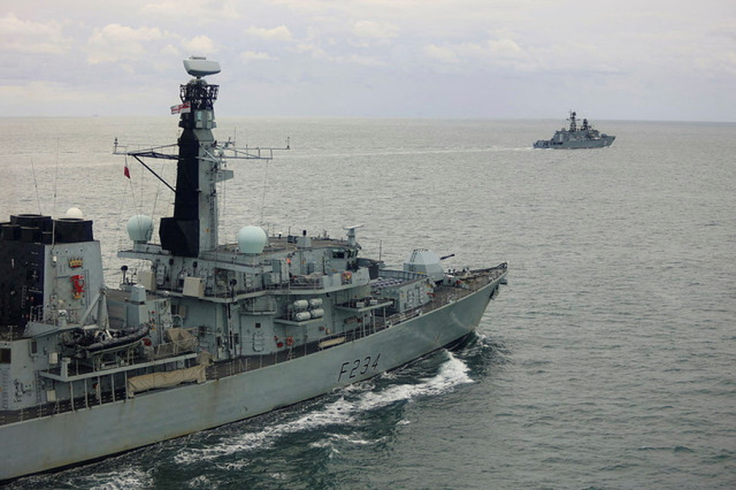
Shadowing a Russian warship can cost the Royal Navy tens of thousands of pounds a day before accounting for aircraft, helicopters, and intelligence support. While the Ministry of Defence does not publish the cost of individual operations, official figures suggest deploying a River-class Offshore Patrol Vessel such as HMS Tyne costs around £36,000 a day on average to operate and maintain.
That reality came into sharp focus on Monday after the Russian frigate Neustrashimy conducted a 30-minute live-fire artillery exercise around 46 miles south of Plymouth. The vessel informed HMS Tyne of its intention to carry out gunnery practice before opening fire in international waters, prompting continued monitoring by British forces.
Defence Secretary Wes Streeting described the exercise as 'performative and irresponsible', while the Kremlin insisted it complied fully with international maritime law and was unrelated to the appointment of Prime Minister Andy Burnham.
Why Britain Shadows Russian Warships
Russian naval vessels regularly pass through the English Channel and waters close to the UK as part of longer deployments between the Baltic Sea, the North Atlantic, and the Mediterranean.
Although these transits are legal under international law, the Royal Navy routinely shadows foreign military vessels to monitor their movements, gather intelligence, reassure commercial shipping, and ensure any unusual activity is closely observed.
The Royal Navy regularly publishes updates on its maritime operations, offering an insight into the ships, aircraft, and personnel that help monitor security around UK waters and support NATO missions.
In this latest incident, HMS Tyne tracked Neustrashimy throughout its passage, while BBC Verify analysis showed several British military aircraft operating nearby, including two RAF Typhoons, a Voyager air-to-air refuelling aircraft, and a Royal Navy helicopter. A French military aircraft also contacted the Russian warship before the exercise.
Why These Missions Come at a Cost
Monitoring foreign warships involves far more than dispatching a patrol vessel.
Although the Ministry of Defence does not publish the cost of individual shadowing missions, official parliamentary figures provide an indication of the resources involved. The Royal Navy's eight River-class Offshore Patrol Vessels, including HMS Tyne, recorded £54.1 million in operating costs and £51.3 million in maintenance costs during the 2022-23 financial year. Averaged across the fleet, that works out to roughly £13.2 million per vessel each year, or about £36,000 per day, before the cost of RAF aircraft, Royal Navy helicopters, intelligence support and other operational assets is included.
Each shadowing operation also requires trained crews, fuel, logistics, communications, intelligence analysts and maintenance support. During the Neustrashimy incident, HMS Tyne was supported by multiple military aircraft operating nearby, meaning the total resources committed extended well beyond a single patrol ship.
The Ministry of Defence has not disclosed the cost of this week's operation. However, defence analysts say the increasing frequency of Russian naval activity places additional pressure on military budgets and assets that are already supporting NATO commitments, overseas deployments, and domestic security tasks.
A Familiar Pattern Returning to UK Waters
The Plymouth exercise is the latest in a series of encounters involving Russian naval vessels near Britain.
Last month, Royal Marines boarded a suspected Russian 'shadow fleet' oil tanker in the English Channel during a six-hour operation. In June, a British sailing couple reported hearing warning shots fired by the Russian frigate Admiral Grigorovich after their yacht approached in international waters near the Isle of Wight.
Retired Royal Navy commander Tom Sharpe told BBC Radio 4 that conducting a live-fire exercise so close to the UK's south coast was 'very unusual', adding that firing a 100mm naval gun in one of the world's busiest shipping lanes carried inherent risks despite remaining lawful.
Sharpe suggested the incident reflected a return to the type of military signalling commonly seen during the Cold War, with both Britain and Russia responding to each other's actions in increasingly visible ways.
Why the Incident Matters
The exercise lasted only 30 minutes, but it serves as another reminder that Russian naval activity near Britain has become more frequent and increasingly resource-intensive for the Royal Navy to monitor.
As tensions between Russia and NATO continue, surveillance missions that once attracted little public attention are becoming a regular feature of Britain's maritime security operations, requiring ships, aircraft, and personnel to remain ready whenever foreign military vessels approach UK waters.
© Copyright IBTimes 2026. All rights reserved.
- Recommended For You