

UK Households Told to Stockpile Food, Water and Medicines as Russia Cyber Attack Threat Grows
New public information campaign encourages families to stockpile essentials as cyber threats loom.
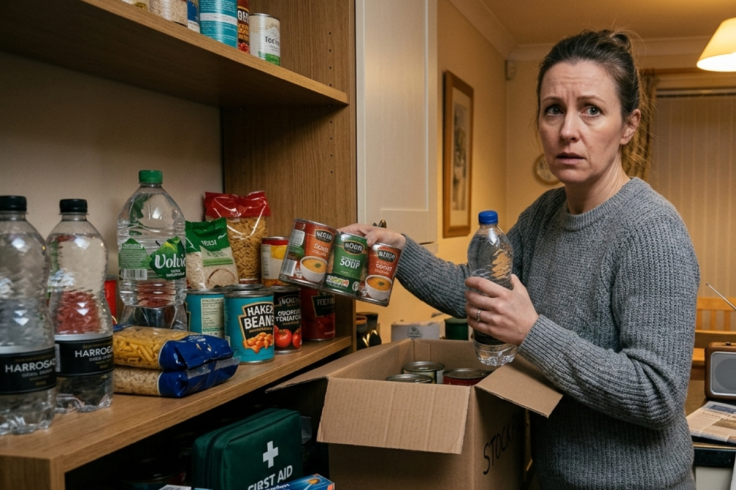
The UK Government will urge households to keep emergency supplies of food, water and medicines as part of a new public information campaign aimed at helping people prepare for potential crises, including a Russian cyber attack. Ministers are expected to launch the campaign later this year, encouraging families to take simple steps to ensure they can cope if access to essential services is disrupted.
The move comes as worries continue to grow over cyber attacks targeting the UK's critical national infrastructure and warnings that Russia could pose a military threat to a NATO country within the coming years. Alongside the public campaign, the Government will stage a large scale national defence exercise next year to test how Whitehall would respond to a hostile 'hybrid' attack.
Officials say the campaign will also include guidance for schools and colleges, while updated national risk assessments now recognise new threats facing the country, including foreign interference in British democracy and cyber attacks on key infrastructure.
National Resilience Campaign
Darren Jones, the Chief Secretary to the Prime Minister, announced that the Government will launch a 'national resilience public awareness campaign' to help people prepare for emergencies and periods of disruption.
Speaking to MPs, Mr Jones said households should be ready for situations such as 'a cyber attack which can impact access to power, water, phone signal or local shops to get food'.
The campaign will encourage people to build a stockpile of food, medicines and other basic survival equipment. Officials also confirmed that new guidance will be issued to schools and colleges to help teach children how to stay safe during emergencies.
The announcement follows warnings in last year's Strategic Defence Review, which said the UK was 'already under daily attack' from espionage, cyber threats and 'information manipulation' by hostile states, including Russia and Iran.
The review, commissioned after Labour entered office, also warned that Vladimir Putin had shown a 'willingness to use military force, inflict harm on civilians, and threaten the use of nuclear weapons'.
Alongside the awareness campaign, the Government will carry out a 'national home defence exercise' next year. Hundreds of civil servants will take part in the exercise, planning how Whitehall would respond to a crisis caused by a foreign adversary using hybrid methods.
Mr Jones said: 'Throughout our history, the UK has overcome challenges from plagues and pandemics to war and our fair share of wet weather. It is right that we consistently evaluate the risks we could face and plan for what may come.'
He added: 'The Government will do all it can, and we are well prepared, but we can all play our part to keep ourselves and our loved ones safe. This campaign will help the public to take small but important steps to be prepared in case of emergencies and disruption, be that severe weather or a cyber attack, which can impact access to power, water, or phone signal.'
Updated Risk Planning
Ministers have also updated the National Risk Register, which sets out the Government's 'reasonable worst case scenarios' across a range of threats.
For the first time, the register includes the risk of foreign interference in the UK's democracy, alongside the threat of cyber attacks targeting data infrastructure, water infrastructure and police systems.
The Government does not publish its assessment of the risk of a nuclear attack on the UK mainland because it remains highly classified.
Although ministers have yet to release the public guidance in full, it is understood the advice is likely to follow measures already adopted by several European countries.
In Sweden, households have been advised to store food and water, along with warm clothing and a battery-powered radio in case of power cuts. Norway has recommended that people keep medicines, including iodine tablets for use in the event of a nuclear incident. Germany has encouraged homeowners to adapt their cellars so they can be used as bunkers.
Last year, the European Union also advised people to prepare a 72-hour emergency supply, including identification documents stored in waterproof protection, canned food, bottled water, matches and a Swiss Army knife.
The announcement comes after Sir Keir Starmer said last month that Western intelligence agencies believed Russia could attack a Nato country within four years.
During the launch of the Government's defence investment plan, he said there 'could be an attack by Russia on Nato as soon as 2030', adding: 'You can see the urgency and the priority that we're putting behind this now.'
Mr Jones also pointed to the changing nature of modern threats, saying record temperatures and advances in artificial intelligence presented new challenges alongside new opportunities.
He said: 'This year we saw temperatures across the UK breaking records in May, only to be exceeded again in June, and AI offers new ways for criminals to carry out cyber attacks against us, as well as offering huge opportunities for our economy and security.'
He added: 'Being prepared not only helps people keep themselves and their family safe, but also means the emergency services can focus on helping the most vulnerable in communities.'
© Copyright IBTimes 2026. All rights reserved.