

Who Is Scott Wiener? The California Senator Whose Committee Blocked a Bill Barring Registered Sex Offenders From Public Office
The San Francisco Democrat is under fire after the committee he chairs blocked a bill barring every registered sex offender from running for public office.
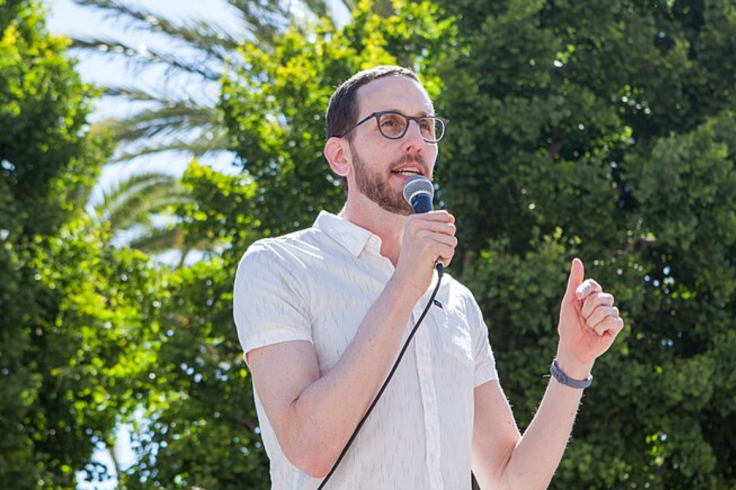
Scott Wiener, the San Francisco Democrat leading the race for Nancy Pelosi's congressional seat, has drawn national criticism after the Senate committee he chairs blocked a proposed law to bar every registered sex offender in California from running for public office.
The Senate Elections and Constitutional Amendments Committee rejected Assembly Bill 2753 on 30 Jun 2026, leaving the state with no statute that stops registrants from seeking elected office. Wiener cast the sole 'no' vote and urged colleagues to reject the measure, arguing it swept far too broadly across California's three-tier registry.
His stance handed conservative opponents fresh ammunition against a candidate already at the centre of the contest to succeed the retiring House speaker emerita.
The Fresno Candidacy That Prompted Assembly Bill 2753
Assemblywoman Esmeralda Soria, who represents California's 27th Assembly District around Fresno, introduced AB 2753 in February 2026. She acted after Rene Campos, a tier 1 registrant convicted of a misdemeanour related to possessing child sexual abuse material, announced plans to run for the Fresno City Council.
According to the official Senate committee analysis, Campos never qualified for the ballot because he failed to collect the 20 voter signatures the law requires on nomination papers.
The bill would have amended the state Elections Code to prohibit anyone 'ever required to register as a sex offender' from becoming a candidate for, or being elected to, any state or local office.
Existing law disqualifies only people convicted of certain corruption felonies, among them bribery, embezzlement of public money, extortion, and perjury. Soria's measure cleared the Assembly floor on a 60-0 vote on 7 May 2026 before it reached the Senate.
Inside the Senate Committee's 2-1-2 Rejection
The five-member committee split 2-1-2, one vote short of the majority needed to advance the bill. Democrat Sabrina Cervantes and the panel's lone Republican, Steven Choi, voted yes; Wiener voted no; and Democrats Ben Allen and Tom Umberg declined to vote, according to reporting by KCRA Capitol correspondent Ashley Zavala and the committee's official record. That tally froze AB 2753 in committee for the session.
Wiener pressed for an amendment limiting the ban to tier 3 registrants, who face lifetime registration, and told the hearing he would recommend a 'no' vote without it. He described the registry as a law-enforcement monitoring tool rather than a punishment, and he warned that the blanket language could sweep in older cases involving consensual conduct, citing the 1953 arrest of civil rights organiser Bayard Rustin, as the Los Angeles Times first reported. Soria refused to narrow the bill further.
'The bottom line is this: I was not willing to make additional amendments to this bill,' Soria said in a statement from her office. 'I made a promise to my community that I would do everything in my power to ensure they would never have to go through something like this again.' She told reporters afterwards that she was 'extremely disappointed' but intended to keep fighting.
Who Is Scott Wiener, and Why Does His Record Draw Fire
Wiener has served in the state Senate since 2016 and represents San Francisco and part of San Mateo County. Openly gay and a former co-chair of the California Legislative Jewish Caucus, he trained at Duke University and Harvard Law School and built a legislative profile around housing, transport, drug policy, and LGBTQ rights. He finished first on 2 Jun 2026, top-two primary for the 11th Congressional District with about 41%, and now faces Supervisor Connie Chan in November.
Critics repeatedly point to Senate Bill 145, which Governor Gavin Newsom signed in 2020. That law gave judges discretion over sex offender registration in cases of oral or anal sex involving a minor aged 14 to 17 and an adult within 10 years of age, matching a discretion that already applied to vaginal intercourse. Co-sponsored by the Los Angeles County District Attorney's Office and Equality California, it did not apply to children under 14, yet it became a lasting target of QAnon-driven misinformation that falsely branded it a 'paedophile' measure.
Minutes after rejecting Soria's bill, the committee advanced a competing measure, AB 2691 by Assemblywoman Dawn Addis, which Wiener supported. That bill targets people convicted of specific felony sexual assault or human trafficking offences rather than everyone on the registry. As amended before the vote, it redefined 'sexual assault' to exclude certain acts involving minors, the New York Post reported.
The California Family Council said the revised language carved out sodomy, oral copulation, and sexual penetration involving minors under certain conditions, alongside some felony charges for adults over 21 who engage in sex acts with people under 16. Greg Burt, the group's vice-president, told the hearing that his staff assumed at first they had misread the text. Supporters counter that a narrower, offence-based rule stands a better chance of surviving the constitutional scrutiny that broad candidacy bans invite.
With AB 2753 dead and AB 2691's carve-outs still advancing, California voters head towards the autumn session without a clear answer on who may lawfully appear on their ballots.
© Copyright IBTimes 2026. All rights reserved.