

Tony Blair Blindsides Keir Starmer by Warning Labour Suffers From 'Infinite Self Delusion' and Will Lose Next Election
Former PM Tony Blair criticises Labour's strategic direction, urging focus on policy over personality.
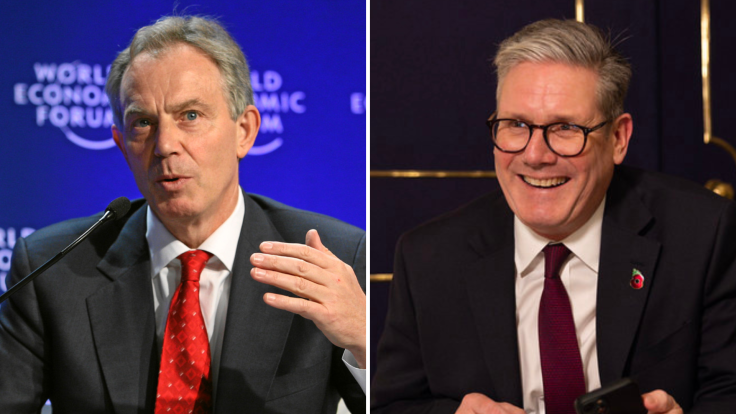
Former Prime Minister Tony Blair has delivered a sharp warning to Prime Minister Keir Starmer, arguing that the Labour Party risks losing the next general election because of what he described as its 'almost infinite capacity for self-delusion.'
The intervention has intensified tensions within Labour at a time when the party is already facing growing criticism over its political direction and recent electoral struggles.
Blair's comments appeared in a lengthy essay focused on Labour's future strategy and the challenges facing Britain. The former Labour leader argued that replacing personalities alone would not solve the party's deeper problems, insisting Labour must instead develop a career governing vision centred on economic growth, technology, and political pragmatism, per Reuters.
Blair wrote: 'The government's principal problem isn't Keir's personality. Or a failure to communicate 'our achievements'. Or a need to assert more strongly Labour's 'values.' Whether there is a leadership change or not is irrelevant if it doesn't start with a policy debate.'
Blair Says Labour Has Lost Strategic Direction
In his critique, Blair claimed Labour currently lacks a 'coherent plan' for the country and warned the party was operating from the wrong political position to secure another term in government.
He argued the party had drifted into what he characterised as a 'soft-left comfort zone,' which he believes could alienate voters and damage business confidence.
'The Government is governing from an essentially traditional Labour 'soft left' position, parked firmly in the Party's comfort zone. The Labour Party is playing with fire; or, more accurately, with its future, and that of the country,' Blair wrote. 'I am afraid, like many progressive parties, it has an almost infinite capacity for self-delusion,' he added.
Blair specifically criticised policies linked to higher taxation, welfare spending, and tighter business regulations. He also raised concerns about Labour's approach to net zero policies, workers' rights reforms, and restrictions on oil and gas production, arguing such measures could weaken economic competitiveness if not carefully balanced with growth objectives, per The Sun.
Warning Over Future Election Prospects
The former prime minister warned that Labour could repeat past mistakes if it misreads public opinion. According to Blair, some figures within the party wrongly assume that setbacks against right-wing opponents automatically mean voters want Labour to move further left. He described that thinking as politically dangerous, according to a Financial Times report.
Per The Guardian, Blair stressed that Labour should focus less on internal ideological debates and more on practical policies that improve economic stability and public services. He urged party figures to prioritise 'policy first, politics second' while embracing technological innovation, particularly artificial intelligence, which he described as transformative for Britain's future economy.
Starmer Under Pressure After Election Struggles
The intervention comes as Starmer faces mounting pressure following disappointing local election performances and growing unrest inside Labour ranks. Reports suggest some MPs have become increasingly anxious about the party's electoral position after heavy losses in local contests earlier this month.
Despite his criticism, Blair stopped short of directly calling for Starmer's removal. Instead, he argued that forcing out the current leader without a serious debate about policy alternatives would only deepen Labour's problems, per IVTX.
Blair also warned against attempts to reverse Brexit or move sharply leftward economically, arguing those positions would fail to reconnect Labour with swing voters. Instead, he advocated for what he called a 'radical centre' approach that combines economic reform with pro-business policies and stronger technological investment.
© Copyright IBTimes 2026. All rights reserved.