'Diaper Nurse' Aide Allegedly Sent Trump 'Strange' Notes About 'Punishing' Her, Reports Suggest
President Trump's early departure from Camp David revives claims about his travel habits and highlights executive assistant Natalie Harp's growing role.
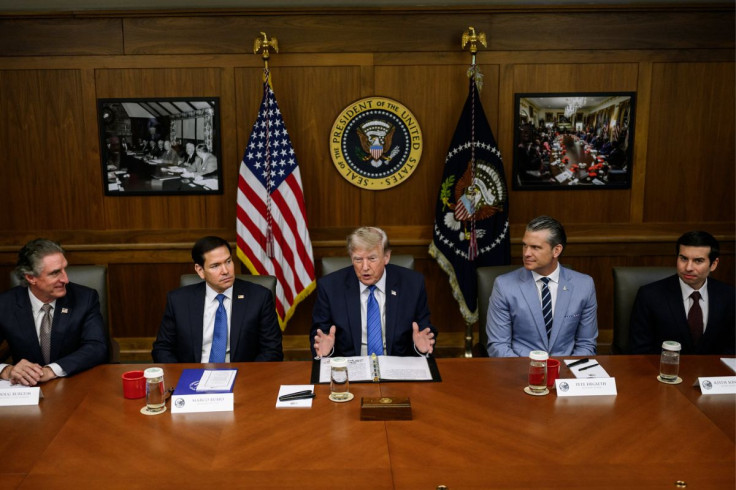
Donald Trump reportedly cut short his stay at Camp David after convening his Cabinet on Friday, reviving long-running claims that the president dislikes spending nights anywhere other than his own properties. The visit also renewed attention on executive assistant Natalie Harp, who has become one of Trump's closest aides following reports that she allegedly sent him unusual messages referring to him 'punishing' her.
President Trump hailed Camp David as a "very special" place as he held a televised Cabinet meeting at the presidential retreat in rural Maryland to discuss policy and tout his performance before the midterm elections. https://t.co/IRM6jczuNj
— The Washington Times (@WashTimes) July 31, 2026
The Cabinet gathering at the presidential retreat in Maryland's Catoctin Mountains was billed as the first live televised Cabinet meeting in US history. Vice President JD Vance, Secretary of State Marco Rubio and Defence Secretary Pete Hegseth attended, but Trump reportedly departed for his Bedminster golf club later that day instead of remaining overnight.
Camp David Departure Revives Old Claims
According to author Michael Wolff, Trump's early departure reflected a long-standing dislike of Camp David rather than any scheduling necessity.
Speaking on The Daily Beast podcast Inside Trump's Head, Wolff claimed the president has never been comfortable staying at the secluded retreat, despite generations of presidents using it for diplomacy, crisis meetings and private discussions.
Co-host Joanna Coles noted that Trump travelled to Camp David for the Cabinet meeting before returning to Bedminster later the same day. She speculated that the president simply preferred not to spend the night there.
Wolff argued the issue goes beyond the location itself.
'A Big Issue' For Trump
According to Wolff, where Trump sleeps has long been an unexpectedly important consideration for aides responsible for arranging his travel.
'It's always top of mind with him — where he spends the night,' Wolff said. 'In whose sheets is he touching? I swear, this is a thing that aides have to talk about.'
He added that conversations about bedding routinely become part of travel planning.
'What kind of sheets do they have? This is a big issue for Donald Trump. Bedding.'
Wolff contrasted that attention to personal comfort with what he described as Trump's limited interest in many policy details.
'He's a hotel guy,' he said. 'These are the details that actually he'll spend time on. He won't spend time on the details of going to war, but on bedding at a hotel, he comes alive.'
The White House has not publicly responded to Wolff's characterisation.
Spotlight Falls On Harp
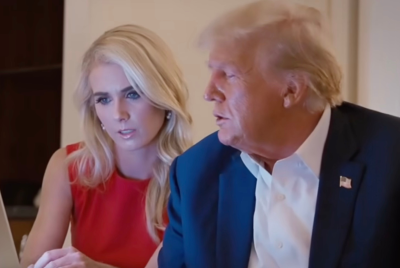
Travelling alongside Trump at Camp David was Natalie Harp, the president's executive assistant, whose increasingly prominent role has attracted growing public attention.
Harp has frequently been seen accompanying Trump during public appearances and campaign events, often carrying printed news articles, social media posts and other supportive material prepared for the president.
Donald Trump's Aide Natalie Harp Sparks Backlash From Critics Over Constant Presence at High-Level Meetings: 'Doubt She Even Has Clearance' https://t.co/JN4SOytwvV pic.twitter.com/MRh8Q96L6I
— OK! Magazine USA (@OKMagazine) August 5, 2026
Her visibility has increased following reports that she allegedly sent Trump a series of unusual personal notes containing references to him 'punishing' her. Those reports have circulated widely but have not been independently confirmed by the White House.
The speculation has also fuelled online rumours about Harp's relationship with the president, including the circulation of the baseless nickname 'diaper nurse'. There is no evidence supporting that characterisation, which appears to have originated solely through social media commentary.
A Familiar Portrait
Wolff's observations echo previous reporting suggesting Trump pays close attention to the comforts of his surroundings while travelling.
In Regime Change: Inside the Imperial Presidency of Donald Trump, published in 2026, New York Times reporters Maggie Haberman and Jonathan Swan described the president's personal habits while staying away from home, including claims that he frequently left takeaway containers, drink cartons and food wrappers around his bedroom.
Those accounts have contributed to a broader portrait of a president who prefers familiar surroundings and carefully managed routines whenever he travels overnight.
Camp David, however, has traditionally served a very different purpose. Built as a secure government retreat rather than a luxury resort, it has long been valued by presidents as a place for private diplomacy and strategic discussions away from Washington.
Comfort Before Convention?
Trump's reported reluctance to stay overnight at Camp David has become another small but revealing detail highlighted by former aides, journalists and long-time observers of his presidency.
Whether discussing hotel bedding, room arrangements or preferred surroundings, Wolff argues that questions of personal comfort often receive far more attention than outsiders might expect.
Friday's Cabinet meeting therefore ended up highlighting more than the administration's agenda. Trump's decision to leave Camp David after the meeting revived familiar claims about his travel preferences while once again placing Harp — whose increasingly visible role continues to generate headlines of its own — firmly at the centre of public attention.
© Copyright IBTimes 2026. All rights reserved.
- Recommended For You