

Trump Biographer Exposes the 'Dangerous Addiction' That Could Sink His Presidency
A presidency built on the need to be seen may struggle most when the cameras finally turn away.

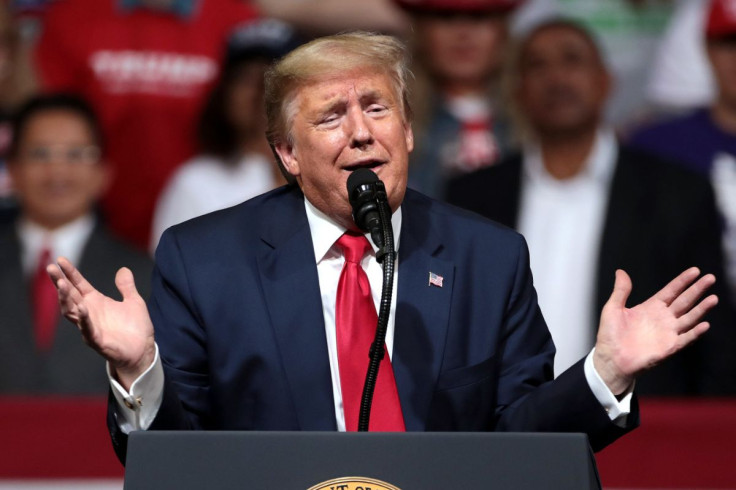
Donald Trump's longtime biographer Michael Wolff has warned that the US president's 'dangerous addiction' to attention, laid bare during a recent NATO summit in Ankara, could ultimately sink a second Trump presidency if he returns to the White House in Washington in January.
Wolff is not a casual observer lobbing opinions from the sidelines. He has spent years chronicling Trump's rise and reign, publishing a string of insider books on his first administration and now hosting a podcast, 'Inside Trump's Head,' for the Daily Beast. In the latest episode, he seized on Trump's performance at the NATO gathering in Turkey as a sort of case study in what he sees as the core driver of Trump's politics, and perhaps his undoing, if voters send him back to power.
Trump Biographer Says NATO Summit Showed His 'Dangerous Addiction'
The news came after Wolff watched Trump's trip to Ankara descend into yet another travelling row with some of America's closest allies. On the podcast, Wolff said the meeting revealed that Trump, in his view, is controlled less by ideology or strategy than by an overriding need to dominate the spotlight.
'He's not about policy. He's not about accomplishments. He's not about 'America first.' he's certainly not about cooperation, which is the nature of NATO,' Wolff said on 'Inside Trump's Head.' 'It's just about attention.'
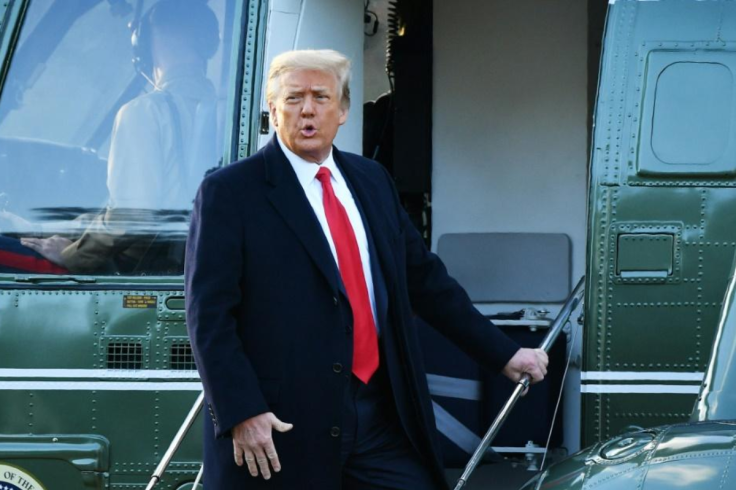
According to Wolff, Trump arrived in Ankara asking himself one question: how to make himself the story. He argued that the president's subsequent barrage of complaints about supposed NATO freeloaders, his renewed shots at European leaders, and even his rhetoric over Greenland all fit that pattern.
'He arrives there, and it's, 'What do I do to claim all of the attention?' Then coming back to Greenland, then coming back to dismissing everyone, dissing Europe. So essentially, how could he not but become the centre of attention here?' Wolff said.
Trump's appearance in Turkey was marked by repeated attacks on long‑standing US partners, including Spain, France, Germany, Italy and the UK. He castigated them for refusing to join his war, accused them of failing to spend enough on NATO, and revived his provocative calls to annex Greenland. The specifics matter less than the performance, Wolff suggested, because provocation is the point.
Attention as Foreign Policy, Says Trump Biographer
In case you missed it, Wolff went further than diagnosing a personality quirk. He argued that Trump's need for attention is now baked into US foreign policy when he is in charge, warping Washington's alliances and strategic priorities.
Wolff even floated the possibility that Trump allowed a recent ceasefire deal with Iran to collapse in order to command the stage at the Ankara summit, though he offered no documentary evidence for that claim beyond his reading of Trump's motives.
Wolff's broader contention is that the hunt for attention has defined what he calls '10 years of the Trump era.' Looking back to Trump's original insurgent campaign and through the turmoil of his first term, he framed the pattern starkly.
'You have to understand that there is no meaning beyond that. It's not about anything else,' Wolff told listeners. 'What has this 10 years of the Trump era been about? It has just been about what gets him attention.'

That diagnosis drew a sceptical, slightly exasperated response from Wolff's co‑host, Joanna Coles. She said she still hears 'earnest and utterly sincere journalists trying to make sense' of Trump's actions as if they fit into a normal policy framework. For Coles, the obvious question is more psychological, almost textbook: does such an obsession with attention come from not getting enough of it early on?
Wolff pushed back on that pop‑psych reading. 'He has always gotten too much of it, and that has created an addiction which obviously has to be, you know, satisfied with ever more attention,' he said. In other words, this is not a hunger born of scarcity. It is a dependency that grows with every rally, every camera scrum, every diplomatic dust‑up.
From there, Wolff drew a line from Trump's personal craving to America's posture on the world stage when he is in office. 'Our foreign policy is not to cooperate with our allies because our allies are irrelevant, we are the focus, we must be the focus, and by we Trump means 'I' must be the focus,' he argued. 'That then becomes the profile of America's place in the world. No other interests matter, no other nations matter, no other leaders matter.'
It is pretty wild, when you think about it, to frame an entire superpower's role in the world around one man's need to be watched.
Could Trump's 'Dangerous Addiction' Derail a Second Term?
For starters, Wolff's warning lands at a moment when Trump is campaigning on a promise to restore what he calls American strength abroad, while many European leaders still vividly remember the chaos of his first term. If Wolff is right, the same impulse that makes Trump a magnetic, if divisive, political figure could also make steady diplomacy almost impossible.
Although Wolff did not spell out specific scenarios in this podcast episode, the logic of his argument is not hard to follow. An attention‑driven president is more likely to trash agreements than to quietly maintain them, more likely to start public fights with allies than to negotiate in private, more likely to chase headlines than to slog through the boring stuff of policy.
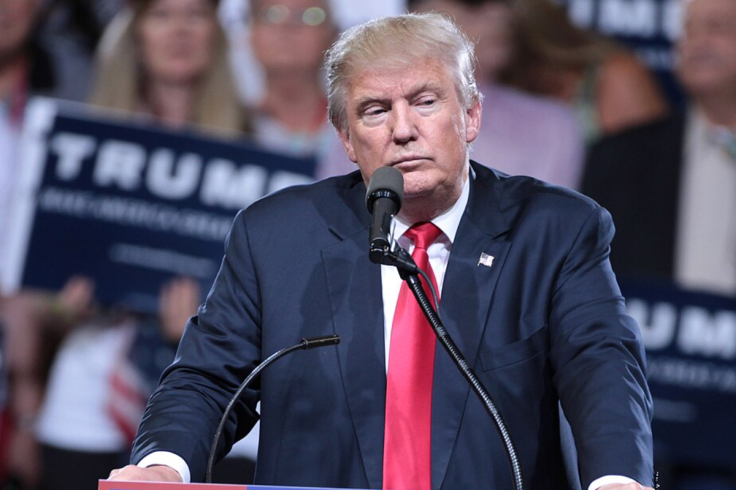
Coles, speaking as the foil in the conversation, suggested that many in the media still underestimate how central this is. They look for coherent doctrine where there may simply be performance. 'It is strange when you hear earnest and utterly sincere journalists trying to make sense out of what he does,' she said, noting that attempts to rationalise Trump's decisions as part of a conventional strategy often run aground.
The Trump campaign did not immediately respond to Wolff's latest remarks on the podcast. In public, Trump has long rejected portrayals of him as erratic or self‑centred in foreign affairs, insisting that his confrontational stance on NATO spending and trade simply reflects a tougher, more transactional form of leadership.
Supporters argue that his readiness to insult or pressure allies delivered concrete results, including higher defence spending by some NATO states. Critics counter that whatever short‑term gains he claims are outweighed by the erosion of trust in Washington's word and the sense that alliances can be overturned on a whim.
Wolff, for his part, seems less interested in scoring that debate than in pointing to the underlying engine that, he says, keeps whirring regardless of the policy label slapped on top. Attention is the throughline. Whether that makes Trump uniquely dangerous or simply uniquely predictable may be a debate that drags on well into any second term.
The bigger question, which neither Wolff nor Coles fully answered, is what happens when a politician's addiction to attention finally collides with the demands of governing a country that sometimes needs its leaders to be boring.
© Copyright IBTimes 2026. All rights reserved.