Trump Slams Canada With 50% Tariffs, Then Flies to Michigan To Claim He's Saving Auto Jobs
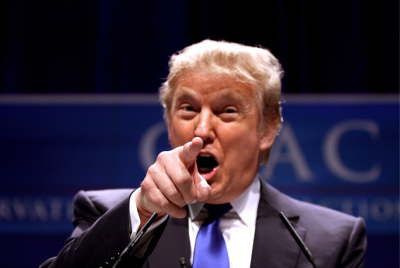
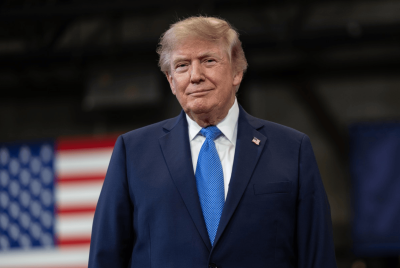
Trump is proving point in Michigan to defend his 50% tariffs on Canadian goods, claiming they will save American auto jobs.

President Donald Trump is using Monday visit to suburban Detroit to defend his sweeping 50% tariffs on Canada Section 338, igniting an intense economic battle right in the heart of the American automotive sector.
As corporate leaders and working families navigate mounting supply chain disruptions, digital search interest for the Section 338 Tariff Act of 1930 and the Michigan General Motors Milford proving ground has surged across online platforms.
The visit to General Motors will see Trump argue that his Canada tariffs are saving American auto jobs. It comes in the middle of early voting for the state's 4 August primary, when both Republicans and Democrats face heated contests.
For Trump, the Canada tariffs and his record on the economy have become the main talking points in a state that depends heavily on cross‑border trade. For millions staring down rising grocery bills and persistent inflationary pressures, this high-stakes political rally feels like a precarious high-wire act balancing national manufacturing protectionism against everyday financial survival.
Trump Tariffs and Michigan Politics Collide
Trump confirmed he would use the Milford stop to tout his handling of the economy and the auto industry. The General Motors facility, home to testing tracks and proving grounds, is a convenient backdrop for an argument that tariffs are protecting American manufacturers rather than punishing them.
Republican Mike Rogers is cruising unopposed through the Senate primary, but the party's governor race is a live fight between Trump‑backed Representative John James and businessman Perry Johnson.
Johnson, who has already mounted failed campaigns, including a 2024 run for the presidency, is leaning hard into Trump's brand despite not securing his endorsement. He is even staging a 'Trump Tailgate' outside the GM event, a sideshow that underlines how much state Republicans still orbit the president.
On the Democratic side, Representative Haley Stevens and progressive Abdul El‑Sayed are locked in a high‑profile Senate primary for the right to face Rogers in November, after he was narrowly beaten by Democrat Elissa Slotkin in 2024.
The White House insists voters will reward him. 'The President pledged to put Michigan workers back to work, and he's doing it,' spokesperson Liz Huston said in a statement, claiming his policies have boosted manufacturing jobs and attracted foreign investment.
How Canada Tariffs Clash With Michigan's Reality
Pertinently, Michigan's economy leans heavily on Canada, more than most parts of the United States. The state's auto industry is tightly woven with plants and suppliers across the border, and tariffs on imported cars and auto parts flow straight into higher costs for companies based around Detroit.
A new package of import levies has been rolled out against dozens of trading partners, but Trump has singled out Canada with tariffs as high as 50% on cars and a long list of other products, from hockey sticks and beer to cement, dairy and honey. Those measures land at a rough time. Inflation is still running high, petrol prices are climbing again, and the war in Iran has deepened unease over the wider economy.
Voters were already increasingly dissatisfied with Trump's economic record before he reopened the tariff battle, and there is no mystery about who ultimately pays most of these taxes. Tariffs are charged on importers in the United States, who routinely pass them along in the form of higher prices for consumers.
Jason Roe, a former executive director of the Michigan Republican Party who tried to distance it from Trump's 'Make America Great Again' movement in 2021, is blunt about the political risk.
He told reporters he believes the timing of the visit is mainly about Michigan's late primary and securing James's nomination. Yet he warned that Trump linking himself so closely to top Republicans before the general election could backfire, calling the president 'kryptonite to November voters.'
Democrats, perhaps unsurprisingly, sound almost delighted. Curtis Hertel, chair of the Michigan Democratic Party, said, 'We're happy to have the president here, campaigning with Republicans. We think it highlights the fact that the only thing they care about is Donald Trump and refuse to stand up to him.'
He added, 'It's good for us every time the president is here because he's incredibly unpopular.'
A Great Depression Law, a Modern Trade War
There is the oddity of the legal tool Trump is using. Section 338 of the Tariff Act of 1930 allows a US president to impose tariffs of up to 50% on imports from countries judged to discriminate against American businesses. It requires no formal investigation and sets no time limit on how long the tariffs can last.
Trade lawyer Ryan Majerus has described Section 338 as 'completely untested' and admitted it is 'hard to believe it's been on the books for 100 years.'
For decades, US negotiators have instead relied on modern instruments such as Section 301 of the 1974 Trade Act. Section 338, while occasionally waved around as a threat in the 1930s, has never been used to actually slap tariffs on a partner country until now.
Trump's decision to dig it out is partly forced by legal setbacks. Last year he imposed double‑digit tariffs on imports from almost every country by invoking the 1977 International Emergency Economic Powers Act, claiming the trade deficit was a national emergency.
In February, the Supreme Court struck that move down, saying he had exceeded his authority. As a result, his administration is refunding those IEEPA‑based tariffs.
In the meantime, Trump turned to Section 122 of the 1974 Trade Act, which allows global tariffs of up to 15% for 150 days, and used it to impose 10% duties worldwide. Those expire on Friday, and he has yet to roll out the Section 301 tariffs many expected as a replacement.
Legal doubts remain. Majerus has argued that 'the legal case for 338 is weaker than IEEPA' and that 'there's at least a fair probability it will get overturned.'
Other specialists, including Georgetown University scholar Peter Harrell, have questioned whether the US International Trade Commission must investigate before such tariffs can be applied, or whether newer laws have effectively sidelined Section 338 altogether.
Who Really Pays for Trump's Canada Tariffs
Canada is America's second‑largest trading partner. The United States imported $389 billion of Canadian goods last year, behind only the $541 billion in imports from Mexico, according to Canadian government data.
Nearly 72% of Canadian goods exports went to the US, down from almost 76% in 2024, which means any broad tariff hit will sting north of the border.
Stephen Brown, chief North America economist at Capital Economics, has estimated that the Section 338 tariffs will touch about $20 billion worth of Canadian imports. By his calculation, that would raise the average US tariff rate on Canadian goods from 3.1% to 5.6%.
He argues this will not have major implications for overall US economic growth or inflation, but says 'the consequences for Canada will be greater, but manageable.'
At street level, though, the picture looks less abstract. In 2025, Trump's earlier tariffs cost US households an average of $1,000, according to the non‑profit Tax Foundation. Many of the products now targeted, including building materials and food, are exactly the kind of everyday items that quietly eat into a family budget.
Barry Appleton, a law professor and co‑director of New York Law School's Centre for International Law, said that in the past US consumers had been shielded from some of these costs by exemptions for USMCA‑compliant goods.
'Anything that got exempted before is basically going to be covered now,' he warned. 'So where American consumers were shielded from the costs earlier because of the USMCA exemption, this tariff is going to remove it.'
Greg Husisian, a partner and international trade specialist at law firm Foley & Lardner, put it even more simply. 'Even with the significant carve‑outs, you're still going to be hitting a fair amount of goods, and those costs are going to be passed onto US consumers at a time when the US consumer is telling people pretty consistently that they feel tapped out by inflation,' he said.
Trump, for his part, has leaned into the confrontation with Canada, even claiming in the Oval Office that 'they need us to survive. Without us, there's no way they can survive.'
He has joked that Canada should be the 51st US state and raged online about wildfire smoke drifting south, saying the 'incalculable' cost of that pollution should be 'added to the TARIFFS Canada is currently paying.'
President Donald Trump has just reached back nearly a century to invoke Section 338 of the 1930 Tariff Act, a rarely mentioned provision from the Great Depression, to hit Canada with 50% tariffs on a wide range of products.
The White House says Canada is discriminating against American exports of cars, alcohol and cheese, and argues the new duties are needed as leverage while the United States renegotiates the US‑Mexico‑Canada Agreement.
The tariffs, announced in Washington, are due to take effect on 19 August and cover goods that in the past had been shielded by USMCA exemptions. Canadian officials have retaliated to earlier US measures with their own levies, and relations have soured sharply. Now, Trump is trying to sell the same policy to voters whose livelihoods are tied to that relationship.
© Copyright IBTimes 2026. All rights reserved.
- Recommended For You