Donald Trump Accused of Hating the United States After Oval Office Rant on 'Filthy' Blue Cities
The Oval Office transforms into a stage for urban condemnation as federal funding becomes a weapon.

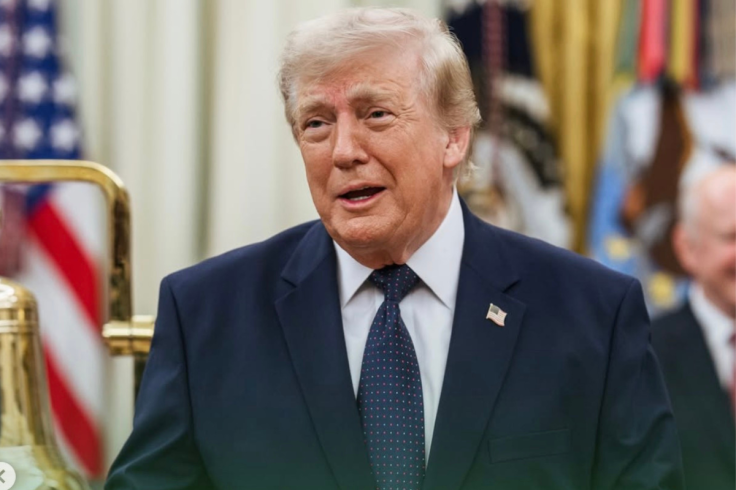
President Donald Trump drew sharp criticism on Monday after describing several Democrat-led cities as 'filthy' during remarks from the Oval Office, prompting opponents to accuse him of disparaging the very country he leads.
The comments came during a televised appearance in which Trump veered from his prepared remarks to criticise large metropolitan areas, many of which are governed by Democratic officials. The president argued that many American cities suffer from deteriorating conditions, portraying them as dirty, neglected and poorly managed.
'What else do they have in common'" Trump asked before answering his own question. 'They're filthy dirty.'
He continued by claiming that many urban centres have streets that smell, storefronts that are broken and public spaces that have fallen into disrepair. 'Everything about the place is dirty,' Trump said, later adding that his criticism applied to 'really all of them.'
The remarks echoed themes that have frequently appeared in Trump's speeches and campaign rallies, where he has portrayed major Democratic-run cities as symbols of failed governance, crime and urban decline.
Critics Say Trump's Comments Were Unpresidential
Trump's latest remarks quickly spread across social media, where critics questioned whether a sitting president should speak so negatively about American communities. Many users pointed to the irony that Trump himself was born and built much of his business career in New York City, one of the country's largest Democratic strongholds.
One X user wrote that Trump's business empire had long depended on major metropolitan areas, arguing that his hotels, golf properties and real estate investments benefited from the economic activity generated by the very cities he was criticising.
Another commenter said no American president should characterise parts of the country in such sweeping terms, while others accused Trump of undermining national unity by repeatedly attacking cities based on their political leadership.
Several critics also argued that Trump's rhetoric contrasted with repeated calls from many of his supporters for Americans to avoid speaking negatively about the country. One widely shared post claimed there was a contradiction between demanding patriotism while frequently portraying American cities in overwhelmingly negative terms.
The criticism continued throughout Monday, with many users debating whether Trump's comments reflected legitimate concerns about crime and infrastructure or amounted to political messaging aimed at Democratic voters and elected officials.
Part of a Broader Political Strategy
Trump's comments also fit into a broader pattern that has characterised much of his second administration's relationship with Democratic-led cities and states. Since returning to office, the administration has repeatedly clashed with local officials over immigration enforcement, crime policy, public safety and federal funding.
The White House has argued that many major cities have experienced rising disorder because of progressive policies implemented by Democratic leaders. Trump has frequently cited public safety concerns when discussing cities including Los Angeles, Chicago and Washington, D.C., arguing that stronger federal intervention is needed to restore order.
Some local officials have strongly rejected those characterisations, pointing to crime statistics showing declines in certain categories of violent crime and arguing that the administration selectively highlights negative data while ignoring broader trends.
Earlier this year, Trump authorised the deployment of National Guard personnel to several urban areas, citing public safety concerns. The move drew criticism from governors and mayors in affected jurisdictions, some of whom argued that the deployments occurred without adequate consultation and risked escalating tensions rather than easing them.
This gives administration officials defended the decision, saying the federal government had a responsibility to protect public safety when local authorities failed to do so.
Federal Funding Disputes Continue
The president's criticism of Democratic-led states has also extended beyond rhetoric. In May, Health and Human Services Secretary Robert F. Kennedy Jr. announced approximately $1 billion in Medicaid funding reductions affecting California and Minnesota.
Kennedy accused the states of engaging in fraudulent practices related to Medicaid administration. State officials rejected those allegations, disputing both the accusations and the administration's justification for the funding cuts.
Kennedy said the department had relied in part on artificial intelligence-assisted analysis in reviewing the programmes, although the administration has released limited details about the methodology used.

The funding dispute became another flashpoint in the broader conflict between the White House and Democratic governors, with critics arguing the cuts were politically motivated while administration officials maintained they were based on financial oversight and programme integrity.
Political Divide Remains Deep
Trump has long argued that Democratic leadership has contributed to declining quality of life in many major American cities. Supporters say his blunt language reflects genuine concerns about homelessness, public safety, infrastructure and urban management that many politicians avoid discussing.
Critics, however, contend that his characterisations paint an overly broad picture of cities that remain major centres of business, culture and innovation while deepening political divisions. The latest Oval Office remarks have once again placed that divide in the spotlight.
As debate over crime, public spending and urban governance continues ahead of the next election cycle, Trump's comments are likely to remain part of a broader political argument over the condition of America's largest cities—and who bears responsibility for addressing their challenges.
© Copyright IBTimes 2026. All rights reserved.
- Recommended For You