

Trump Uses Emergency Powers to Waive Congress Approval and Fast-Track £525M Bomb Sale to Israel
Trump accelerates £525M ($650M) bomb sale to Israel without congressional approval during Iran conflict.
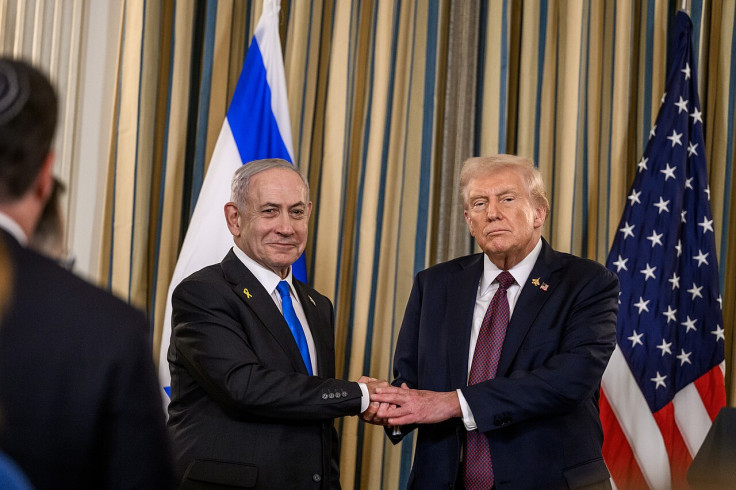
President Donald Trump has invoked emergency powers to bypass Congress and expedite the sale of over £525 million ($650 million) worth of bombs to Israel, according to officials familiar with the deal.
The package includes thousands of BLU‑110A/B and BLU‑111 bombs for Israel during rising tensions in the Middle East. So far, US and Israeli strikes on Iran have killed over 1,300 civilians and six American soldiers.
Secretary of State Marco Rubio said the sale was necessary to protect US security and help the ongoing air campaign against Iran.
What the Bombs Will Be Used For
According to Reuters, the sale includes 12,000 1,000-pound BLU‑110A/B bombs and 500-pound BLU‑111 munitions. This fulfills an Israeli request made after the joint US–Israeli air campaign began.
The bombs are intended primarily for military strikes against Iranian facilities and missile infrastructure. These include long-range targets such as nuclear sites, missile production factories, and naval assets that Israel and the United States consider threats to regional security.
The bombs are designed to destroy hardened targets and disable offensive capabilities.
Israel has also purchased an additional £240 million ($298 million) in munitions through direct commercial sales.
Officials say their use is meant to pre-emptively reduce the risk of attacks on Israel and US allies, though critics warn that such strikes also risk civilian casualties and could escalate the conflict further.
Since the attacks began, civilians have borne the brunt of the escalation.
Thousands of Iranian civilians have been killed or injured, while tens of thousands have been displaced. Israeli airstrikes have also killed civilians, compounding concerns over humanitarian consequences in the densely populated areas affected by military operations.
US Justifies Emergency Action
Rubio said the sale was necessary to maintain operational momentum and reduce potential US casualties. By invoking emergency authority, the administration avoided the usual 30-day congressional review period for foreign military sales, which critics argue undermines democratic oversight.
Democratic Representative Gregory Meeks called the move 'an emergency of the Trump administration's own creation,' suggesting the decision reflects a lack of pre-planning rather than urgent necessity.
Trump, for his part, has defended the operation as essential to destroying Iran's missile and nuclear capabilities, asserting that the campaign may last far longer than the initial four-to-five-week estimate.
No long-term US ground presence has been confirmed.
The Standard Way of Selling Military Arms to Foreign Countries
Normally, the sale of military equipment from the US to other countries follows a structured, multi-step process called the Foreign Military Sales (FMS) programme. First, a foreign government formally requests weapons or equipment through the US State Department.
The request is then reviewed to ensure it aligns with US foreign policy, national security, and international law.
Once approved, the Department of Defense and State Department prepare a detailed proposal, including the type of equipment, cost, delivery schedule, and training requirements. Crucially, Congress is given a chance to review and potentially block the sale.
This usually includes a 30-day period during which lawmakers can examine the deal, ask questions, or raise objections, ensuring democratic oversight.
After Congress completes its review, the sale can proceed.
The equipment is then manufactured or allocated from US stockpiles, shipped to the buyer, and often accompanied by training and support for proper use. This standard procedure is designed to maintain transparency, prevent rushed decisions, and balance US security interests with international responsibilities.
Will Congress Have the Chance to Question the Sale?
Because the Trump administration invoked emergency authority, Congress does not have the standard 30-day review period for this foreign military sale.
This means legislators were bypassed in approving or questioning the £525 million ($650M) bomb transfer. While Congress can still hold hearings, demand explanations, or attempt to restrict future sales through funding measures, the immediate deployment of these munitions cannot be legally blocked.
Lawmakers may push for post-sale scrutiny, but any direct intervention comes after the bombs are already shipped or potentially in use.
© Copyright IBTimes 2026. All rights reserved.
- MOST POPULAR IN World


