Trump's Great American State Fair Is Finally Open. Why Is It Being Compared to the 'Willy Wonka Experience'?
A modern-day World's Fair marks America's 250th birthday celebrations

Donald Trump's long-awaited Great American State Fair has finally opened on Washington's National Mall, launching what the White House and organisers describe as the centrepiece of America's 250th birthday celebrations. Designed as a 16-day showcase of every US state, the event was promoted as a modern-day World's Fair featuring exhibits, live entertainment, rides and patriotic displays. Instead, its opening quickly became overshadowed by a wave of viral criticism over sparse crowds, technical problems and images that many online claimed fell well short of the grand promises.
Within hours of the gates opening, social media users began comparing the event to Glasgow's infamous 'Willy Wonka Experience' – the poorly executed attraction that became an internet sensation in 2024 after visitors discovered a venue that looked nothing like its glossy promotional images. Photos from the National Mall showing largely empty walkways, unfinished areas and limited activity spread rapidly online, fuelling claims that Trump's flagship celebration had suffered a similarly underwhelming debut.
The comparison matters because the Great American State Fair is intended to be one of the defining public events leading up to the United States' 250th anniversary of independence in 2026. While supporters argue the fair remains an ambitious patriotic celebration with weeks still to run, critics say its troubled opening has distracted from the wider America250 programme and raised fresh questions about planning, participation and political divisions surrounding the event.
Line for State Fair admission looking... not long. pic.twitter.com/4FgMiULnQ9
— Michael Schaffer (@michaelschaffer) June 25, 2026
Why the Fair Is Being Likened to the 'Willy Wonka Experience'
The comparison stems less from the fair's official programme than from the contrast between expectations and reality.
willy wonka ass 250 https://t.co/ZdSKV7pUMt pic.twitter.com/T2RZrCBeas
— Daniel 🧮 (@dunisayno) June 25, 2026
Promotional material had promised an expansive celebration featuring exhibits from all 50 states, concerts, family attractions, food vendors and a festival atmosphere stretching across the National Mall. However, visitors arriving on opening day encountered delayed entry, reports of power outages affecting parts of the site and technical issues that temporarily halted attractions, including the fair's giant Ferris wheel. Some food vendors also experienced electrical problems during the day.
The Ferris wheel at the Great American state fair is DOWN. Operator told me due to generator issues and engine overheating. Unclear when it will be moving again, at least 1 - 2 hours they said. pic.twitter.com/XFVbkGSUin
— Kaela Cote-Stemmermann (@Kaela_CS) June 25, 2026
Early photographs circulating online appeared to show wide open spaces with relatively light attendance, prompting comparisons to the 'Willy Wonka Experience' and, in some posts, even the ill-fated Fyre Festival. Critics argued that the event looked significantly smaller and less polished than advertised, while supporters countered that images captured quieter periods during a free event scheduled to run for more than two weeks.
Maryland, Virginia and DC exhibits at the Great American State Fair pic.twitter.com/OT3ovtD3GM
— Homa Bash (@HomaBashNews) June 25, 2026
What the Great American State Fair Actually Offers
Despite the criticism, the fair remains one of the largest temporary attractions built on the National Mall in recent years.
Visitors can explore state-themed pavilions showcasing local history, tourism, agriculture and innovation, alongside cultural exhibitions, family activities, food stalls and entertainment venues. The most visible attraction is a 110-foot Ferris wheel overlooking the Washington Monument, marking the first time a ride of its kind has operated on the National Mall. Organisers have also included historical displays, interactive exhibits and patriotic programming designed to celebrate the country's heritage.
The event runs from 25 June until 10 July and was conceived as a nationwide exhibition bringing together representatives from across the United States. However, participation has not been universal. Several states chose not to send official delegations, citing concerns ranging from costs and scheduling conflicts to the increasingly political tone surrounding the event.
Why the Fair Matters to the AMERICA250 Celebrations

The Great American State Fair is more than a standalone festival. It forms part of the broader America250 commemorations marking the 250th anniversary of the signing of the Declaration of Independence in 1776.
The White House has promoted the fair as the flagship public celebration ahead of next year's semiquincentennial, describing it as a national gathering intended to highlight American history, innovation and culture. Alongside the fair, organisers have announced sporting competitions, educational programmes and Fourth of July events designed to continue throughout the anniversary year.
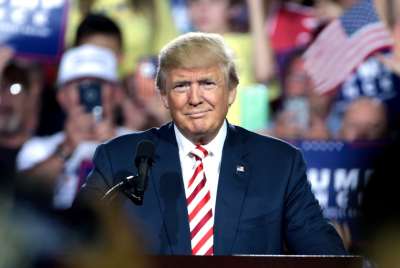
President Trump officially opened the celebrations with a rally-style speech on the National Mall, presenting the fair as evidence that America was entering what he described as a renewed era of national pride.
Political Controversy Has Followed the Project From the Beginning
The difficult opening was not the first challenge facing the Great American State Fair.
Weeks before the event began, it was reported that several well-known musicians withdrew from scheduled performances after learning of its close links to the Trump administration. Those cancellations forced organisers to revise parts of the entertainment programme, with Trump ultimately taking centre stage during the opening ceremony himself.
Critics have also argued that what was initially presented as a broadly national celebration has increasingly taken on the appearance of a political event, while supporters maintain it reflects patriotic values and offers a family-friendly way to commemorate America's milestone anniversary.
Whether the 'Willy Wonka Experience' label endures will likely depend on how the remaining days unfold. Opening-day photographs and technical glitches may have dominated online discussion, but organisers still have more than two weeks to attract larger crowds and shift attention back towards the fair's original purpose: celebrating America's 250th birthday.
© Copyright IBTimes 2026. All rights reserved.
- Recommended For You