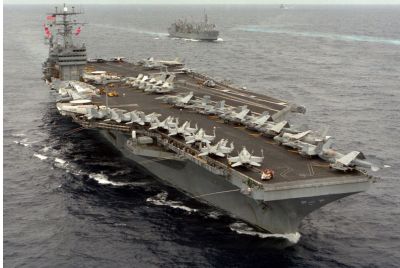
Pentagon Forces Urgent Carrier Replacement After Extended Deployment Triggers Crew Mental Health Crisis
After more than 260 days at sea, the USS Abraham Lincoln faces mounting scrutiny over crew welfare as the Pentagon rushes in the USS George Washington to relieve it
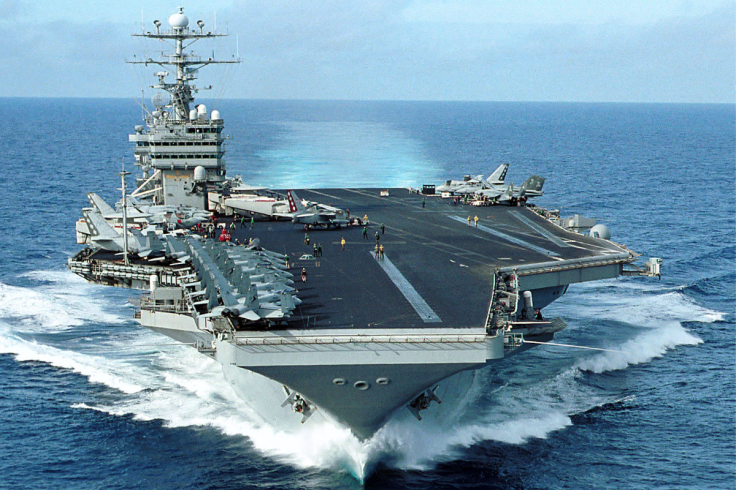
The Pentagon has ordered the USS George Washington to race from the Pacific to the Middle East to relieve the USS Abraham Lincoln after more than 260 unbroken days at sea.
The Lincoln left San Diego on 21 November and has barely docked since, supporting American military operations against Iran that escalated into active conflict on 28 February.
Defence officials confirmed that the punishing deployment, one of the longest in modern US naval history, severely disrupted regional supply routes, delayed mail deliveries, and triggered mounting concern over crew mental health and operational fatigue.
While Defence Secretary Pete Hegseth defended conditions aboard the vessel, lawmakers on Capitol Hill have launched aggressive oversight inquiries into the physical and psychological toll placed on thousands of sailors.
Replacement Carrier Rushes in as Pacific Left Exposed
The George Washington, normally based in the Pacific, left Da Nang, Vietnam, last week with a cruiser and destroyer escort, according to a Navy statement.
It has since been tracked crossing the Singapore Strait and, a Navy official said, the Strait of Malacca, the gateway between the Pacific and Indian oceans.
The route points firmly towards the Middle East, where the carrier is expected to take over from the Lincoln as one of two US flat-tops assigned to the Iran campaign, confirming an earlier Wall Street Journal report.
The switch would leave the Pacific without a US carrier for an unspecified period, a striking gap given Washington's long-stated ambition to focus military resources on countering China.
The Trump administration now describes China as 'a settled force' requiring deterrence rather than the central rival it was under Joe Biden, a shift that has freed up the George Washington for deployment westward.
The Navy insists the naval blockade of Iranian ports in the Strait of Hormuz, which the carriers support, can continue indefinitely.
Defence Secretary Pete Hegseth told reporters on Thursday that reports about conditions aboard the Lincoln had been 'completely misrepresented'.
Lawmakers Challenge Pentagon Over Sailor Welfare
That has not satisfied lawmakers. Senator Richard Blumenthal, a member of the Senate Armed Services Committee, has written to Navy leaders warning that the Lincoln's extended deployment is 'especially significant' given the ongoing Iran operation. Senator Ruben Gallego, a Marine veteran, has called the treatment of sailors 'not just disgusting; it's dangerous' and wants to lead a bipartisan oversight visit to the ship.
The Navy dismissed reports of food shortages in April as 'false', before later acknowledging that wartime logistics had forced commanders to prioritise deliveries, food first, then hygiene items, then mail. Officials now say sailors have clean water and 'healthy meal options'.
On mental health, the Navy says it has 'not observed an increase in suicidal ideations or attempts' but has withheld supporting data, citing security and privacy concerns.
A sailor went overboard in early August and was recovered and treated before being transferred off the ship; officials would not confirm whether it is being treated as a suicide attempt.
US Central Command has praised the crew's resilience after 'more than 260 days at sea, 10,000 aircraft flights, and 1.5 million pounds of ordnance expended'.
Strain Spreads Across US Carrier Fleet
The Lincoln is not alone in raising concern. The USS Gerald R. Ford returned in May after an 11-month deployment, the longest since Vietnam, during which a laundry-room fire left hundreds without beds. Earlier, the USS Harry S. Truman and other vessels battling Houthi forces in Yemen also faced extended tours that fuelled fatigue and maintenance worries.
At a tense town hall last week, acting Navy Secretary Hung Cao and senior commanders told Lincoln families they were working to secure the crew's relief. The Pentagon maintains rotation will happen 'as quickly as circumstances allow', though for families, lawmakers and sailors alike, patience is wearing thin.
With sister vessels like the USS Gerald R. Ford and the USS Harry S. Truman also enduring historic tour extensions, the crisis aboard the Lincoln highlights a systemic overstretch across the American carrier fleet.
© Copyright IBTimes 2026. All rights reserved.
- Recommended For You