

Pathologist Breaks Down Trump's 'Four-Fingered Grip' and Why It Suggests Cognitive Decline
Speech-language pathologist raises concerns over Trump's motor skills and speech patterns.

President Donald Trump's 'four-fingered grip' on a children's book during a July 2026 appearance on Usha Vance's podcast has prompted fresh claims from a licensed speech-language pathologist that the move, and his speech, could point to cognitive decline.
The clip, taken from Storytime with the Second Lady, has been seized on by Hilary Shae, who said the reach looked neurologically unusual, though she stressed she was making an observational assessment rather than a diagnosis.
Trump's Podcast Moment And The Grip That Sparked Debate
The news came after Trump appeared on Vance's podcast, which was posted online on 4 July and featured him reading Presidents Play!, a children's book from the White House Historical Association.
According to reports, Trump used the segment to riff off-script about his predecessors, his body and life inside the White House, rather than simply reading the book as the format suggested.
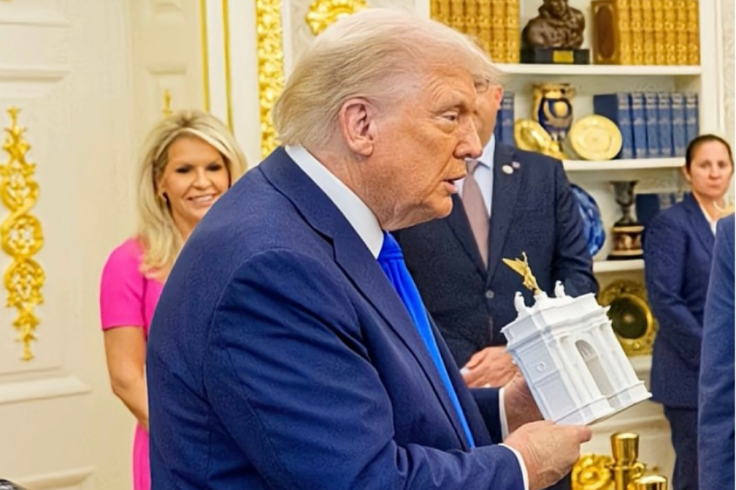
What caught Shae's attention was the physical act of reaching for the book. In her analysis of slowed footage, she said Trump's shoulder rotated outward in an awkward way and that he used what she described as an unusual four-fingered grip to lift the book from a stack.
For most viewers, it may have looked like a clumsy grab. Shae argued it was more revealing than that, calling it, in her words, 'quite informative from a neurological perspective'.
That is a bold claim, and one that needs a careful read. Shae said Trump's appearance was a 'big mistake' because, in her view, it exposed signs and symptoms consistent with dementia in both speech and motor function.
She has been documenting public clips of the president for months, and this latest one, she suggested, fits a broader pattern rather than standing alone.
Trump's Speech And The Limits Of Remote Judgement
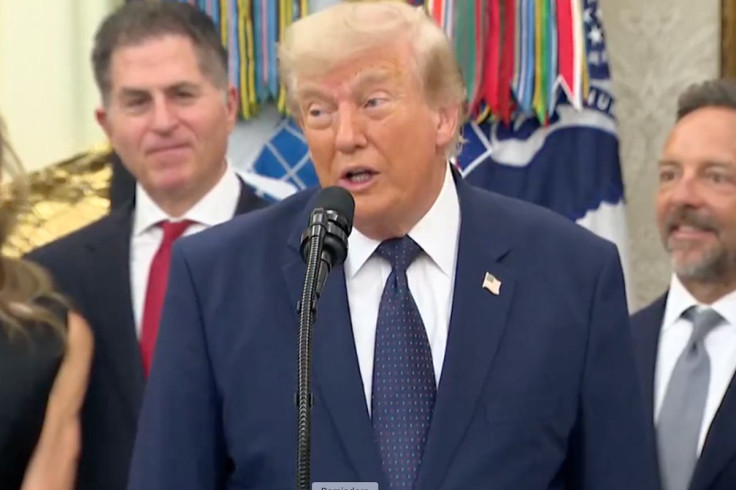
Shae's bigger concern was not only the grip but what she sees as recurring language problems. She pointed to Trump's difficulty with multi-syllable words and said he often appears to substitute simpler approximations or abandon words mid-sentence.
In another recent analysis of his 4 July speech at the National Mall, she flagged moments where he appeared unable to say '250th anniversary' and 'magnificent' cleanly.
The clinical term discussed here is phonemic paraphasia, where a speaker swaps sounds, stumbles over syllables, or breaks off a word part-way through. Cornell lecturer Dr Harry Segal has separately described such errors as possible signs of early dementia, though he too was speaking from public observation rather than a private medical assessment.
That matters, because it is one thing to note a pattern and quite another to pretend a diagnosis has been made from television clips and social media fragments. It hasn't.
Shae also mentioned dysarthria, a motor speech disorder linked to weakness in the muscles used for speaking, and said the pattern could be consistent with a transient ischaemic attack or stroke.
She did not claim to have reviewed any medical records, and no public evidence has been presented showing that Trump has suffered a stroke or TIA. In other words, there are observations, interpretations and plenty of noise, but no public clinical finding.
Why The Trump Claims Keep Returning
This debate has been bubbling for months. Shae and other commentators have repeatedly posted analyses of Trump's gait, hand movement and speech, while medical commentator Dr Vin Gupta has also called for a fuller public neurological assessment, saying the behaviour seen in public should raise concern.
The White House has not released a comprehensive neuropsychological report to settle the matter one way or the other.
The wider backdrop is that dementia warning signs often show up in small, ungainly ways long before a formal diagnosis is made. Research cited in Shae's material links reduced grip strength, poor balance, loss of dexterity and gait changes with later cognitive decline, while language difficulties are also recognised markers in Alzheimer's and related conditions.
The Alzheimer's Association says 7.4 million Americans aged 65 and older are living with Alzheimer's disease in 2026, a number that gives these debates real-world weight rather than reducing them to political theatre.
Still, there are limits. The American Psychiatric Association's Goldwater Rule exists precisely because diagnosing public figures from a distance is ethically fraught. Trump himself has repeatedly denied any decline, and supporters point to normal ageing, stress and his long-established rhetorical style as simpler explanations.
Maybe that is the whole story, maybe not. But the internet, as ever, has a way of turning a three-second reach for a book into a full-blown medical trial in the court of public opinion, which is mad in its own peculiar way.
© Copyright IBTimes 2026. All rights reserved.