'He Doesn't Know What's Going On': Donald Trump's Niece Blasts His 'Alarming' Deer-in-the-Headlights Look
A niece's grim family memory collides with a former president's political future, and the diagnosis is anything but simple.
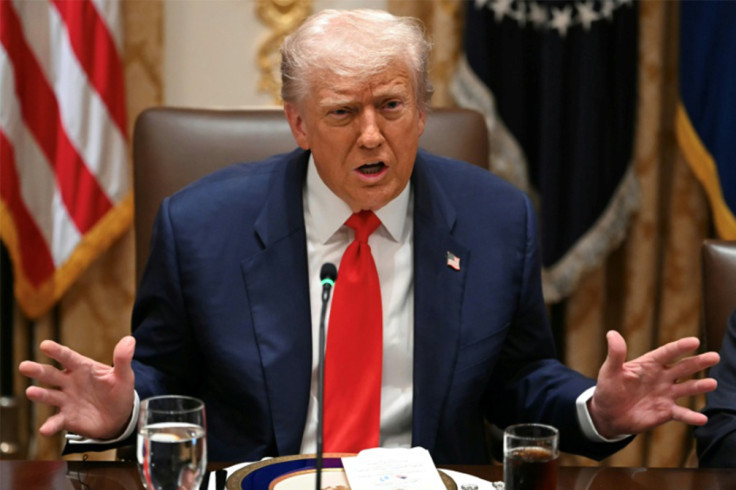
Donald Trump's niece has launched one of her most withering public critiques yet of the former US president's health, alleging on American television this week that Trump, now 80, is showing 'alarming' physical frailty and possible signs of cognitive decline.
After Mary Trump, a clinical psychologist and the daughter of Trump's late older brother Fred Jr, appeared on The Joy Reid Show in the US. During the interview, she set out what she described as a 'perfect storm' of problems affecting her uncle, combining what she called psychological, emotional, physical and cognitive deterioration. Her comments build on years of estrangement from the wider Trump family and a long-running pattern of public criticism of the former president's behaviour and fitness for office.

Mary Trump Links Donald Trump's Health To Family History
Mary has positioned herself for some time as a uniquely placed critic of Trump, blending family insight with professional training. On air, she argued that what viewers see now is not just political theatre or ageing in public, but something more troubling.
'His cankles are cankling, his hands look terrible, they're swollen, they're bruised, he is incapable of staying awake, he is incapable of focusing on anything,' she claimed, offering a blunt inventory of what she believes are visible physical changes. None of these assertions has been independently verified and Trump's team has not provided medical records to corroborate or rebut such detail, so her description remains exactly that her description.
She went further, suggesting that behaviour his supporters may brush off as routine bluster or distraction could instead be symptomatic. According to Mary, her uncle increasingly tells people that 'nobody's interested' in what they are saying if the conversation is not about him. She framed that not just as narcissism, but as part of a broader pattern that might signal neurological decline.
'All of those are bad signs in terms of his potential physical ailments,' she said, adding that features such as hypersomnia excessive sleepiness and poor impulse control 'are also potential signs of cognitive decline.' She was careful to note the word 'potential,' but her overall conclusion was unambiguous.

Alzheimer's Fears And The 'Deer In The Headlights' Look
Central to Mary's argument is the family's history of Alzheimer's disease and her comparison between Donald Trump and his father, Fred Trump Sr, who was diagnosed with the condition before his death.
'As many of you know, Alzheimer's runs in my family. Hopefully it's gonna skip my generation, but it does run in my family and I see similarities between my grandfather's behaviour and Donald's behaviour,' she said. She reiterated that observation earlier this month, saying there were 'more similarities between him and his father, who had very serious Alzheimer's' and noting that her grandfather's symptoms began to worsen at roughly the age Trump is now.
She also highlighted a contrast. Fred Sr, in her telling, was physically stronger at the same stage of life and, as she put it, 'as a sociopath, he didn't have any emotional or psychological world that could impinge upon him.' Trump, she argued, is contending not only with age and possible neurological issues but with what she described as 'decades long, severe undiagnosed, untreated psychiatric disorders.'
Again, none of these psychiatric claims has been supported by independent medical evaluation made public. No physician currently treating Trump has come forward with a diagnosis of Alzheimer's, dementia or any similar condition, and there is no official confirmation that any such tests have been carried out. In the absence of that, Mary's remarks should be read as opinion informed by personal history and clinical training, rather than as established medical fact.
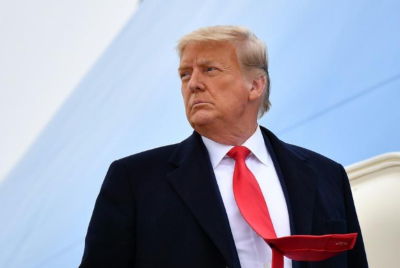
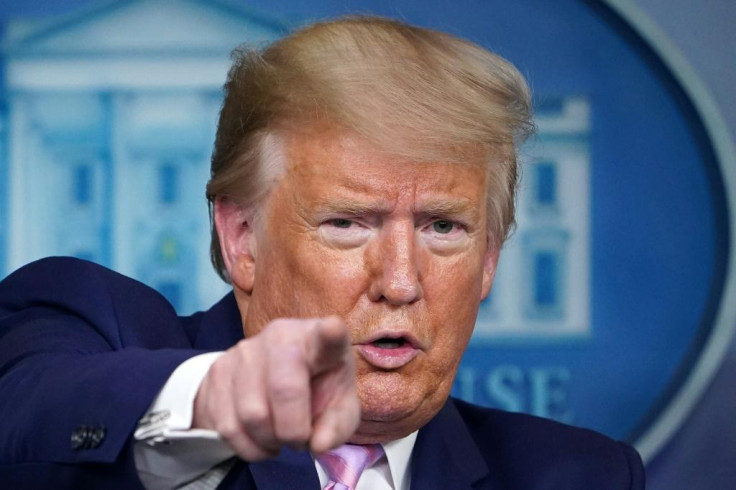
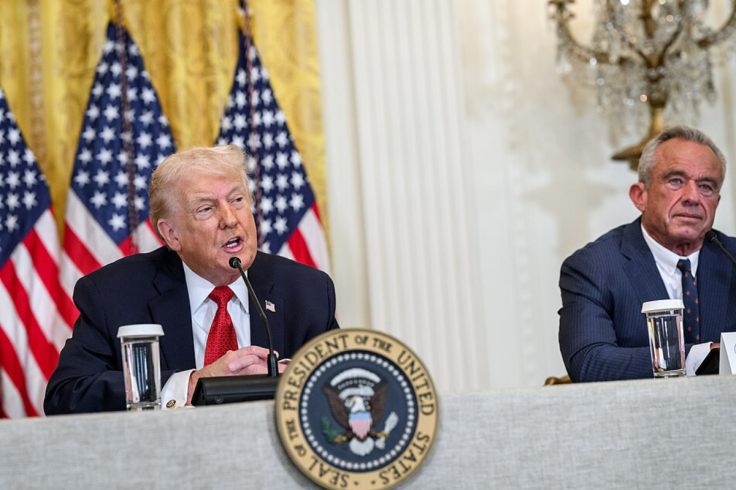
Visually, she said, there is something new and unsettling about how he appears in public. She described her uncle as increasingly having a 'deer in the headlights look,' which, in her view, gives the impression 'that he doesn't always know what's going on.' She called that 'very alarming,' particularly for someone who is again seeking the most powerful elected role in the United States.
Political Stakes As Donald Trump Faces Fresh Scrutiny
Mary's intervention comes at a moment when Trump's health already a topic of speculation during his presidency is resurfacing as a political issue. While the report did not include a response from Trump or his representatives, his camp has routinely dismissed past questions about his fitness as partisan attacks, pointing to public rallies and lengthy campaign speeches as proof of stamina.
What Mary brings, which cuts differently, is the authority of proximity. She is not a political rival, but kin, and one who has already paid a price for breaking ranks with a famously tight-lipped family. That does not make her infallible, but it does mean her assessments cannot be shrugged off quite as easily as those of distant commentators.
Still, there are obvious limits. Without transparent medical documentation, much of the debate over Trump's health remains speculative, dependent on interpretations of footage, gaffes and mannerisms. Mary herself acknowledged that Alzheimer's 'hopefully' will skip her generation, a reminder that genetics tilt the odds but do not dictate them.
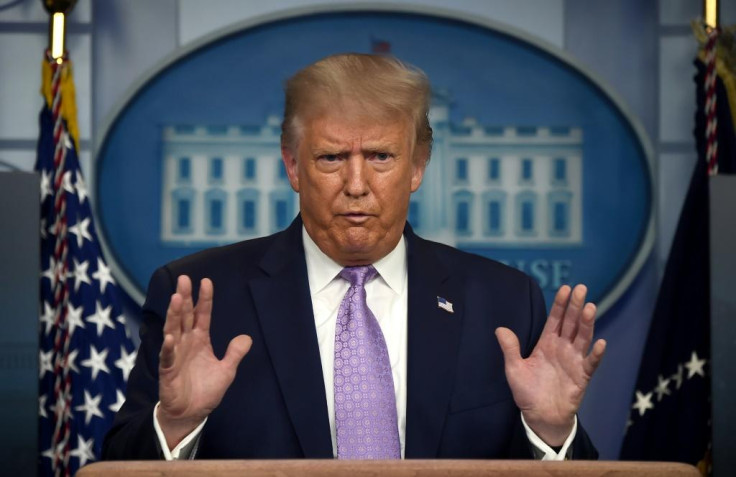
Her overarching claim, though, is stark. In her view, the United States is watching an 80-year-old man already carrying 'long-standing' psychological burdens now confronting age-related decline in real time. Whether voters see the same 'deer in the headlights' she does, or simply the familiar showman of the Trump era a little slower on his feet, will shape how seriously they take her warning.
Nothing in Mary's discussion has yet been confirmed by medical professionals treating Trump, and there is no publicly available evidence of a formal diagnosis of dementia or Alzheimer's. Until that changes, her allegations, however striking, should be treated with a measure of caution and a clear understanding of what they are allegations from a critical family member, not medical fact.
© Copyright IBTimes 2026. All rights reserved.
- Recommended For You