

'Going Nuts in Real Time': Expert Warns Trump's 67 Late-Night Rants Reveal an Alarming Mental Health Crisis
Trump's 67‑post late‑night Truth Social blitz has revived questions about his mental stability, with analyst David Rothkopf calling the spree 'neurotic' and self‑sabotaging.
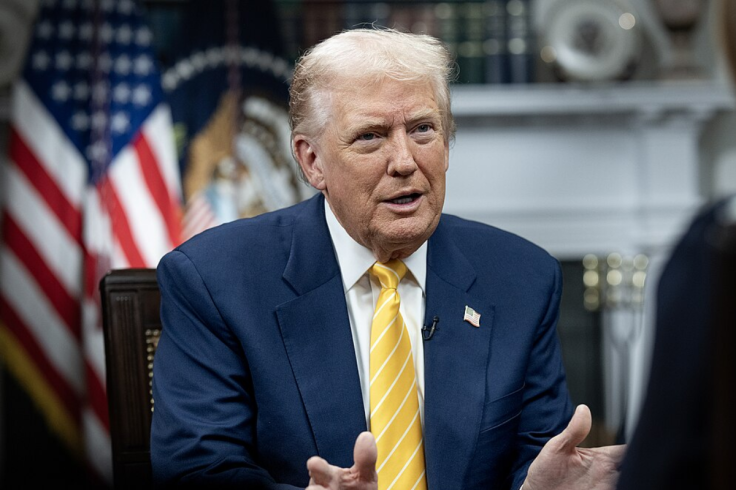
Donald Trump fired off 67 posts on his Truth Social platform between late on 5 July and the early hours of 6 July, and a prominent political analyst claims the late‑night barrage points to a deepening crisis in the president's mental state.
Trump, now the Republican frontrunner for the White House once again, used the hours after US Independence Day to carpet-bomb his followers' feeds with family photographs, attacks on a federal judge and a long self‑congratulatory list of 75 supposed accomplishments. The posting spree, which followed July 4 festivities at what was described as his under‑performing state fair‑style event, has prompted fresh scrutiny of both his judgement and his grip on reality.
According to a report, political analyst and author David Rothkopf argued that the volume and tone of Trump's output cannot be brushed off as normal campaign chest‑thumping.
'I mean, that's one way to look at it,' he told host Joanna Coles, when asked if the posts were simply an election pitch. 'To me, this is just neurotic.'
Donald Trump's 67 Posts And Anxious Self‑Justification
Trump's late‑night flood of content ranged from nostalgic shots of his family to bitter broadsides against a federal judge, as well as a lengthy catalogue of what he hailed as his achievements in office. Among them, according to Rothkopf's account of the posts, were Trump's much‑criticised handling of Iran, his move to designate fentanyl as a weapon of mass destruction, and tariffs later ruled unlawful.
Coles noted that there were 'too many to read', but said what struck her was 'what he thinks is important and how he prioritised them, and he prioritises it with Iran.'
Rothkopf's interpretation is that the list was less a policy record than a kind of public self‑soothing.
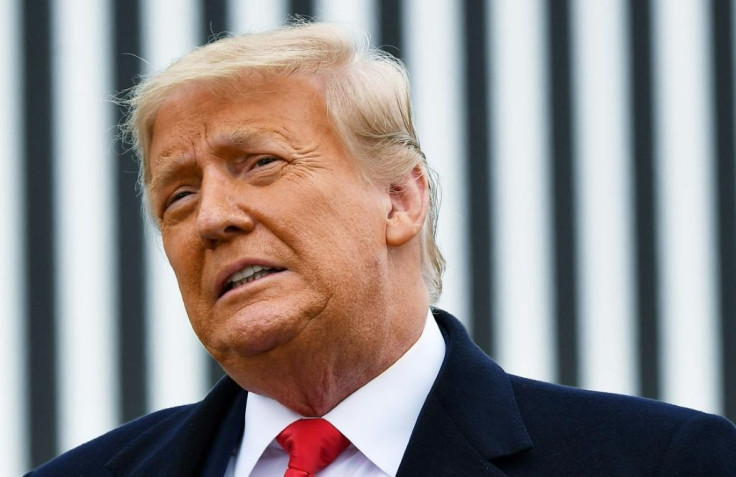
'This is Trump sitting there going, No, I'm a good president, I'm doing all these good things. Here's a list of the good things in case you don't remember them,' he said. 'But almost every single one of them is based on a lie or a misinterpretation of the facts.'
The analyst suggested that in trying to shore up his own image, Trump was instead drawing attention to the mismatch between his claims and the public record.
'This is the thing that is so striking,' Rothkopf told Coles. 'Trump thinks he is reaffirming, but he is actually undermining, because the facts don't add up for him. And that is what is keeping him awake in the middle of the night, and is why he is sending these 67 things.'
No independent mental‑health assessment of the president has been made public, and there is no formal diagnosis on record. Nothing is confirmed, so the more sweeping claims about Trump's psychological condition should be taken with a grain of salt. Rothkopf's comments are analysis, not clinical judgement.
Expert Says Donald Trump Is 'Going Nuts In Real Time'
Even so, Rothkopf appeared frustrated that such behaviour has become, in his words, background noise.
He complained that mainstream outlets had grown numb to Trump's excesses. 'But The New York Times is bored with it. I mean, can you imagine The New York Times saying, Oh, there were 67 Truth Social posts?' he asked. 'No. They don't. Because this is boring. This is beneath them. But this man is going nuts, in real time, online, in front of everyone.'
To much of the world, Rothkopf suggested, the image of a sitting or would‑be president churning out 'crazy memes' in the dead of night is not simply undignified but unsettling.
'To the rest of the world, you've got to say: Oh my god. This guy is the president of the United States, and he's pumping out these crazy memes, and they're all about racism and hate and his personal vendetta against a president. It's a sign of mental illness, right?' he said, before again criticising the lack of sustained media focus on Trump's state of mind.
Rothkopf has long been one of Trump's fiercest establishment critics, repeatedly questioning both his character and his psychological fitness for office. In June, he highlighted the Supreme Court's refusal to shield Trump from the $5 million damages he owes former Elle magazine columnist E. Jean Carroll, after being found liable for sexual assault.
'It's now gone to the Supreme Court, and so, it now stands,' Rothkopf told Coles. He described Trump's legal posture as an attempt to place himself above normal accountability. 'The president was arguing, I'm the president, I am important ... I'm a very important president doing a very important presidency ... and therefore, I shouldn't be bothered with this old stuff,' Rothkopf said. 'Well, they said, Nope, we're not even going to hear it.'
He went on to sketch a broader pattern in how, in his view, Trump and other wealthy defendants interact with the legal system. 'They feel they can hire as many lawyers as they want for as long as they want to come up with delaying tactics,' he said. 'Because every time they go and bring a new case or come up with a new tactic, they know that the other side's got to write a cheque.'
In another June episode of the podcast, Rothkopf turned to age and temperament. He wrongly described Trump as 80 years old in that discussion, but used the point to argue that he should be retired from public life.

'He's had a good life, and he should be at Mar‑a‑Lago sitting by the pool, having a margarita, talking to his friends about things he used to do,' Rothkopf said. 'Unfortunately, he is a disturbed, sick person who holds the most powerful job in the world and is at a stage of his existence where, because he's a narcissist, the only thing he cares about is himself. And if every single one of us ceased to exist, he wouldn't care, because the world is him.'
Trump has not directly responded to Rothkopf's latest characterisation of his late‑night posting habits, and his campaign did not immediately offer a statement on the specific claims about his mental health.
© Copyright IBTimes 2026. All rights reserved.