

Andy Burnham's VAT Cut Could Save EV Drivers More Than Average Households—Here's Why
Prime Minister Andy Burnham's VAT removal aims to reduce living costs, but public EV charging remains costly

Newly installed Prime Minister Andy Burnham announced that the 5% VAT will be removed from domestic electricity bills starting in October. The goal is to ease the cost of living in the UK, with the government estimating households will save an average of £45 a year.
'I said I wanted to give people breathing space, and that's what I'm announcing on my second day as prime minister,' Burnham said Tuesday. 'We're taking immediate action to cut taxes on energy bills, put more money in people's pockets and bring back hope.'
Good News for EV Users?
The news is welcomed by electric vehicle (EV) users as charging at home is now more affordable. An EV user reacted on X (formerly Twitter): 'Cutting VAT on electricity by 5% will save me £8 per year (or £4 for the proposed 6 months) on charging my EV at home. It's a small gesture, but for those struggling with filling up their cars with petrol and diesel, who can't afford to change to an EV, or don't have home charging, more help is needed to ensure that people have a viable option that will save them money whilst providing them the mobility needed.'
Cutting VAT on electricity by 5% will save me £8 per year (or £4 for the proposed 6 months) on charging my EV at home. Households with an average consumption will save £45 per year, according to OFGEM.
— Graeme Cobb ⚡️🚙🚗 ⚡️ (@graeme_cobb) July 21, 2026
It’s a small gesture, but for those struggling with filling up their cars…
The Electric Vehicle Association also said: 'Today's announcement that VAT on household electricity bills will be cut from October is good news for households across the country. For EV drivers who charge at home, it makes one of the UK's cheapest forms of transport even more affordable.'
EV users have been clamoring for cheaper charging for their vehicles as the government continues to champion the use of smarter and greener transportation. But what about those without access to home charging?
Public Charging Is Still Expensive
Burnham's VAT mandate only benefits EV users who have home chargers. There is a 20% VAT on public charging, which is still the main charging tool used by many EV users.
According to the Society of Motor Manufacturers and Traders' 2024 report, the number of plug-in vehicles (battery-operated and plug-in hybrid) on UK roads rose by 34.6%, surpassing two million. This is out of a total vehicle fleet of around 42 million.
While 76% of Battery EV (BEV) users have dedicated home chargers, only 53% of Plug-In Hybrid EV (PHEV) users do. High installation costs, lack of space and infrastructure limitations are among the reasons many EV users rely on public charging stations.
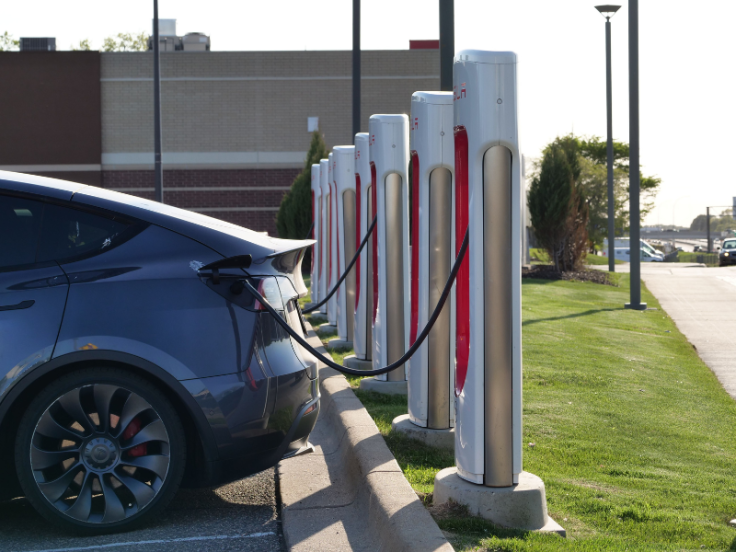
Among those who rely on public charging networks are urban BEV drivers, renters, and homeowners without off-street parking, and they have long sought cheaper public charging stations. There has always been a gap between public and domestic charging and the new Burnham electricity-bills mandate will only widen it.
Critics Call Policy a 'Non-Starter'
All headline. No substance?
— Eleanor Jackson 🇬🇧 (@_EleanorJackson) July 21, 2026
Burnham’s first flagship policy is already a non-starter 👇#ReformUK #AndyBurnham pic.twitter.com/QhIw6vc3IC
Not everyone is convinced by Burnham's flagship policy. Reform UK's Eleanor Jackson called the policy to scrap VAT on home electric bills a mere headline with 'no substance'. 'If they really want to lower energy bills, they should scrap the green levies and subsidies and focus on increasing domestic energy production. Abolishing VAT is a drop in the ocean and feels more like a token gesture than a policy that will make a meaningful difference,' she said on X.
© Copyright IBTimes 2026. All rights reserved.