

Mamdani Secretly Adds $700M to Bloated NYC Schools Budget While Quietly Slashing $29M From the NYPD
In a city of shrinking classrooms and stretched patrols, Mamdani's first budget draws a sharp line between what New York funds loudly and what it trims in the shadows.
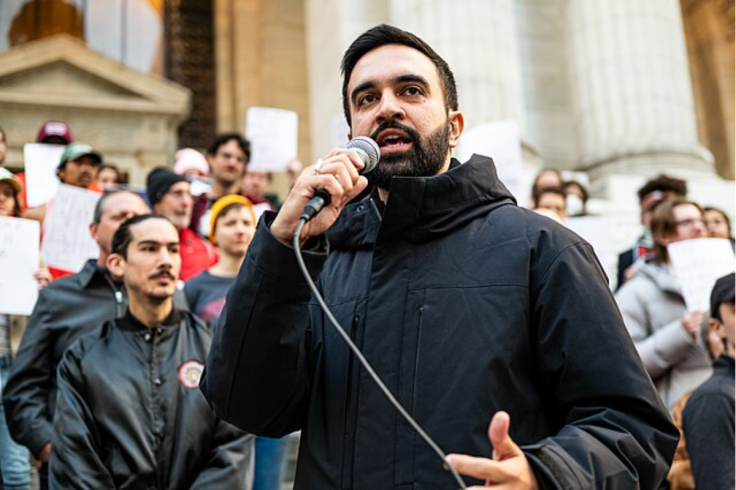
Zohran Mamdani's first New York City budget has quietly pumped an extra $680 million into the public school system for fiscal year 2027, city documents show, lifting Department of Education spending to $38.6 billion while trimming $29 million from the NYPD. The revised figures, released without fanfare days after the budget deal was approved on 29 June, push school funding to nearly a third of the Big Apple's record $126 billion spending plan.
Mamdani, elected mayor in 2025 on a progressive platform, repeatedly pledged to rein in the Department of Education's contract and consultancy costs. Earlier this year, his office had floated a smaller school budget and talked tough about inefficiencies at the country's largest public school district. Instead, the adopted plan hands the DOE almost $4 billion more than last year, even as student numbers continue to slide and basic performance indicators remain stubbornly flat.
Mamdani Faces Scrutiny Over Surging School Spend
New York City's education system is shrinking. There are around 780,000 pupils enrolled, with projections suggesting the system could shed another 153,000 over the next decade. On the city's own numbers, the new DOE budget works out at roughly $49,500 per student about 50% more than the average spend in fellow big-city districts Los Angeles and Chicago, according to federal data cited in the documents.
The return on that outlay is, at best, ambiguous. The 2024 National Assessment of Educational Progress often called the 'Nation's Report Card' found only a third of the city's fourth graders were rated proficient in maths and just 28% in reading. Among eighth graders, 23% hit the proficiency bar in maths and 29% in reading. Those figures, flatlining against a backdrop of mounting costs, form the subtext to almost every complaint now being levelled at City Hall.
Socialist Mayor of New York City, Zohran Mamdani, just gave a speech on what he thinks it means to be an American on America’s 250th Birthday.
— America (@america) July 3, 2026
He attacked our nation as “an arena of supremacy” that “persecutes” and claimed ICE is “invading our streets”. pic.twitter.com/kyHY6TXHfi
Andrew Rein, president of the fiscally conservative Citizens Budget Commission, argued that the city is now effectively budgeting for 'students that don't exist.' In his words, 'Not only is budgeting to pay for students that don't exist unfair, it means you miss the opportunity to spend those dollars on programmes to help New Yorkers ... or building reserves that help New Yorkers weather a rainy day.' It is the kind of criticism Mamdani had, until recently, been directing at his predecessors.
In November, at the SOMOS conference in Puerto Rico shortly after his election, Mamdani said that he intended to carve into DOE contracts. 'When you look at the DOE with a $40 billion budget, about $10 billion goes to contracts and consultants, some of those are for incredibly important things, and some of that spending is also spending that can be reduced when you take a real look at the duplicative processes,' he said. 'We have to always ensure that every dollar of that budget is being spent effectively.'
The adopted budget does not make clear where the education increase will go, or whether those contract lines have been trimmed, shifted or simply absorbed into the larger pot. Detailed breakdowns were only released by city officials late last week, days after the vote, leaving councillors and the public to discover the additional hundreds of millions after the fact.
It is not yet known whether all members of the City Council understood the size of the DOE bump at the time they backed the deal. Nothing is confirmed yet, so everything should be taken with a grain of salt.

NYPD Cut Fuels Anger as Mamdani Courts the Left
If the rise in school spending raised eyebrows among budget hawks, Mamdani's move on policing lit a match under City Hall politics. Republicans and some moderate Democrats had celebrated what they thought was a victory in the negotiations: a promise to hire 580 new police officers to ease demand on existing staff and speed up de-escalation training.
That promise evaporated late on the night of the vote, when the mayor's team informed Council Speaker Julie Menin that the additional officers would no longer be funded. By then, the budget had already cleared the political hurdles on both sides, and Mamdani had secured overwhelming support from the Council's progressive caucus and his Democratic Socialists of America allies, who had previously opposed any expansion of the NYPD headcount.
The final spreadsheet shows a $29 million reduction in the police budget, even though the mayor had publicly defended plans to boost officer numbers just two weeks earlier. The reversal is widely viewed at City Hall as a concession to the left, made easier after Mamdani and Menin agreed to sharply constrain spending on any expansion of housing vouchers an area where progressive members had wanted far more ambition.
City Hall insists this is what responsible government looks like. In a statement issued after the education figures emerged, spokesperson Jenna Lyle said: 'Our children deserve a city that invests in them, not one that balances its books on their backs.' She insisted the administration was displaying 'fiscal responsibility' even as it added billions to the DOE's bottom line.
Not all Democrats were convinced. Bronx councillor Althea Stevens, the only member of her party to vote against the budget, said the package failed the basic fairness test. 'Equity cannot simply be a word we use in speeches or campaign slogans. Equity means directing resources where the needs are greatest,' she said, arguing that the Bronx had been short-changed in the final carve-up.
Beyond the political theatre, the figures leave a quieter, more uncomfortable question hanging over Mamdani's first year in office: if almost a third of New York's vast budget now flows into a school system with fewer students, mixed results and chronic absenteeism nearly 35% of pupils, or 300,000 children, have been classed as chronically absent in recent years how long can City Hall keep promising that more money, on its own, will fix what is going wrong in the classroom.
© Copyright IBTimes 2026. All rights reserved.