Trump's Push to End Clock Changes Gains Momentum as House Backs Permanent Daylight Saving Time
The US House has voted 308-117 to make Daylight Saving Time permanent under the Sunshine Protection Act, a major legislative win for Donald Trump that now faces a Senate showdown.
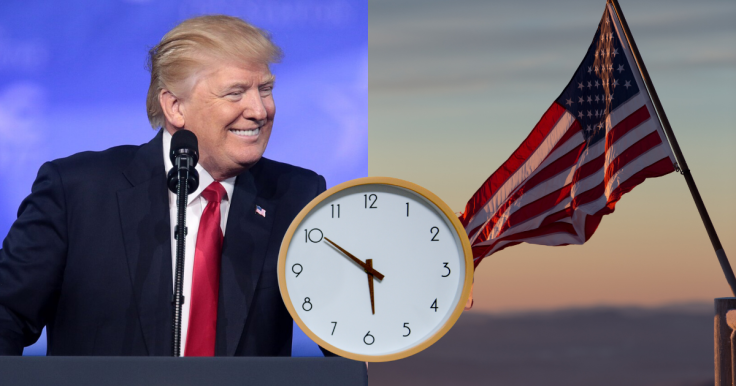
Americans may finally be seeing the end of the twice-yearly ritual of changing clocks, as the US House of Representatives has thrown its weight behind the Sunshine Protection Act.
The bipartisan measure, which would cement permanent daylight saving time across the country, secured a decisive 308-117 vote, handing Donald Trump a significant political victory on a policy he has long championed to brighten American evenings. However, the move has ignited a fierce debate in Washington, pitting the promise of longer summer nights against persistent warnings from sleep experts who argue the legislation prioritises economic convenience over the body's natural circadian rhythm.
With the bill now heading to the Senate, the prospect of ending the 'spring forward, fall back' tradition has moved from a recurring congressional talking point to the verge of reality, setting up a high-stakes legislative confrontation that could alter how the nation keeps time for generations to come.
Trump Finds Rare Bipartisan Support
The proposal has united an unusual coalition in Congress. Support has come largely from lawmakers representing Southern and coastal states, where later sunsets are viewed as an economic and lifestyle benefit. Republicans from Florida have led the effort for years, joined by Democrats including Ed Markey of Massachusetts and Patty Murray of Washington.
Trump has made no secret of his enthusiasm. In May, he described permanent daylight saving time on Truth Social as 'the far more popular alternative', arguing that Americans deserve 'a longer, brighter Day'. White House officials have also confirmed that the President privately pressed lawmakers to advance the legislation and requested updates on its progress during recent policy meetings.
The legislation would allow states that already observe permanent standard time, including Hawaii, most of Arizona and five US territories, to continue under their existing arrangements.
Rep. Brett Guthrie, the Republican chairman of the House Energy and Commerce Committee, defended the proposal during committee proceedings, arguing that additional evening daylight would improve safety.
'It means more sunlight at the end of the day so Americans can return safely from work and children can return safely from school,' Guthrie said.
Longer Evenings Come With A Trade-Off
While the promise of brighter evenings appeals to many Americans, the shift would also produce darker winter mornings across much of the country.
In Washington, DC, for example, late-December sunrises would shift from roughly 7.30am to around 8.30am, while sunset would occur closer to 5.45pm rather than 4.45pm. The exact effect would vary depending on geography, though communities across the country would experience similar changes.
That trade-off has become the central point of disagreement.
The American Academy of Sleep Medicine and other medical organisations have consistently argued that permanent standard time, rather than permanent daylight saving time, better aligns with the body's natural circadian rhythm. Health experts have warned that darker mornings could affect sleep patterns, school routines and workplace safety during the winter months.
Some lawmakers from Midwestern states have echoed those concerns, noting that communities further west within each time zone could experience winter sunrises after 9am.
Sen. Tom Cotton of Arkansas, despite being one of Trump's closest allies on many issues, has previously pledged he would 'always oppose' year-round daylight saving time.
Congress Revisits A Debate That Failed Before
The debate is far from new. Congress briefly adopted permanent daylight saving time during the energy crisis of the early 1970s, hoping reduced electricity consumption would justify the change.
Public opinion shifted rapidly.
Parents complained that children were waiting for school buses in the darkness, while concerns over road safety quickly overshadowed the intended benefits. The policy was repealed within a year, making it one of the shortest-lived nationwide timekeeping experiments in modern American history.
Whether those memories will influence today's lawmakers remains uncertain, although critics continue to cite the episode as a warning against repeating the same mistake.
Scott Lincicome, an economist at the Cato Institute who has written extensively about daylight saving time, believes Trump's support reflects both personal preference and commercial interests.
'The guy owns golf courses; golf courses get richer because of later evenings; and he's a total night owl, so it makes perfect sense for him. For young parents, on the other hand, slightly different calculus,' Lincicome said.
Public Wants Change But Not Everyone Agrees On Which One
One striking feature of the debate is that very few Americans appear satisfied with the current system.
An AP-NORC survey conducted in October 2025 found that only 12 per cent support changing clocks twice each year. Nearly half oppose the current arrangement altogether.
Even so, consensus disappears when respondents are asked what should replace it.
According to the same poll, 56 per cent favour permanent daylight saving time, while 42 per cent prefer permanent standard time, illustrating that although frustration with clock changes is widespread, Americans remain divided over which solution is actually best.
The House vote now places the decision squarely before the Senate, where the Sunshine Protection Act has travelled before. Senators unanimously approved similar legislation in 2022, only for it to stall in the House over concerns about public health and safety.
For now, the Sunshine Protection Act represents the most serious attempt in decades to overhaul the nation's timekeeping. Whether the Senate will send the bill to the President's desk or allow it to stall remains the central question of the legislative session.
© Copyright IBTimes 2026. All rights reserved.
- Recommended For You