

US Supreme Court Justice Says She Wore Bulletproof Vest After Ruling That Ended Federal Abortion Rights
Justice Barrett and Kagan advocate for increased security funding due to escalating threats against federal judges.
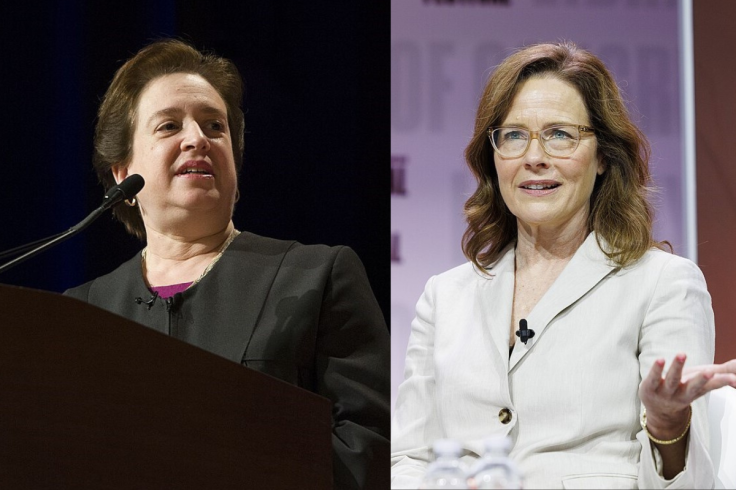
The US Supreme Court is seeking an additional $228 million (£170.06 million) in security funding after a surge in threats against federal judges, with Justice Amy Coney Barrett revealing she was forced to wear a bulletproof vest following the landmark ruling that ended federal abortion rights.
Barrett and Justice Elena Kagan made the case for increased protection during a congressional hearing, citing their own experiences as they urged lawmakers to approve the additional funding. Both justices said the growing threats against members of the nation's highest court underscore the need for stronger security measures.
How The Security Concerns Have Affected The Judges
Barrett said the constant security concerns have taken a personal toll, forcing her to remain vigilant while affecting her family as well. She pointed to several incidents to illustrate why she believes enhanced protection is necessary.
The 54-year-old justice recalled that a draft opinion leaked to a news outlet in 2022 indicated that the Supreme Court was poised to overturn Roe v. Wade, ending the constitutional right to abortion and allowing individual states to determine their own abortion laws.
The leak and the threats that followed prompted Barrett's security team to implement stricter protective measures. Those measures included requiring the conservative Supreme Court justice to wear a bulletproof vest when the court's majority handed down its decision overturning Roe v. Wade in 2022.
'I didn't expect that performing this service was going to put me in the position of explaining to my children what a bulletproof vest was and why I had to wear one,' Barrett said.
Aside from the heightened security surrounding the Dobbs ruling, Barrett also revealed that she had to deal with a swatting incident several weeks ago. Swatting, for those unfamiliar with the term, refers to a hoax emergency call made to trigger a response from law enforcement authorities.
Although the report proved to be false, Barrett said the incident caused significant disruption. Police vehicles surrounded her home after authorities received a bogus report claiming that gunshots had been heard at the property.
Threats Are Rising
With advances in technology, the justices warned that the threat landscape is becoming even more dangerous. Kagan said security threats are expected to increase significantly this year, estimating a rise of roughly 38 per cent. She also pointed to the sharp increase in cyber threats, warning that artificial intelligence is increasingly being exploited to carry out malicious activities.
'For some of us, those threats have come very close, and all of us live with the knowledge that they may again materialise,' Kagan said.
According to the US Marshals Service, 370 threats had already been made against federal judges during the current fiscal year as of 1 July.
Representative Rosa DeLauro said that figure represents a 31 per cent increase compared with the previous year, describing the numbers as deeply alarming and reinforcing the need to strengthen security for members of the federal judiciary.
Push For Stronger Protection
At present, Supreme Court justices are assigned between four and eight security personnel, with the level of protection varying depending on the type of event and the assessed threat.
Barrett said she believes Supreme Court justices should receive the same level of protection currently afforded to Cabinet officials because of the sustained dangers they face.
'The threats are constant and they're always there,' Barrett said.
The Supreme Court is requesting an additional $228 million (£170.06 million) in security funding, representing a 53 per cent increase compared with the previous year.
The request comes weeks after the Supreme Court concluded its latest term at the end of June, during which the justices handed down several high-profile rulings. Decisions involving tariffs, voting rights and birthright citizenship drew sharply divided reactions, with some welcoming the outcomes while others strongly criticising them.
With many of the court's future decisions also expected to divide public opinion, Barrett and Kagan argued that stronger security is no longer a precaution but a necessity to protect the justices, their families and the integrity of the nation's highest court. Whether Congress approves the additional funding remains to be seen.
© Copyright IBTimes 2026. All rights reserved.