

National Defense Authorization Act Vote Collapses as Iran War Revolt Rocks Trump's Pentagon Plan
Failing to hit 60 required votes, the bill stalled amid fierce backlash against Trump's escalating campaign in Iran

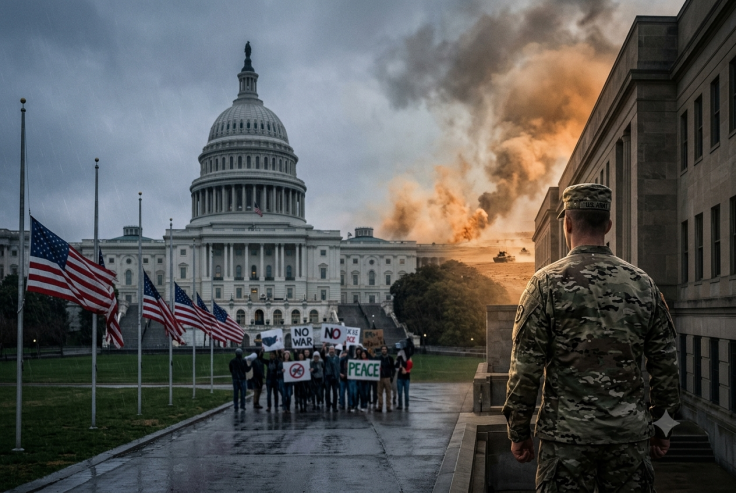
A dramatic showdown on Capitol Hill has halted a critical, must-pass piece of American military legislation. In a tense Washington vote, legislators stepped in to tie the hands of the White House as regional hostilities threaten to spiral out of control.
Senate Blocks Key Defence Bill
Opposition to Donald Trump's military campaign in Iran and deeper armed forces alignment with Israel has led US Senate Democrats to stall a vital annual defence policy bill.
In a highly unusual blow to legislation that virtually always passes, a 50-46 vote on Tuesday saw the chamber refuse to consider the National Defense Authorization Act (NDAA). The narrow defeat fell almost entirely along party lines, preventing the bill from moving forward.
Senate Democrats have blocked Republicans' National Defense Authorization Act, which would've given an additional $1,100,000,000,000 to the Department of War and deepened military ties with Israel pic.twitter.com/HVf42FlEq5
— Headquarters (@HQNewsNow) July 14, 2026
Advancing the legislation required 60 votes in the 100-seat chamber, a threshold it failed to reach. The blocked policy package was designed to greenlight a significant portion of Trump's proposed $1.15 trillion (£860 billion) defence budget.
Iran War Concerns Drive Opposition
A record-breaking Pentagon budget and plans to intensify US military and intelligence ties with Israel sparked fierce pushback from several Democrats. They argued that advancing the package was inappropriate while Trump continues to ramp up hostilities with Iran.
A sad day in the Senate.
— Sen. Dan Sullivan (@SenDanSullivan) July 14, 2026
For the first time in U.S. history, every Senate Democrat, led by Chuck Schumer, voted against starting debate on the overwhelmingly bipartisan National Defense Authorization Act.
For Alaska, this is probably the best NDAA our state has ever seen: $2.6… pic.twitter.com/xYZWjNb7ZT
Warning that the legislation lacked parliamentary checks and balances, Chuck Schumer urged his colleagues to reject it. The Senate Minority Leader cautioned that the bill essentially handed the Trump administration 'a permission slip' to carry out ongoing military actions in Iran.
Activists Demand Funding Restrictions
Pressure mounted from beyond the chamber as a 14-member alliance of anti-war, foreign policy and civil liberties groups lobbied lawmakers to halt the NDAA. The coalition — featuring prominent organisations including the American Civil Liberties Union, Win Without War, CODEPINK and J Street — insisted that Congress must assert its constitutional 'power of the purse' to retain control over military conflicts.
The groups demanded a guaranteed vote on an amendment to strip funding from what they termed Trump's 'unauthorised war' with Iran, arguing that regional hostilities are only one aspect of a broader backlash against the bill.
Israel Provisions Trigger Internal Revolt
The Senate proposal has also faced heavy criticism for tightening US-Israel military and intelligence ties. Clauses would mandate shared weapons production and controversial 'data fusion' targeting systems. Watchdogs warn the arrangement could compromise the US by absorbing mass surveillance data, while a parallel intelligence measure would further expand bilateral intelligence sharing.
An internal revolt took shape days before the vote when a group of lawmakers — including Peter Welch, Jeff Merkley, Ed Markey, Elizabeth Warren, Bernie Sanders and Chris Van Hollen — circulated a joint memo. They urged colleagues to stall the NDAA until its most contentious provisions received full scrutiny, explicitly warning against rubber-stamping closer alignment with Benjamin Netanyahu's 'extremist government'.
Public Opinion Shifts Before Midterms
In a social media broadcast ahead of the session, Van Hollen criticised the lack of limits surrounding Trump's 'illegal war', while highlighting under-the-radar provisions that quietly expand ties with Tel Aviv. The senator questioned why Congress should mandate increased intelligence sharing regardless of the actions of a foreign state.
Tomorrow, the Senate will take a key vote on the $1.1 TRILLION defense bill.
— Senator Chris Van Hollen (@ChrisVanHollen) July 14, 2026
It not only fails to rein in Trump’s Iran war, it also has a provision touted by PM Netanyahu to MANDATE more U.S. defense cooperation with Israel.
None of this is in our national security interests. I… pic.twitter.com/y6VWjUReuf
The dispute underscores a significant ideological realignment ahead of the November midterms, with traditional partisan alliances beginning to fracture. Reflecting that shift, a Reuters/Ipsos survey found that support for a key US ally among Republican voters had fallen to just 22 per cent, down from 59 per cent less than a decade ago.
© Copyright IBTimes 2026. All rights reserved.