Who Is Dasha Kilpatrick? Texas Woman Under Fire After Viral Anti-Muslim Grocery Store Rant
Dasha Kilpatrick faces backlash after confronting Muslim women in a Texas grocery store, igniting discussions on religious intolerance.
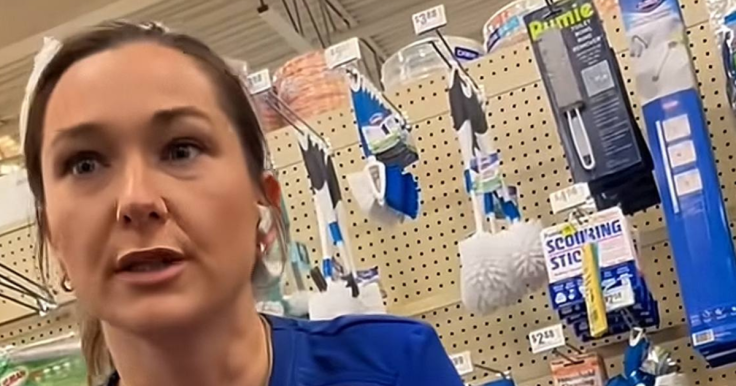
A woman identified as Dasha Kilpatrick is facing intense backlash after a video showing her confronting two Muslim women inside a Texas grocery store went viral online, triggering widespread condemnation over what many have described as blatant Islamophobia.
The footage, filmed inside an H-E-B grocery store in Conroe, Texas, shows Kilpatrick aggressively telling the women they do not belong in the United States because of their religion. The exchange quickly spread across social media, where users criticised both her remarks and the apparent hostility directed at the women, with many raising concerns about religious discrimination and prejudice in public spaces.
Who Is Dasha Kilpatrick?
According to social media investigator TizzyEnt, Dasha Kilpatrick is a 25-year-old massage therapist who worked at Inner Light Holistic Healing. After the video gained traction, internet users began trying to identify the woman seen in the footage, prompting TizzyEnt to publish a follow-up update after reviewing social media accounts and other publicly available information.
In his update, TizzyEnt said Kilpatrick's Facebook activity allegedly contained numerous anti-Muslim posts, which he cited as evidence that the grocery store confrontation was not an isolated incident. He suggested her online activity reflected long-standing hostility towards Muslims rather than a momentary outburst.
TizzyEnt also noted that social media users had begun contacting her employer following the video's circulation. According to some online users, Kilpatrick has since been fired from her job, though that claim has not been independently verified.
UPDATE: FOUND HER pic.twitter.com/HclAyJAuUv
— TizzyEnt (@TizzyEnt) June 21, 2026
Viral Video Shows Dasha Kilpatrick Telling Muslim Women To Leave The US
The controversy centres on a viral video in which Kilpatrick is seen confronting two Muslim women while they shop. Without apparent provocation, she repeatedly tells them to leave the country and insists the United States is a Christian nation.
'You need to leave. You're not welcome here.'
When one of the women responds, Kilpatrick continues: 'This is not a Muslim country. This is a Christian country.'
She then escalates the confrontation further, saying, 'You need to go back to your Islamic country where you came from, okay?' She also describes Islam as 'a terrorist organisation, not a religion,' and accused the women of worshipping a 'terrorist who is a warlord and paedophile.'
Despite the pushback from the women, who challenge her statements and question why someone wearing scrubs would express such views while potentially working in healthcare, Kilpatrick remains adamant, even claiming that she is 'very educated on this subject.'
The video drew additional attention because Kilpatrick appeared to be wearing medical scrubs. That detail prompted concern online, with many arguing that anyone working in healthcare should not display bias against patients based on religion or ethnicity.
@tizzyent Conroe TX, Who is she?
♬ original sound - TizzyEnt
Social Media Reactions Condemn Islamophobic Grocery Store Rant
The video shared on TikTok prompted strong reactions across social media, where many users pointed to the contradiction between Kilpatrick's remarks and the United States' constitutional protections for religious freedom.
'The United States does not have an official religion', one user wrote. Another added, 'Last time I checked, didn't America have freedom of religion... or was that pre-Trump?'
Others focused on the healthcare angle, arguing that prejudice has no place in professions centred on care and trust. 'Racism doesn't belong in healthcare', one commenter wrote, while another said, 'No one in healthcare should ever be this judgemental and hateful. You're supposed to care for all no matter what'.
Several users also contrasted Kilpatrick's rhetoric with their own experiences. 'I'm in Houston, I work for a Muslim man who is one of the kindest people I've ever met. People need to stop judging what they don't know,' one person wrote.
As the backlash grows, the incident has become part of a broader conversation about Islamophobia, religious intolerance, and the real-world consequences of hateful rhetoric amplified online.
© Copyright IBTimes 2026. All rights reserved.
- Recommended For You