

Man Who Threatened to Assassinate Trump Faces 5 Years in Prison. So Why Does He Face Double the Time for Threatening ICE?
Understanding the legal nuances behind differing penalties for threats against public officials

A West Virginia man, Cody Lee Smith, 20, who admitted making online threats against US President Donald Trump, faces a maximum prison sentence of five years for that offence. Yet the same defendant could receive up to 10 years for threatening officers with US Immigration and Customs Enforcement (ICE).
The apparent disparity has prompted widespread discussion, since many assume that threatening the president carries the harshest punishment available under federal law. Instead, the case highlights a key feature of the US legal system: maximum penalties depend on the specific statute prosecutors use, not the prominence of the intended target.
What Smith Was Accused Of
According to a Department of Justice press release, Smith made threats against Trump and ICE agents. Court records say the case began on 17 January 2026, when the Harrison County Sheriff's Department reported social media posts in which Smith threatened to attack and kill ICE agents and President Trump.
Homeland Security and ICE later reviewed Smith's Instagram activity and confirmed he directed multiple threats at President Trump, his supporters, and federal law enforcement. The same day, Smith allegedly sent a direct Instagram message to Donald J Trump Jr containing a sexually violent threat against the president. On 18 January 2026, Smith also called the ICE tip line and threatened to kill ICE agents in Clarksburg, the operator, and the operator's family.
Smith pleaded guilty in federal court to making threats against both Trump and ICE officers. The case drew national attention given the seniority of those targeted and the heightened political tension surrounding immigration enforcement.
Why Does He Face Double the Time for Threatening ICE?
The answer lies in the wording of federal law, not the identity of the victims. Threats against the president, made by Smith on 17 January 2026 and posted to his social media accounts, are prosecuted under 18 U.S.C. § 871, a long-standing statute making it a crime to knowingly and willfully threaten the president, vice president, and certain other officials. Congress set the maximum penalty at five years' imprisonment.
The threats against ICE officers, particularly Smith's 18 January call to the ICE tip line, fall under 18 U.S.C. § 115(a)(1)(B), which covers threats against federal officials and law enforcement officers made with intent to impede, intimidate, interfere with, or retaliate against them for performing official duties. Congress authorised a maximum sentence of 10 years for that offence.
In other words, the difference is entirely statutory. It doesn't mean federal law values ICE officers more highly than the president. Section 871 was written narrowly to address threats to the presidency itself. In contrast, Section 115 was enacted decades later as part of a broader law protecting federal officials and their families from intimidation and retaliation, and Congress assigned each its own maximum penalty.
Different Federal Crimes Require Different Proof
Although both charges involve threats of violence, prosecutors must prove different legal elements under each statute. For threats against the president, prosecutors generally must establish that the defendant knowingly and willfully made a 'true threat' covered by the statute. Courts have repeatedly distinguished genuine threats from protected political speech, since the First Amendment doesn't shield serious threats of violence.
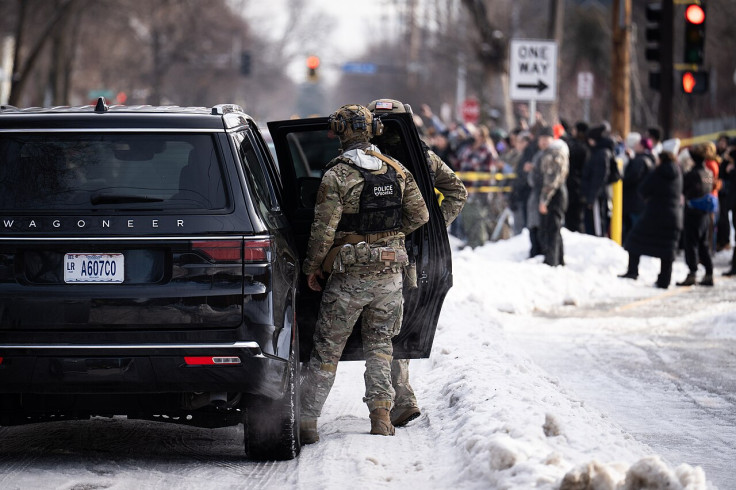
The offence involving federal officers includes additional considerations tied to the victim's official duties, designed to protect federal employees from intimidation or retaliation that could interfere with their work. These distinctions explain why two threats that look similar to the public can carry very different statutory penalties.
Maximum Sentences Are Not Automatic
A common misconception is that defendants automatically receive the maximum term listed in the statute. In reality, statutory maximums simply set the ceiling a judge may impose. Federal sentencing considers the advisory Guidelines alongside the seriousness of the offence, acceptance of responsibility, criminal history, deterrence, and public protection. This means that many defendants receive sentences well below the statutory maximum, while others may receive longer terms depending on the circumstances.
This case is a reminder that the severity of a criminal charge depends on the statute Congress enacted, not on public assumptions about who deserves greater protection. While threatening the president understandably draws attention, federal law imposes different penalties for different offences, leaving sentencing courts to determine appropriate punishment case by case.
© Copyright IBTimes 2026. All rights reserved.