Ukraine War Impact: Birds Build Nests From Discarded Fibre-Optic Drone Cables on Front Line
Museum preserves remarkable nests woven from battlefield drone cables
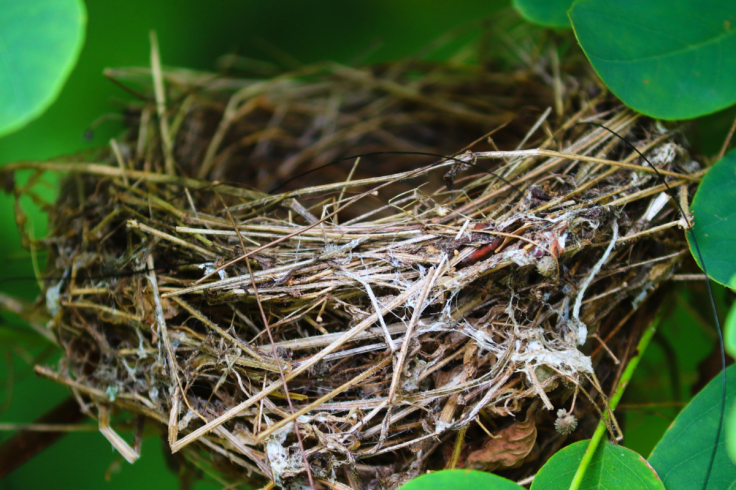
A tiny bird's nest woven from dried grass and discarded fibre-optic drone cable has become a striking symbol of how the war in Ukraine is reshaping not only the battlefield but also the natural world.
Found by Ukrainian servicemen near the front line, the unusual nest, along with another similar discovery, was sent to Kyiv's National Museum of the History of Ukraine in the Second World War for preservation and study.
Researchers believe the nests demonstrate how wildlife is adapting to landscapes transformed by more than four years of conflict, offering a stark glimpse of how the remnants of modern electronic warfare are becoming woven into nature itself.
Fibre-Optic Drones Transform the Battlefield
As the war between Ukraine and Russia has evolved, fibre-optic guided drones have become an increasingly important part of military operations.
Unlike conventional radio-controlled drones, they remain physically connected to operators through ultra-thin fibre-optic cables, making them far less vulnerable to electronic jamming and allowing them to operate more reliably in contested areas.
However, each mission leaves behind kilometres of cable. Some reels stretch up to 20 kilometres and, once the drones have completed their flights, the strands are often left tangled in trees, draped over rooftops or scattered across fields.
— Drone Wars (@Drone_Wars_) April 15, 2026
Across Ukraine's roughly 1,200-kilometre front line, the discarded cables have become an increasingly common part of the landscape.
Researchers believe birds have begun collecting the abandoned strands alongside dried grass and twigs, incorporating them into their nests as they adapt to an environment increasingly shaped by war.
Experts Reveal What the Nests Mean
Senior museum researcher Yana Hrynko told Reuters the discovery reflects 'the change in the nature of war.'
'We can trace the evolution of war through these nests,' Hrynko said, noting that birds had previously incorporated camouflage netting and other battlefield debris into their nests. The appearance of fibre-optic cable, she explained, mirrors the growing reliance on drone technology along the front line.
Researchers have yet to determine which bird species built the nests or how they managed to gather the long strands of cable.
One nest will remain in Kyiv as part of the museum's wartime collection, while the second will travel to the Netherlands for scientific examination.
Dutch biologist Auke-Florian Hiemstra, who specialises in artificial nesting materials, will analyse DNA traces left inside the nests to identify their builders.
'I have never seen nests like this before, and I have seen many, many bird nests,' Hiemstra said.
War's Impact Extends Beyond the Battlefield
Hiemstra said the fibre-optic material could have both benefits and drawbacks for nesting birds. While the cables may help reinforce nests, they could also increase the risk of birds or chicks becoming entangled.
'And by documenting this nest, we're also documenting the impact of war on nature in Ukraine,' he said.
Military personnel in the Donetsk region found a bird's nest woven from the optical fiber of FPV drones.#DroneWars #FPV pic.twitter.com/QtDiTv6AgO
— Drone Wars (@Drone_Wars_) June 6, 2026
The discovery offers a rare glimpse into the environmental consequences of a conflict increasingly defined by technology.
Since Russia launched its full-scale invasion in February 2022, both sides have dramatically expanded their use of drones, leaving behind not only damaged infrastructure but also vast quantities of military debris across forests, farmland and villages.
For researchers, the nests have become more than biological curiosities. They provide tangible evidence of how wildlife is adapting to landscapes transformed by modern warfare, preserving a unique record of the conflict's lasting impact on the natural environment.
© Copyright IBTimes 2025. All rights reserved.
- Recommended For You