Iran War Fallout Set to Deepen China's Grip on Global Renewable Energy Supply
China's renewable energy sector thrives as global conflicts accelerate the shift from fossil fuels
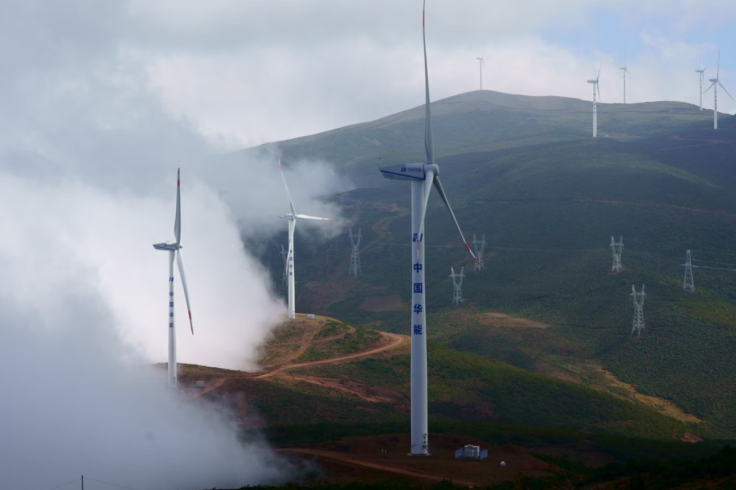
The war between the United States, Israel and Iran has pushed governments and energy firms to accelerate their move away from fossil fuels, and the numbers show China is already the biggest winner of that shift.
China alone added 440.1 GW of the 513.3 GW increase recorded across Asia in 2025, helping push global renewable capacity to 2,891 GW, according to the International Renewable Energy Agency. That single figure explains why analysts expect Beijing's lead to widen further as the conflict pushes more countries to abandon fossil fuels faster than planned.
China's Unassailable Lead in Renewable Manufacturing
China already produces more than 80 per cent of the world's wind turbines, solar panels and energy storage batteries, according to research and consulting firm Wood Mackenzie. Maurice Obstfeld, a senior fellow at the Peterson Institute for International Economics and former chief economist at the International Monetary Fund, said the war has offered an 'object lesson in the value of a much more diversified energy mix'.
'China will benefit, given its dominance in providing renewable energy infrastructure products,' Obstfeld said.
That dominance runs deeper than finished panels. The International Energy Agency has found that China's share of global polysilicon, ingot and wafer production is set to reach almost 95 per cent based on manufacturing capacity currently under construction, giving Beijing an effective lock on the raw materials that feed the entire solar supply chain.
A video released today by China's State-owned Assets Supervision and Administration Commission, which oversees over 100 major central enterprises, became one of the biggest trending topics on Chinese social media today.
— Zhai Xiang (@ZhaiXiang5) June 30, 2026
The footage was shot on the Gobi Desert in Ruoqiang County… pic.twitter.com/wmn7bPhD8E
Strait Disruption Pushes Buyers Towards Renewables
Since fighting broke out in late February, oil markets have been rattled by fears over the Strait of Hormuz, the narrow waterway through which approximately one-fifth of the world's oil and liquefied natural gas normally passes. Energy suppliers have already begun shifting oil away from tankers and towards land routes such as Saudi Arabia's East-West Pipeline and the Iraq-Turkiye Crude Oil Pipeline, though their combined capacity still falls well short of the roughly 20 million barrels a day that used to move through the strait.
Dan Marks, a research fellow in energy security at the Royal United Services Institute, said he expects 'long-term' concern over shipping through the waterway to persist. 'While the current Iranian regime remains in place and at odds with the United States and Israel, there will always be the possibility that tensions will flare and the strait will close,' Marks said.
June Goh, a Singapore-based senior oil market analyst at commodities data firm Sparta, said she expects both producers and buyers to reduce their reliance on the strait going forward, whether through new pipeline routes or by building up strategic petroleum reserves.
UNUSUAL
— China pulse 🇨🇳 (@Eng_china5) June 30, 2026
The first solar‑thermal power station in northeast China has begun operating.
The “Jixi” solar‑thermal power plant, with a capacity of 100 megawatts and located in the city of Dan in Jilin Province, is the northernmost facility of its kind in China.
Its operation marks… pic.twitter.com/9dzVxamrJP
How the EV Boom Strengthens Beijing's Hand
Adi Imsirovic, a veteran oil trader who lectures at the University of Oxford, said the war has changed the oil market for good. 'Following this war, few people looking for a new car will opt for one with an internal combustion engine,' he said, pointing to the growing appeal of electric vehicles.
He added the shift would end oil's 'monopoly' in road transport, leaving air travel and petrochemicals as the fuel's main remaining strongholds. That matters for China specifically, since it also dominates battery manufacturing, the other core component of the EV supply chain.
Mohamed Elheddad, an associate lecturer in economics at the University of Lancashire, said the war may simply be speeding up decisions that were already being made. 'The conflict may ultimately bring forward investment decisions that were already in motion,' he said, adding that the United States and Qatar could also consolidate their positions as leading energy suppliers once the dust settles.
China already controls the bulk of the raw materials, manufacturing capacity and installed capacity behind the global renewables boom, and the war is now accelerating demand for exactly the products it makes. If that trend holds, the balance of power in global energy is likely to shift further towards Beijing over the coming decade, with consequences for trade, investment and supply chains far beyond the Middle East.
© Copyright IBTimes 2026. All rights reserved.
- Recommended For You