Atlantic's 'Cold Blob' Linked to Slowing Ocean Current That Could Disrupt Weather Worldwide, Scientists Say
New study links Atlantic 'Cold Blob' to weakening ocean currents, impacting global climate
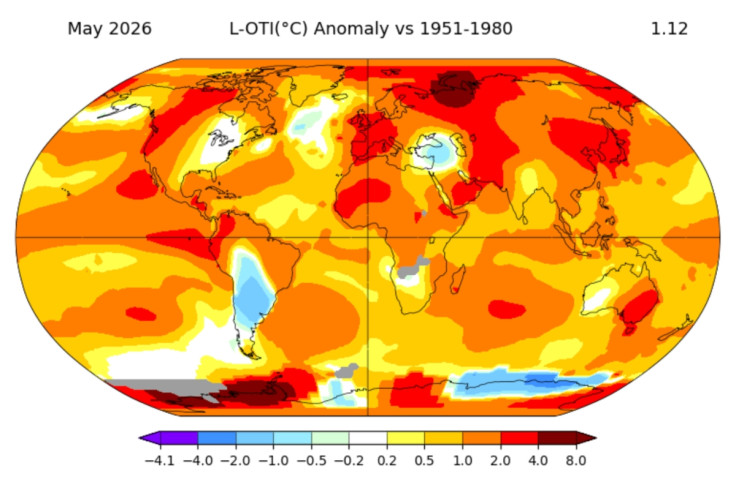
A patch of unusually cold water in the North Atlantic may provide some of the strongest evidence yet that a major ocean current system is slowing down. Scientists say this development could have significant consequences for weather patterns around the world.
The area, known as the Atlantic 'Cold Blob', lies south of Greenland and Iceland and has puzzled researchers for years because it has cooled while much of the rest of the planet has continued to warm. The anomaly stands out against the trend of rising global ocean temperatures.
A new study published in Geophysical Research Letters links the phenomenon to a weakening of the Atlantic Meridional Overturning Circulation (AMOC), a vast system of currents that transports warm water northwards from the tropics. Often described as a conveyor belt for ocean heat, the AMOC helps regulate climate and plays a role in keeping parts of Europe milder than they would otherwise be at similar latitudes.
Atlantic Anomaly Can't Be Explained
Scientists have debated what was driving the persistent cooling south of Greenland while much of the world's oceans continued to warm. Some studies suggested the Cold Blob was caused by increased heat loss from the ocean surface, while others argued the explanation lay deeper within the Atlantic itself.
The new study sought to resolve that debate using observation-based climate data, satellite measurements and meteorological records spanning several decades. Researchers examined changes in ocean heat content alongside surface heat exchanges across the region.
Less warm water appears to be reaching the area than in previous decades, allowing temperatures to remain unusually low compared with surrounding oceans. The study concludes that the Cold Blob is not simply a surface feature but reflects deeper changes within the North Atlantic.
BREAKING🚨: Mysterious ‘cold blob’ in the Atlantic suggests the AMOC is weakening
— All day Astronomy (@forallcurious) June 7, 2026
it means a new ice age within your life time. pic.twitter.com/Hc8By14xw0
Evidence Points To A Slowing Ocean Current
Researchers also identified another pattern that supports the theory of a weakening AMOC. Satellite observations show a narrow strip of unusually warm water along the eastern coast of North America, north of Cape Hatteras. Oceanographers have long regarded this feature as an 'AMOC fingerprint' because it is associated with changes in the Gulf Stream as the broader circulation system weakens.
The study notes that direct observations have also documented weakening in parts of the Gulf Stream over recent decades. Combined with the persistent Cold Blob, the researchers argue that these patterns point towards a broader reduction in Atlantic heat transport.
Beyond The North Atlantic
The AMOC plays a central role in redistributing heat around the planet and influences weather patterns across Europe, North America and beyond.
Previous research has linked a weakening AMOC to colder conditions in parts of northern Europe, shifting rainfall patterns in Africa and South America, stronger sea-level rise along sections of North America's east coast and changes to storm tracks across the North Atlantic. While the exact impacts remain uncertain, scientists consider the circulation system one of the most important regulators of the global climate.
The researchers did not predict an imminent collapse of the AMOC. However, they said the findings add to a growing body of evidence suggesting the circulation system has weakened over time and may continue to do so as the climate warms.
© Copyright IBTimes 2026. All rights reserved.
- Recommended For You