

Donald Trump Heartbreak: Giorgia Meloni Humiliates POTUS Online as Ex-Official Warns the World is Turning Its Back on Him
The Italian Prime Minister has publicly dismissed the president's claims regarding a photo request, marking a rare moment of open defiance.
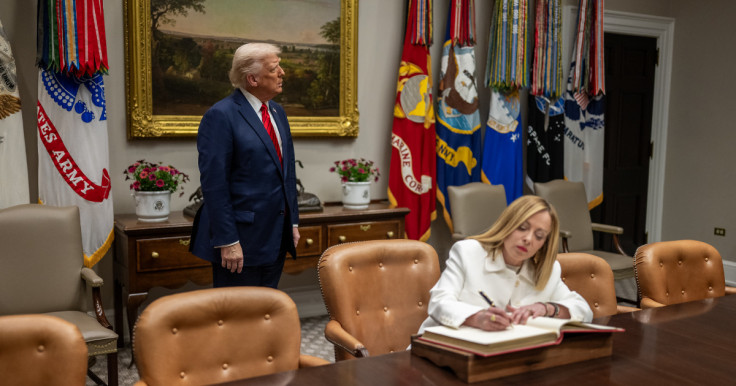
A series of confrontational episodes on the world stage has intensified speculation that President Donald Trump is becoming increasingly isolated from traditional Western allies. The latest friction, a public dispute with Italian Prime Minister Giorgia Meloni, follows an unusually blunt intervention in United Kingdom politics, leading observers to question whether the 'special relationship' and other transatlantic ties are approaching a breaking point.
The tension between Washington and Rome reached a peak this week after Trump claimed during an interview that Meloni had 'begged' him for a photograph at the recent G7 summit in France. The Italian leader, who had previously maintained a relatively warm working relationship with the White House, responded with surprising speed and directness.
This clash occurs against the backdrop of another controversial moment: Trump's reaction to the resignation of UK Prime Minister Keir Starmer. Following the news of Starmer's resignation, the president used the transition to attack the outgoing leader's record on immigration and energy policies.
While the president's remarks were consistent with his typical campaign rhetoric, they were viewed by many in Westminster as a gratuitous attack on a close ally at a moment of domestic vulnerability. Miles Taylor, a former chief of staff at the Department of Homeland Security, noted that such interventions reveal a troubling worldview.
Writing in the i Paper, Taylor described the president's behaviour as 'attacking the patient' while they were 'still on the table', suggesting that Trump views foreign partners not as equals to be respected, but as instruments to be utilised and discarded when their utility fades.
Taylor argued in the i Paper that the president's reaction to Starmer's exit revealed more than just political instinct. It showed, he wrote, a willingness to undermine allies at moments of vulnerability.

Giorgia Meloni And Donald Trump Clash Goes Public
The tension with Meloni has only sharpened that picture. Once described by Trump's allies as one of his closest partners in Europe, the Italian leader moved quickly to refute Trump's claim about the G7 encounter, calling it 'completely fabricated' and issuing a pointed response.
'My popularity is none of your concern,' Meloni said. 'I suggest you focus on yours.'
It was a striking moment. European leaders have often chosen diplomacy over direct confrontation with Trump, even when disagreements run deep. Meloni did the opposite, and publicly. That shift has not gone unnoticed.
Clips of the exchange circulated widely online, with commentators framing it as a rare instance of a European leader openly pushing back against Trump's rhetoric. Some users praised Meloni's directness, while others questioned whether the exchange signalled a deeper fracture in transatlantic ties. Either way, it travelled fast, and it stuck.
Taylor pointed to the episode as emblematic of a broader pattern. Leaders who were once seen as aligned with Trump, he argued, can quickly fall out of favour if they show independence. And when that happens, the relationship tends to unravel just as quickly.
'World Turning Its Back On Me'
Drawing on his time inside the administration, Taylor offered a blunt assessment of Trump's approach to foreign leaders. In private, he wrote, Trump categorised counterparts as 'winners' or 'losers,' and once labelled, those relationships were often treated as expendable.
'Allies, in this worldview, are not partners to be kept but props to be used and, when their usefulness lapses, discarded,' he wrote.
That framing helps explain why the Meloni fallout matters beyond a single dispute. She had positioned herself as a bridge between Washington and Europe, attending Trump's second inauguration and maintaining relatively warm ties. If even that relationship can sour publicly, what does that say about the rest?
Taylor's warning goes further. He suggests Trump's long-standing preference for a more inward-looking America could produce an unintended consequence, not the US turning away from the world, but the world stepping back from the US.
'Trump wanted America to turn its back on the world,' he wrote. 'But he may yet get the world turning its back on him.'
Foreign policy, after all, is not just about rhetoric. It is about trust, continuity, and the quiet management of alliances. When those fray, the consequences are rarely immediate, but they are rarely minor either.
Taylor argued that Trump's worldview puts him at odds with many Western democracies, which he said prioritise the rule of law. 'He favoured the rule of one,' Taylor added, suggesting a fundamental mismatch that has long simmered beneath the surface.
Whether that assessment is fair or politically motivated will be debated, especially given Taylor's later support for Trump's opponents in the 2020 and 2024 elections. But the underlying question lingers.
If allies begin to respond to Trump not with caution, but with open pushback, as Meloni just did, does that mark a turning point or just another episode in a long-running pattern? And how many more of these moments can the network of alliances absorb before something more concrete shifts?
For now, what is clear is that the tone has changed. Not dramatically, not all at once, but enough to be noticed.
© Copyright IBTimes 2026. All rights reserved.
- Recommended For You


