Donald Trump Is a Terrified Little Boy Driven Entirely by Fear of Humiliation, Mary Trump Claims
A niece, a psychologist and a long memory collide in Mary Trump's stark portrait of the frightened man she says still drives Donald Trump's public rage.
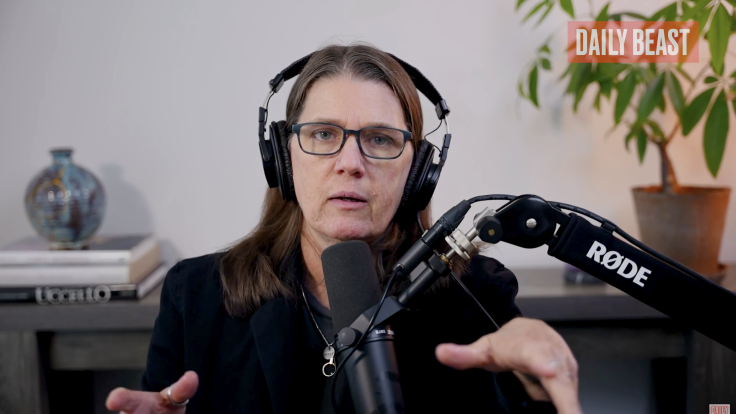
Donald Trump's niece has claimed that the president is in 'accelerating' cognitive and psychological decline and is driven above all by a terror of public shame, in a stark assessment of his fitness to lead the United States. Speaking in a recorded discussion with political strategist Sidney Blumenthal, psychologist Mary Trump alleged that Donald's 'undiagnosed' psychiatric conditions, combined with age-related deterioration, have left him increasingly desperate and easily manipulated.
After months of public debate in the US over Donald's health and acuity, with opinion polls indicating that a majority of voters doubt his 'stamina and sharpness' to serve another term in the White House. Questions about his physical and mental state have dogged his appearances and his looming political comeback, but what Mary offers is not the usual partisan attack. It is, instead, an unflinching family diagnosis.
Mary Trump Says Decline Is Exposing 'The Same' Donald Trump
Blumenthal pressed Mary on whether the Donald now dominating headlines is simply the same man the world has known for decades or someone whose condition is rapidly worsening. 'Has he always been crazy?' Blumenthal asked, before wondering aloud if the deterioration was speeding up and 'how fast.'
Mary was blunt. This is, in her view, not a transformation so much as a stripping away. 'This isn't a different guy. This isn't somebody who's suddenly becoming a worse person or a more unhinged person,' she replied. She argued that Donald's former allies claiming he is no longer the man they once backed are simply wrong. 'Yes, he is. He's been exactly the same person for decades.'
What has changed, she suggested, is not his core personality but the visibility of it. The 'perfect storm of cognitive, psychological, and physical decline,' she said, is revealing his long‑standing traits 'in a way that's making it more obvious for people who either haven't been paying attention or, for their own reasons, wanted to give him the benefit of the doubt and pretend he was something he wasn't.' In her telling, the decline is not only real, it is predictable: 'That's simply what happens.'
She went further, raising what she called 'his psychiatric disorders' and describing them as 'longstanding, untreated, undiagnosed conditions.' The logic is clinical rather than political. 'When you don't treat an illness, it worsens over time,' she said. In her view, his psychological state is now being hammered from two sides, with 'cognitive and physical decline' accelerating the deterioration.
Mary pointed out that Donald is '80 years old' and 'not healthy,' and drew on her own family history to sharpen the warning. Alzheimer's disease, she said, 'runs in my family.' Her grandfather, Donald's father, had Alzheimer's, with symptoms worsening in his early eighties, yet she recalled him as 'physically healthier than Donald is.'
None of this is confirmed by medical records released to the public, and Donald himself has repeatedly boasted of his health and mental fitness, so these claims should be treated with caution. They are, nonetheless, being made by a close relative who is also a trained psychologist.
Strongmen, Fear and the 'Terrified Little Boy' Inside Donald Trump
Blumenthal then steered the conversation to one of Donald's most consistent fascinations: strongmen. As he put it, Donald 'loves strongmen, and he loves to be seen as a strongman himself' and has long sought proximity to leaders such as Vladimir Putin, China's Xi Jinping and North Korea's Kim Jong Un. Donald once spoke at length about the 'love letters' he said he received from Kim.
According to Blumenthal, the twist now is that Donald has 'encountered actual strongmen who are defeating him.' That, he suggested, must be a profound shock. Mary agreed that her uncle's image of dominance is colliding with a more fragile reality, one he cannot easily face.
'I don't know that he can grapple with it on a conscious level, which is exactly why he's becoming increasingly desperate,' she said. In her view, he is flailing, 'trying to do several things simultaneously: change the subject, change the narrative, and somehow manufacture a win.' The more he flatters authoritarian figures and makes himself 'subservient to so‑called strongmen,' she argued, the more he 'reveals just how weak he actually is.'
From there she homed in on what she described as a 'fundamental truth' about Donald. 'The thing he fears most is humiliation,' she said. Right now, she argued, he is 'being humiliated on a daily basis by the consequences of the very things he chose to do,' ranging from 'the ridiculous, like the reflecting pool,' to 'something as catastrophic as the war with Iran.'
Specific policy details were not unpacked in the conversation, and none of these examples has been independently documented in this exchange, so they remain her characterisation of his record rather than fresh factual disclosures.
The emotional picture she painted was harsh. 'Deep down, he is now, just as he has always been, a terrified little boy,' she said. 'Everything he does is driven by fear and by a desperate need to avoid humiliation.' That fear, in her view, is not just a psychological footnote. It is a vulnerability that shapes American politics.

Mary argued that this makes Donald unusually easy to handle for those around him. His inner circle, she said, understand 'his narcissism and his profound insecurities.' The calculation is straightforward. 'He'll approve almost anything as long as he's getting what he wants in return,' she claimed. At this stage of his life and career, she believes what he wants 'most is adulation, compliments, power, and money. Mostly money, but the rest matters to him too.'
None of Donald's current advisers or campaign representatives were quoted in the discussion, and there was no response from the former president to his niece's latest broadside. Without independent medical evidence, her assertions about diagnosis and decline remain allegations rather than established fact, even if they come from inside the family. But they add another sharp, personal layer to a question that will not go away: what exactly is driving Donald as he fights, once again, to reclaim the presidency.
© Copyright IBTimes 2026. All rights reserved.
- Recommended For You