

Trump Accounts: Free $1,000 Deposits Begin This Month But Not Every Child Qualifies
A bold savings promise for America's newborns is colliding with the fine print of who knew to sign up, and who can afford to play along.

Donald Trump's new 'Trump Accounts' savings scheme officially opens for contributions this month in the United States, promising a free $1,000 government deposit for eligible children but with strict rules over who qualifies and how much others can pay in. Only children born between 1 January 2025 and 31 December 2028 can receive the initial federal contribution, and even then only if parents or guardians opted in earlier this year using a specific Internal Revenue Service form.
The Trump Accounts were unveiled last summer as part of Trump's sweeping 'One Big Beautiful Bill' package, pitched as a way to help American families build long-term wealth for their children. The idea is disarmingly simple on paper: the federal government seeds each qualifying account with $1,000 at birth, the balance is locked away, and the money becomes accessible when the child turns 18. Around that basic structure, however, sit layers of eligibility checks, contribution caps and corporate sweeteners that make the scheme both more generous and more complex than it first appears.

How Donald Trump's Child Accounts Work in Practice
Under the rules now in force, only a narrow cohort of children will be granted a Trump Account with the automatic $1,000 deposit. The child must be born within the four‑year window from the start of 2025 to the end of 2028, must have a Social Security number, and must have a parent or legal guardian able to take responsibility for managing the account.
Crucially, families also had to know about the programme in time to sign up. Parents or guardians were required to opt in when filing their federal tax return earlier this year, using IRS Form 4547 to request an initial Trump Account for an eligible child. Those who missed the form or filed too early may find themselves locked out of that $1,000 start, at least based on the rules disclosed so far.
Once opened, the account sits untouched until the young person reaches 18, at which point they can access the funds. The government's seed money is a one‑off. Any additional growth will come from private contributions and investment returns over nearly two decades.
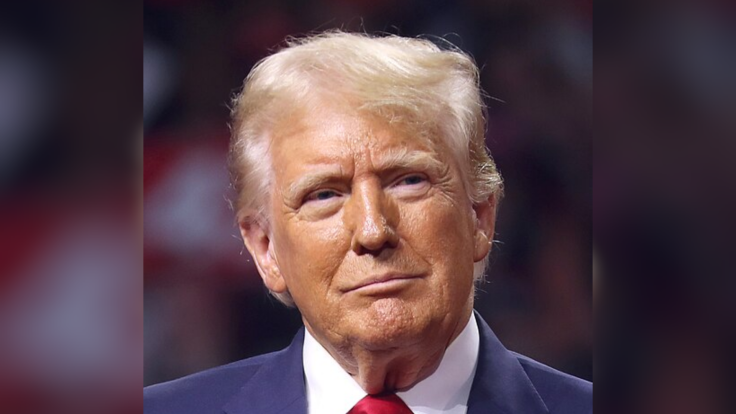
Donald Trump's Plan Draws in Big Business and Billionaires
The most striking feature of the Trump Accounts scheme is not the federal cheque, but the network of outside money now queuing up to match or top it up.Friends and family are permitted to contribute up to $5,000 a year to a single Trump Account. Employers can also pay in, but their share is capped at $2,500 annually, half of the overall limit. That structure in effect invites companies to position themselves as partners in an employee's family planning, while still putting a hard ceiling on how much corporate cash can be funnelled into one child's fund.
None of this private money can start flowing immediately. The rules state that contributions from friends, family and employers cannot be made until after 4 July, the day the United States marks what will be its 250th anniversary of independence. In practice, that odd, symbolic delay means parents are waiting for a green light that is linked more to national pageantry than to financial planning.

Even with that pause, some of the biggest names in American finance have already nailed their colours to the mast. Bank of America and JPMorgan Chase have both signalled they will contribute to Trump Accounts for qualifying employees' children, effectively giving some parents an extra perk beyond their salary.
Jamie Dimon, chief executive of JPMorgan Chase, framed the move as part of a longer corporate project rather than a one‑off nod to Trump's policy agenda. 'JPMorgan Chase has demonstrated a long-term commitment to the financial health and well-being of all our employees and their families around the world, including 190,000 here in the United States,' he said, arguing that matching the Trump Account contribution would 'make it easier for them to start saving early, invest wisely, and plan for their family's financial future.'
Alongside the big banks, a group of billionaires has lined up behind the concept with targeted side‑offers. Michael Dell, the founder and chief executive of Dell Technologies, and his wife Susan have pledged what they call a 'mini seed' for younger children in lower and middle‑income neighbourhoods. Their promise applies to children under 10 living in US ZIP codes where the median income is below $150,000, adding an extra layer of geography‑based support on top of the federal and employer‑led contributions.
Backers present these add‑ons as a way to give poorer families a head start that wealthier households already enjoy through traditional savings and investments. Critics, where they have spoken up, tend to worry that a complex web of private conditions and opt‑in mechanisms could leave the least informed families with the least benefit. None of those concerns, however, have yet altered the fundamentals of Trump's 'Trump Accounts' framework as laid out in the One Big Beautiful Bill.
There is still some uncertainty around take‑up rates, the fine print of how these accounts will be managed over 18 years, and whether Congress or a future administration could change the terms. Nothing is confirmed yet beyond the eligibility rules and the published contribution caps, so families are being urged to treat the early promises with a degree of caution and to watch closely as the first contributions land after Independence Day.
© Copyright IBTimes 2026. All rights reserved.