

What Actually Happened on July 4 and Why Fireworks Have Become the Symbol of Freedom
Exploring the historical roots and modern-day celebrations of America's Independence Day
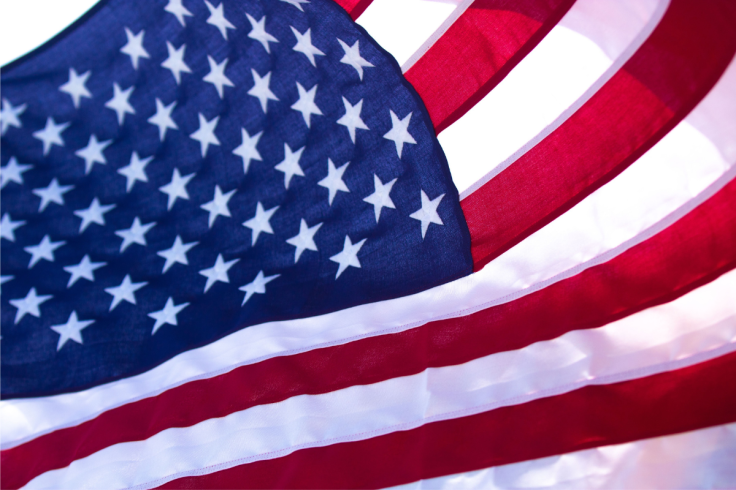
Every year on the Fourth of July, Americans light up the sky with fireworks, gather around barbecues and watch parades roll through city streets. But the holiday that has become synonymous with hot dogs and pyrotechnics has a far more dramatic origin story, one rooted in revolution, political courage and a declaration that changed the course of history.
The Day That Started It All
On 4 July 1776, the Second Continental Congress formally adopted the Declaration of Independence, severing the thirteen American colonies from British rule and announcing the birth of a new nation to the world.
The road to that moment had been long and fractious. Throughout the 1760s and early 1770s, the colonists found themselves increasingly at odds with British policies on taxation and governance. Repeated protests were met not with compromise but with escalation, including the closure of Boston's port and the imposition of martial law in Massachusetts. By the winter of 1775 to 1776, reconciliation with Britain had come to seem not just unlikely but impossible.
Thomas Jefferson was tasked with drafting the declaration, with Benjamin Franklin and John Adams reviewing and refining his work. The committee presented the final draft to Congress on 28 June 1776. Six days later, on 4 July, Congress adopted it in full.
The document did more than announce independence. It enabled the fledgling United States to seek formal alliances with foreign powers. France signed a Treaty of Alliance in 1778, providing crucial military support. The Netherlands recognised American independence in 1782, and Great Britain itself finally acknowledged the United States as a sovereign nation under the Treaty of Paris in 1783.
Why Fireworks Became the Symbol of Freedom
The association between fireworks and Independence Day goes back almost to the very beginning. Founding Father John Adams, writing to his wife Abigail on 3 July 1776, predicted that the anniversary of independence ought to be celebrated with 'Pomp and Parade, with Shews, Games, Sports, Guns, Bells, Bonfires and Illuminations from one End of this Continent to the other.'
He was not wrong. One year after independence was declared, a spontaneous celebration in Philadelphia marked the first anniversary. Widespread observance of the holiday took longer to take hold, becoming commonplace only after the War of 1812, but fireworks have remained central to it ever since.
Consumer spending on fireworks in the United States reached $2.2 billion in 2024, up from just $407 million in 2000. The biggest surge came during the Covid-19 pandemic, when public displays were cancelled and Americans turned to consumer fireworks instead, with spending nearly doubling between 2019 and 2020.
The President Who Refused to Celebrate
Not every American has embraced the Fourth of July with enthusiasm. John Adams himself refused to mark the holiday on 4 July, insisting that 2 July, the date the Continental Congress actually voted for independence, was the true anniversary. He turned down invitations to events even while serving as the second president of the United States.
History offered a poignant footnote. Adams and Thomas Jefferson, the primary author of the Declaration of Independence, both died on 4 July 1826, the fiftieth anniversary of its adoption.
The Hidden Dangers of the Holiday
For all its spectacle, Independence Day remains one of the most dangerous holidays in the American calendar. In 2024, fireworks were responsible for eleven deaths and an estimated 14,700 emergency room visits, a 52 per cent increase on the previous year. Burns were the most common injury, with hands, fingers, ears and faces among the most frequently affected.
Safety experts consistently advise keeping children away from fireworks entirely, avoiding alcohol when handling them and never attempting to relight a firework that has failed to ignite.
Two hundred and fifty years on, the rockets' red glare remains as spectacular as ever. The trick, as always, is making sure everyone is still around to see the next one.
© Copyright IBTimes 2026. All rights reserved.