

George RR Martin's 21-Year-Old Writing Confession Explains The Winds of Winter Delay: 'Forty-Seven Restructures'
A gardener without a map, George R.R .Martin continues to work through his own epic as readers wait on the far side.
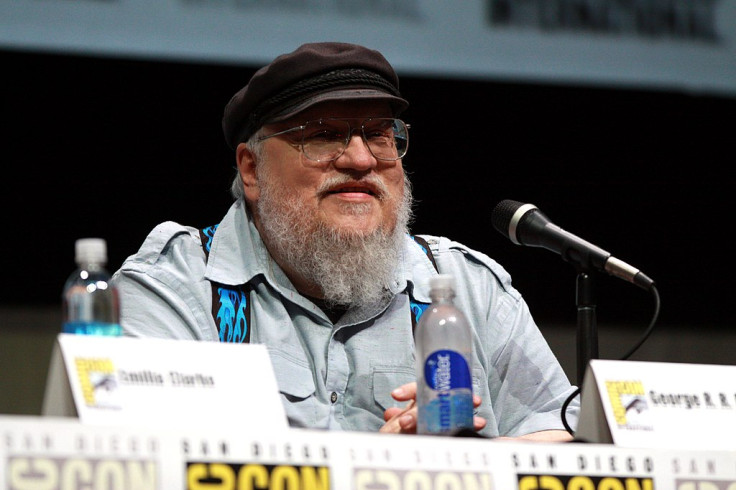
George R.R. Martin admitted more than two decades ago that he hates writing outlines, a long-standing quirk that may now help explain why The Winds of Winter remains unfinished despite years of work and intense pressure from fans worldwide. Speaking at the Library of Congress' National Book Festival in 2005, the A Song of Ice and Fire author said he never plans his novels scene by scene and prefers to 'discover' the story as he goes.
The Winds of Winter is the long-awaited sixth volume in Martin's fantasy saga, following 2011's A Dance with Dragons. The books inspired HBO's hit series Game of Thrones, which surged far ahead of the source material and concluded its television run in 2019. Since then, every stray remark from Martin about his process has been picked apart for clues as readers try to understand why the next book has proved so resistant to completion.
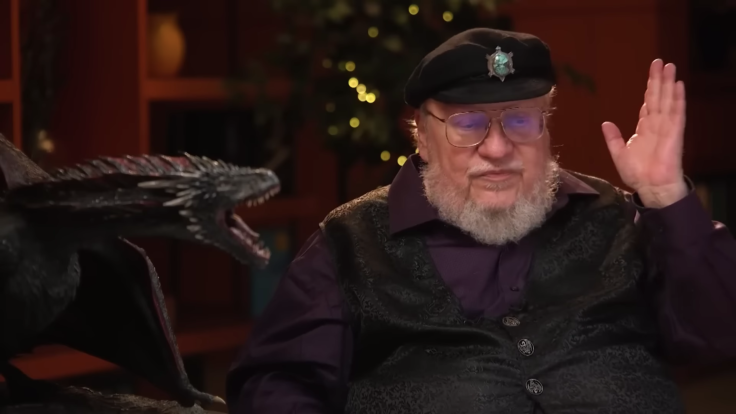
In that 2005 appearance, Martin was unusually candid about his methods. 'I don't have a formal outline. I'm not one of these writers who outlines every what's gonna be in every scene, what's gonna be in every chapter. I might be faster if I did,' he told the audience. It was not an offhand comment. He went on to describe outlining as a habit he picked up only out of necessity during his years working in Hollywood.
Back then, he said the rigid structures of television writing fundamentally clashed with how he thinks about story. 'I never liked it. It did take away some of the spontaneity. I felt, you know, in some sense, I had already told the story even though I had only told it in shorthand, and retelling the story over again is not as much fun as telling the story for the first time.' That clash has become more than a matter of taste when scaled up to a series as sprawling as A Song of Ice and Fire.
George R.R. Martin admitted the reason Winds of Winter isn't finished is that HBO keeps pulling him away from the one place he can actually write.
— Fandom Pulse (@fandompulse) May 17, 2026
He can only write "in my own setting with my office around me" — and constant HBO travel obligations make that impossible.
Did… pic.twitter.com/vXgJ4ASMeC
How Martin's 'Gardener' Style Is Tangling The Winds of Winter
Martin has long described himself as a 'gardener' rather than an 'architect': he plants characters and situations, then watches to see what grows, instead of constructing everything from a detailed blueprint. It is a romantic image, and the results on the page are hard to argue with. The books' tangled loyalties, moral ambiguity and shocking reversals feel less like clockwork and more like real history, untidy and unpredictable.
The trade-off is structural chaos. Knowing only the main destinations in advance leaves a lot of room to wander off the road. In a shorter novel, that can be exhilarating. In a multi-thousand-page epic with dozens of point-of-view characters, it becomes a logistical nightmare. Every new idea that appears midway through a draft can force him to backtrack, revise earlier chapters and re-thread entire plotlines so that they line up with the latest discovery.
Martin himself has conceded how extreme this can get. When he was wrestling with A Dance with Dragons, he admitted on his blog in 2010 that he had decided to move some chapters out of that book and into The Winds of Winter instead. The choice, he said, was made because it 'felt right' for the story, but it came at a cost to the structure. 'The event was originally going to occur near the end of the book, but in one of my forty-seven restructures I moved it to the late middle instead,' he wrote.
Forty-seven restructures for a single event is not the work of a writer ticking smoothly through an outline. It is the pattern of someone continually pulling apart and re-stitching the manuscript. By his own admission, he has done this 'on several other occasions.' Without a formal map, each new revision can spawn a fresh round of adjustments, slowing forward motion to a crawl. The very spontaneity that gives his narrative its life can, at this scale, lock him into a loop of almost endless revision.
Did Game of Thrones Drain the Mystery From The Winds of Winter?
Martin has said the act of outlining can feel like telling the story once already, making the full draft less exciting to write. A version of that problem may have replayed itself, on a grander stage, when he revealed his intended ending for the books to the Game of Thrones showrunners.
In an interview with Rolling Stone, Martin confirmed that the TV team were given his key endgame beats well in advance. 'The major points of the ending will be things that I told them, you know, five or six years ago,' he said. Those skeletal ideas were then adapted, expanded and ultimately broadcast to millions of viewers before he had finished writing the novels that were supposed to carry them.

It is not hard to imagine the effect on a writer who already worries that summarising a story saps its energy. Some of his biggest reveals, once private milestones waiting for future readers, have already been staged, debated and, for many fans, definitively judged on screen. Nothing is confirmed yet about how closely the books will mirror the show's ending, so everything should be taken with a grain of salt, but the psychological hurdle is obvious.
If outlining a novel can make the full draft feel like a retread, then scripting scenes that the world has, in some form, already watched could be even more dispiriting. For Martin, a self-declared gardener drawn to the joy of discovering the story in the act of writing, The Winds of Winter has become both a technical puzzle and, arguably, a motivational one. The pages still to be written sit behind years of restructures, public expectations and a television finale that overtook its source.
© Copyright IBTimes 2026. All rights reserved.