Khamenei Rejects Ceasefire—'Not Right Time For Peace' After Larijani Killing, Warns US Must 'Pay'
A hardline shift signals a deeper and more dangerous phase as tensions with the US and Israel escalate.
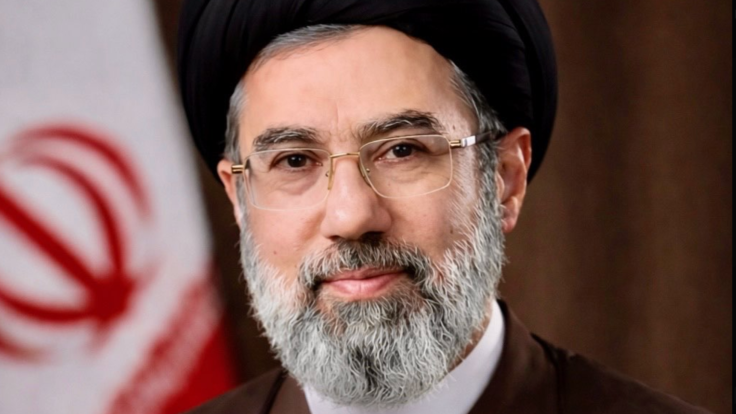
Iran's new supreme leader Ayatollah Mojtaba Khamenei has shut the door on peace talks and rejected proposals aimed at easing tensions with the United States. Instead, he has made it clear this is not a moment for restraint but for reckoning.
His rejection was blunt and deeply personal. It came just moments after Israel killed one of Iran's most powerful insiders, Ali Larijani, secretary of Iran's Supreme National Security Council, along with his deputy and son Alireza Bayat on a Monday night attack.
The response from Tehran has sharpened quickly. There is now a growing sense that the conflict is moving into a harsher phase, with revenge shaping decisions at the very top. A senior Iranian official said Khamenei dismissed efforts sent to Iran's Foreign Ministry to ease tensions or secure a ceasefire with Washington, leaving little room for compromise.
A Killing that Shook Iran's Inner Circle
Larijani was not just another senior figure. He sat at the centre of Iran's power structure, with influence that ran deep through both political and security networks.
According to CNN, he was widely seen as a trusted insider who could bridge factions within the regime. His role stretched from nuclear negotiations to regional strategy, placing him among the most influential voices behind closed doors.
His death leaves a gap at a critical moment. It has also shifted the tone inside Iran's leadership, where the language now carries a mix of grief, anger and vengeance, not just calculation.
Iran Vows 'Decisive' Response
In the hours after Larijani's killing, Iranian officials promised retaliation. The country's army chief described it as a 'decisive, deterrent, and regretful response,' words that suggest action is not only likely but expected.
BBC News reported that Iran's Islamic Revolutionary Guard Corps said it had already fired missiles towards central Israel. The strike was described as a direct act of revenge.
Khamenei Sets a Hardline Tone
It remains unclear whether Khamenei joined his first major foreign policy meeting as supreme leader in person or remotely, but his message was unmistakable.
Khamenei rejected de-escalation proposals delivered through intermediaries, saying it was not 'the right time for peace until the United States and Israel are 'brought to their knees, accept defeat and pay compensation,' according to the unidentified senior official cited by Reuters.
Iran's leadership has framed the recent strikes as actions that demand a response. The tone from Tehran is no longer measured. It is firm, defiant, and driven by emotion.
Questions Grow Over US Role and Strategy
As Iran hardens its position, uncertainty is also building in Washington. The US has offered different explanations for joining Israel in strikes against Iran, prompting questions about its long-term approach.
In a separate CNN report, the resignation of Joseph Kent, director of the US National Counterterrorism Center, has added to that uncertainty. In his resignation letter to President Donald Trump, Kent wrote that Iran 'posed no imminent threat to our nation.'
After much reflection, I have decided to resign from my position as Director of the National Counterterrorism Center, effective today.
— Joe Kent (@joekent16jan19) March 17, 2026
I cannot in good conscience support the ongoing war in Iran. Iran posed no imminent threat to our nation, and it is clear that we started this… pic.twitter.com/prtu86DpEr
His words have added fuel to an already tense debate over the legal and political grounds for the conflict. They also point to divisions within the US government.
CNN's live coverage noted that officials have struggled to clearly explain the justification for what could become a wider war. That lack of clarity may make it harder to build international support.
A Conflict Driven by Grief and Calculation
The killing of Larijani has altered the course of the crisis. What once looked like a strategic standoff now carries a deeply personal edge for Iran's leadership.
Khamenei's refusal to consider a ceasefire underscores how much has changed. This is no longer just about pressure or negotiation. It is about showing strength and demanding accountability.
Reports suggest tensions have now entered their 18th day, with both sides preparing for what may come next.
For people across the region, the stakes are rising quickly. For those in power, the room to manoeuvre is narrowing. With diplomacy pushed aside, the road ahead looks far more uncertain than it did just days ago.
© Copyright IBTimes 2026. All rights reserved.
- MOST POPULAR IN World